Brother(hood) Dance blends cultural research in dance, agriculture and technology
Co-led by School of Dance professor Ricarrdo Hunter-Valentine, “Black in the Water” is the second work in Brother(hood) Dance’s Environmental Justice Trilogy, using a series of thematic “puddles” to examine the relationship between water and Black communities in Ohio.
Sophia Rooksberry; Photos by James Hamilton | December 5, 2025
Share:
“What you all will experience today is puddles, if you will…”
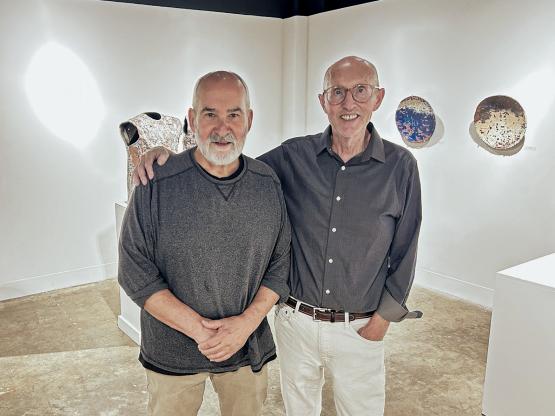
With this sentence, Orlando Hunter-Valentine launched Brother(hood) Dance’s second performance of “Black in the Water” on the afternoon of Nov. 22. Brother(hood) Dance was co-founded in 2014 by Orlando and his partner, Ricarrdo Hunter-Valentine, an assistant professor of instruction in the School of Dance.
“Our mission is to create space for artists to engage in dance and agriculture and technology, because we have found through our experience freelancing in New York City that dancers don’t always have access to healthy food options and studio space because of the cost,” Ricarrdo said. “Brother(hood) Dance have found ourselves using parks and small farms as a way to create our work. We have found that the Earth has been really supportive in our creative practice and spiritual practice as well, in allowing us to have a vision of doing all three disciplines together.”
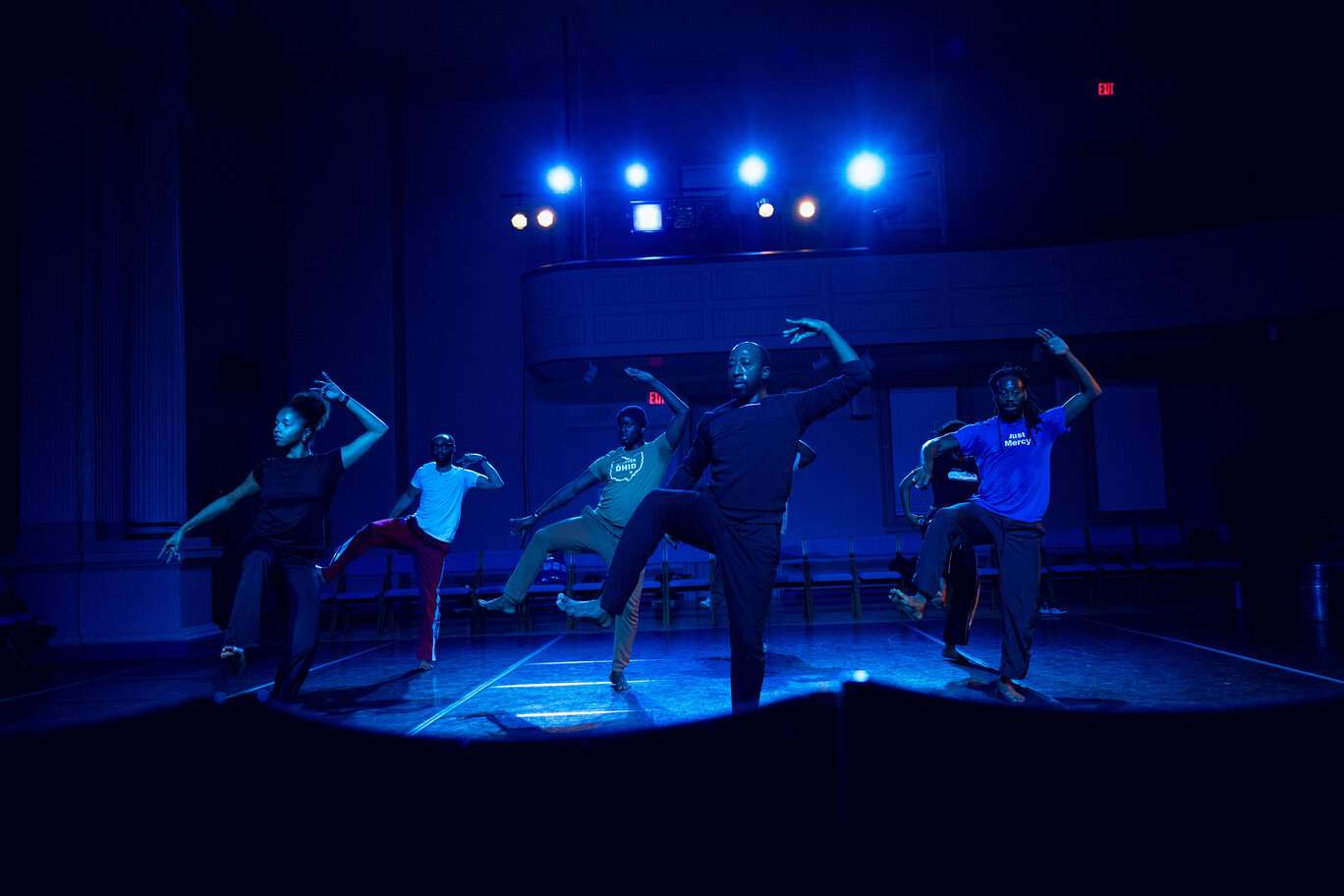
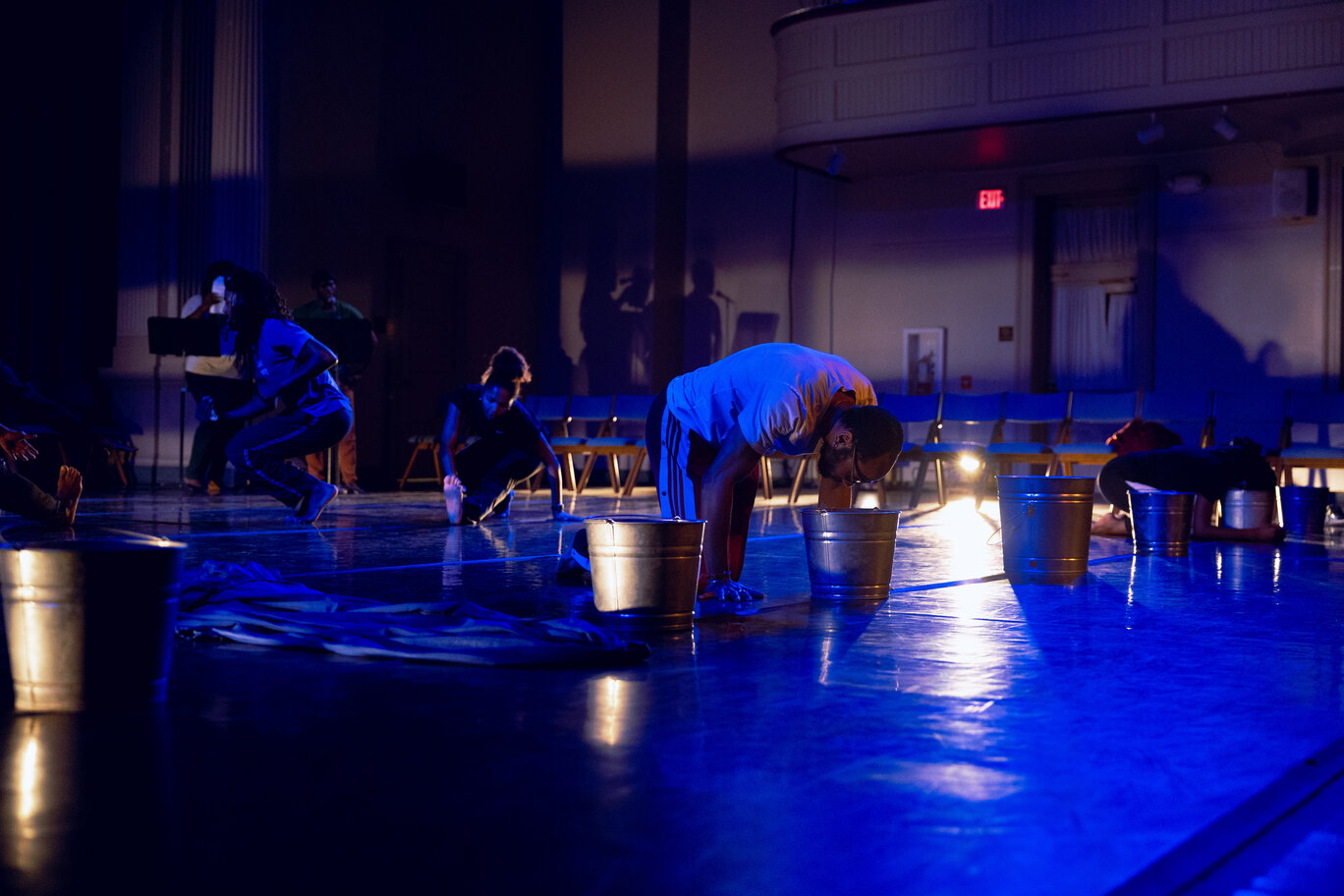
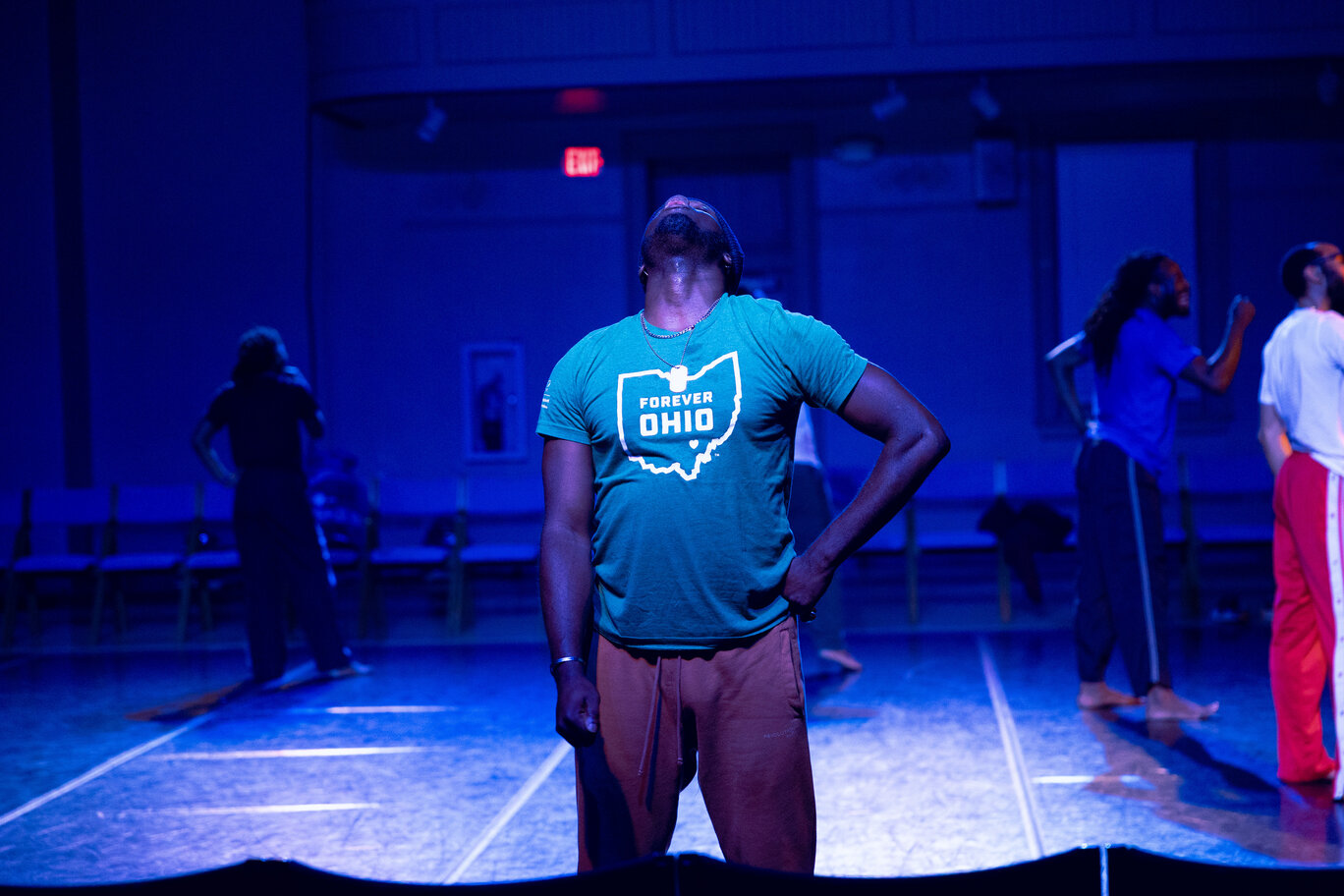
The enviro-centric core of Brother(hood) Dance led the duo to Columbus in 2022 to pursue their MFA’s and explore the intersection between agriculture, technology and dance.
“We have a framework we call ‘D.A.T.’ – Dance, Agriculture and Technology,” Ricarrdo said. “We were able to harvest stories from Black growers in Columbus, Ohio, and asked questions around their relationship to land, food and family, and we created a … work based off of those stories and premiered it at the Wexner Center for the Arts.”
This work was the first installment of the group’s Environmental Justice Trilogy; the second installment, “Black in the Water,” shifted focus to “look at water and its relationship to Black communities in Ohio.”
“This is a work in process (made up of) small ideas that we’ve been working on for the past three months,” Ricarrdo said. “It is very community centered, so there are moments where we perform and then engage with the audience to get their stories about water.”
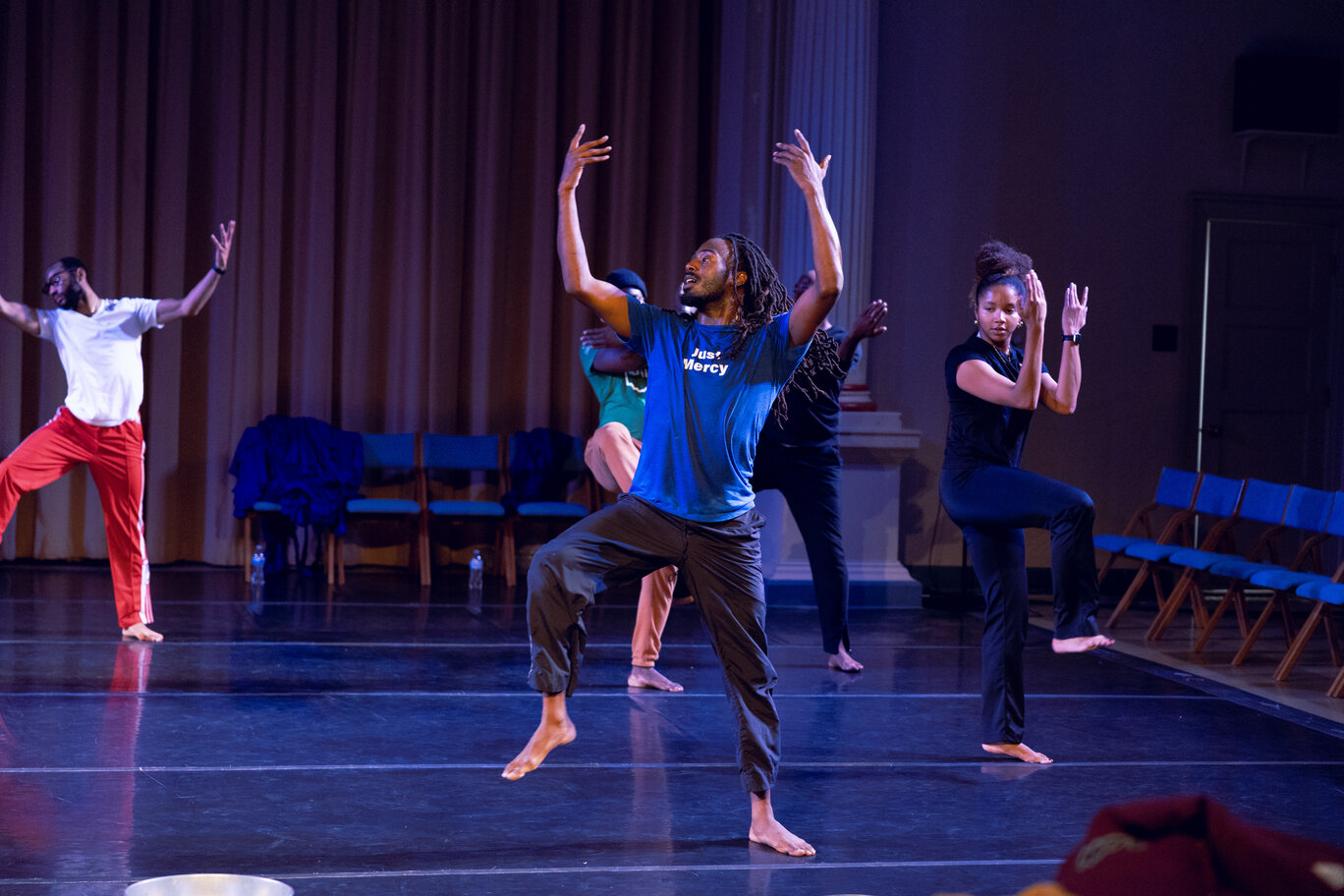
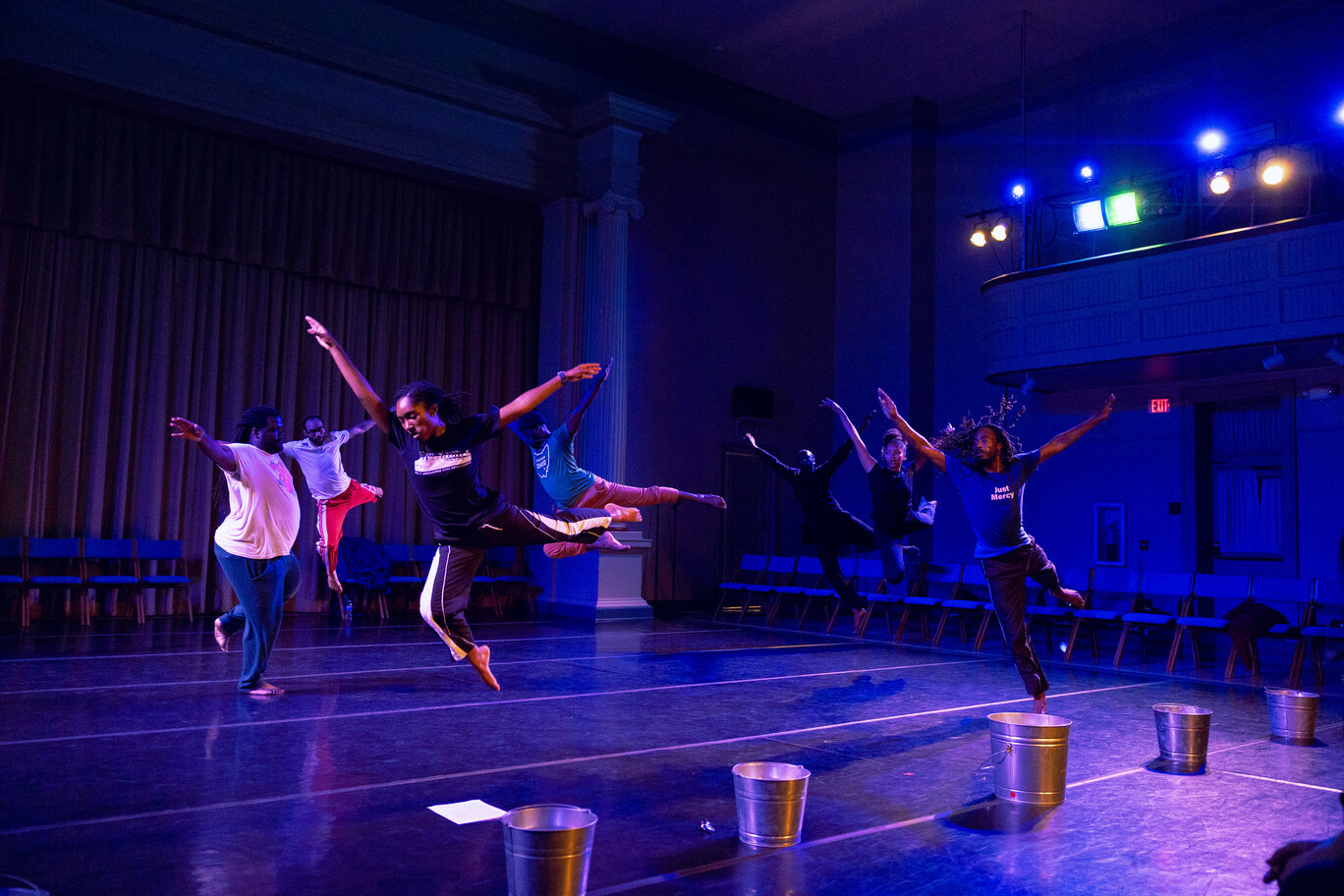
Along with four additional dancers, Orlando and Ricarrdo explored the lifespan of water in the form of “puddles,” sections of the dance each with their own themes and aesthetics. The first puddle was a ritualistic dance from Zimbabwe in which the dancers flowed both in unison and individually, exploring the cellular structure of water molecules through movement.
In the second puddle, dancers pantomimed the mundane acts of daily life that necessitate water, including brushing teeth, pumping wells and washing dishes. In this puddle, the dancers proved themselves to not only be masters of choreography, but masters of acting as well.
In another puddle, dancers donned blue skirts and praised a deity of the ocean, sweat dripping on the floor in a physical manifestation of the dance. In another, the ensemble took turns dancing and standing behind a microphone, each exploring a moving spoken word piece about the destructiveness of data centers and climate injustice.
Throughout the course of the performance, the dancers explored everything from the terror of water scarcity to the sacredness of the ocean. The dancers moved both individually and as a unit with a fluidity that can only be described as powerful and aqueous. The eye-level stage blurred the lines between performers and audience members, and the spectators were even given a forum to share thoughts and emotions around the performance, which they had viewed in its most vulnerable stage.
“Black in the Water” was a promising and impactful addition to the Environmental Justice Trilogy, the final segment of which is currently in the planning phase.
“After this run, we’ll continue to apply for residencies,” Ricarrdo said. “Next summer we’ll be at Ohio State engaging with their technology department, so we’ll be integrating some technology play that we’ve gathered through our research with water.”