
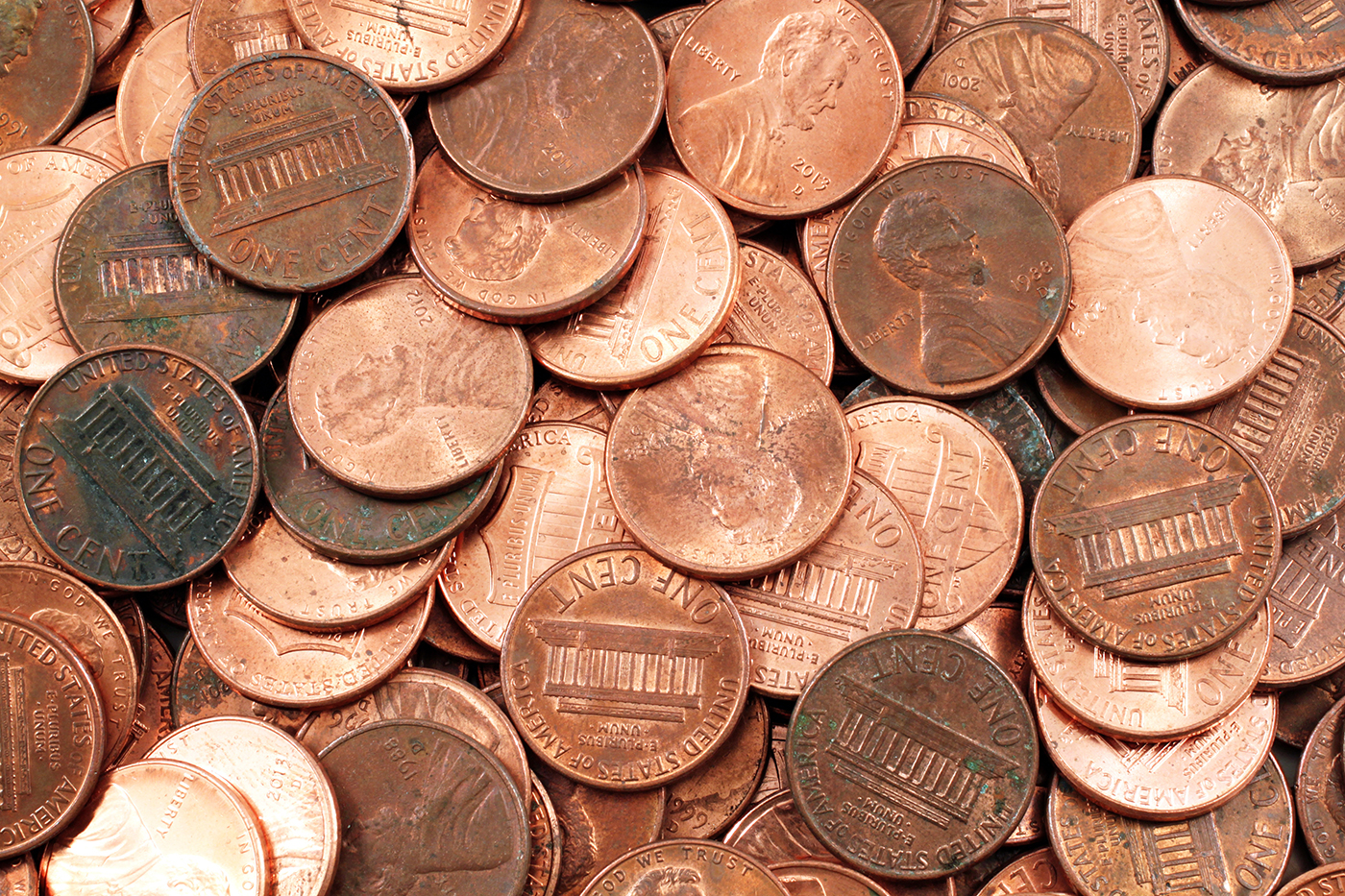
What killed the penny: OHIO economist shares his two cents on the retiring of the cent
The penny was one of the first coins made by the U.S. Mint in 1793, but as of November 2025, it is no longer being produced. Ohio University Professor of Economics Roberto Duncan provides some insight into what led to the end of the popular coin.
Alex Semancik | December 4, 2025
Share:
It’s the end of an era for an iconic American legal tender. The last U.S. penny was made on Nov. 12, 2025, after more than 230 years of production. Amid an ongoing coin shortage, no new pennies will be made. But this isn’t quite goodbye. The penny is still an acceptable form of currency, billions of them are still in circulation and they will likely be used for many years to come.
Roberto Duncan, Ph.D. says shifts from cash to digital currency, the minting cost and recent inflation ultimately led to the penny’s demise. Duncan is an expert in macroeconomics, monetary policy and economic growth and professor of economics in Ohio University’s College of Arts and Sciences.
Why did the U.S. stop making the penny?
The penny was one of the first coins made by the U.S. Mint in 1793 and has since played a role in daily American life. However, economic and production factors, combined with evolving consumer behavior, have made its continued production unsustainable, according to the U.S. Mint.
Duncan says that the recent inflation surge of 2021–22 likely contributed to the decision to stop producing pennies, but only to a limited extent. The main reason is the steadily rising cost of producing and distributing the penny over the last two decades. The one cent piece now costs nearly four cents to produce.
Image

“Even before the recent inflation surge, the cost of producing each penny was about twice its nominal value, and the unit cost of a penny (1.99 cents in 2019) has been above face value since 2005,” he said. “Once the net benefit of producing pennies becomes negative, we must ask whether this situation is temporary or permanent. If it appears to be a permanent condition, then discontinuing penny production becomes the natural policy choice.”
There is also a symbolic factor at play. With so much history behind the penny, for a while there was some reluctance to stop its minting.
“For some, the penny represents a piece of American culture and history,” explained Duncan. “However, as most of the population shifts away from cash and relies on cards and other digital payment options, that symbolic value also tends to diminish over time.”
The impact of the penny on businesses
There are an estimated 300 billion pennies in circulation, but many of them are squirreled away, confined to piggy banks, jars and other means of storage. Enough of these 300 billion coins rarely see the light of day that many U.S. businesses are struggling to provide cash-paying customers with exact change.
The existence of the penny allows businesses to set prices more precisely and to adjust prices in small increments. According to Duncan, this can facilitate transactions for both buyers and sellers, since low-denomination coins make it easier to give or receive exact change in cash transactions.
Some retailers are posting signs warning consumers of the penny shortage and encouraging them to use card or exact change for cash transactions. Others are rounding down to the nearest nickel to avoid angering their patrons. Duncan says the impact of this shortage is indicative of the importance of the cent.
Image

“Without pennies, sellers would either need to adjust prices only in five-cent increments or round transaction totals up or down. Rounding down may create a loss for the seller, whereas rounding up may impose a loss on the buyer.”
Despite some businesses like gas stations and convenience stores feeling the pinch, discontinuing the penny will not create serious problems for everyday transactions. Duncan says only around 14% of transactions are made in cash, and only about 5% of all money spent is spent in cash. He believes those who rely more heavily on cash are the ones most likely to feel any impact from a shortage of pennies.
“If the [U.S. Mint’s 300 billion penny] estimate is correct, we should not expect serious or widespread problems with cash transactions,” said Duncan. “In the U.S., [consumers who use cash] typically include older adults and low-income individuals. If some businesses that frequently serve these groups decide to round prices up to the nearest dollar, their customers may feel disappointed or dissatisfied.”
Image

But Duncan doesn’t think anything drastic will happen just yet. He believes most businesses won’t react immediately and will likely adopt a “wait-and-see” approach.
“I don’t think the vast majority of businesses will change their pricing strategies because of this decision by the U.S. Mint. Most, if not all, will continue using ‘.99’ price endings because of their positive psychological effect on consumers,” Duncan explained. “Some businesses might also offer customers the option to donate the leftover penny to charity. Others may simply shift more to debit cards and digital payments, avoiding the issue altogether. Rounding prices to the nearest nickel is another possibility, but many customers may not care about receiving one or a few pennies in change given their very low purchasing power, and if an occasional customer insists on getting that last cent, a cashier might simply hand over a nickel, with the business absorbing a small loss.”
Is the nickel next?
With the recent death of the penny, the nickel is clearly the next in line. Duncan says the nickel is next on the list because it is now the lowest denomination coin after the penny. Duncan also points to the losses the nickel generates due to rising costs.
Each penny costs nearly four cents to produce, each nickel costs nearly 14 cents to make and distribute, a net loss of around nine cents. The nine-cent loss per coin certainly adds up, but Duncan believes the hit consumers would take due to rounding will help ensure the nickel’s longevity.
Image
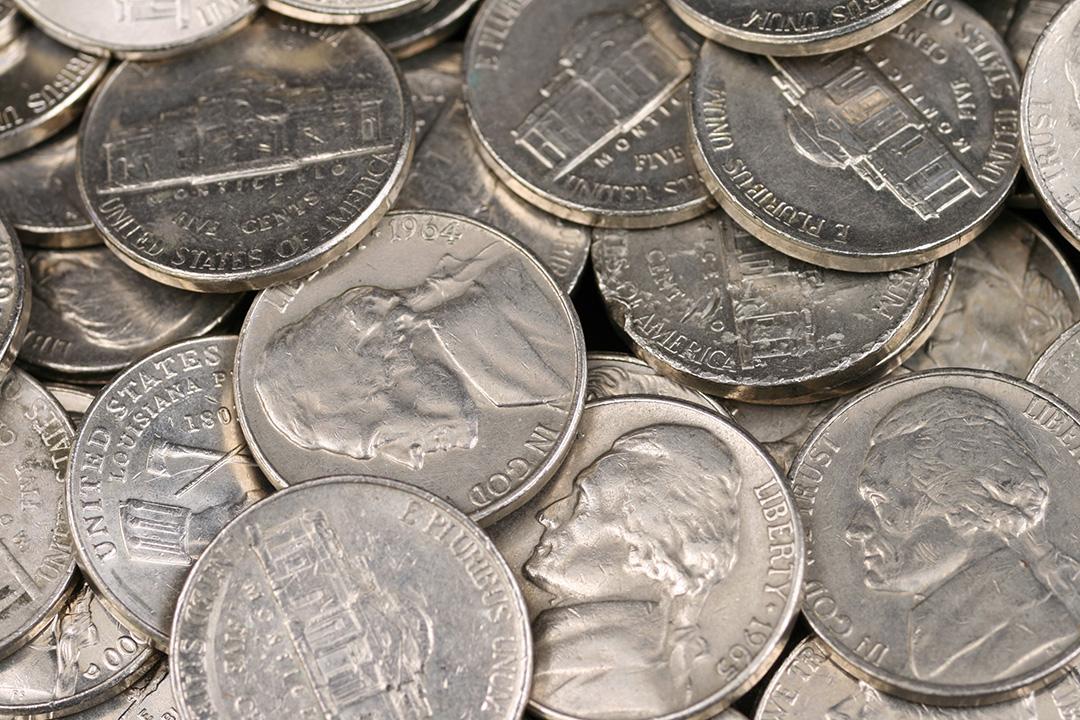
“According to economists at the Federal Reserve Bank of Richmond, rounding prices up after eliminating the penny alone could cost consumers around $6 million per year,” emphasized Duncan. “Eliminating the nickel in addition to the penny could lead to significantly higher rounding costs, up to $56 million per year.”
It is also still possible that the U.S. Mint will change the composition of the nickel to cheaper metals to reduce costs, which would further extend its life. It is difficult to predict what will happen to the nickel, Duncan doesn’t think the decision to stop its production will happen anytime soon.