Image
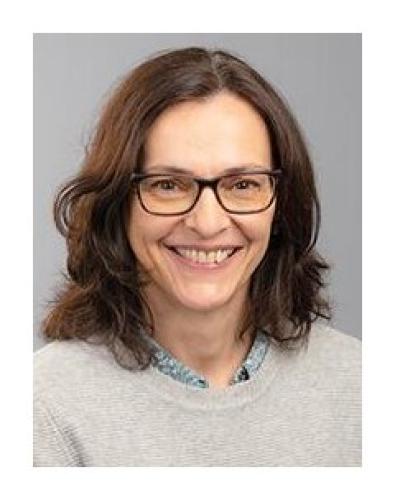
Graciela Muniz-Terrera
New research suggests that a person’s overall physical and mental abilities, known as intrinsic capacity, may help predict future cognitive decline.
Intrinsic capacity is a concept developed by the World Health Organization (WHO). It looks at what people can do, rather than what they cannot and includes five key areas of health: movement, mental well-being, thinking and memory, senses (vision and hearing) and vitality (strength and breathing ability). Together, these areas give a broad picture of healthy aging.
A recent study, co-authored by an international team of researchers including Graciela Muniz-Terrera, Ph.D., professor of Social Medicine and the Osteopathic Heritage Foundation Ralph S. Licklider, D.O. Endowed Professor in Health and Aging at the Ohio University Heritage College of Osteopathic Medicine, is the first to show that lower intrinsic capacity in older adults who initially had normal thinking skills was linked to a higher chance of developing mild cognitive impairment four to five years later. Mild cognitive impairment is an early stage of memory and thinking problems that is more serious than normal aging but not as severe as dementia.
The study, published in GeroScience, examined data of 731 individuals, who had participated in the English Longitudinal Study of Ageing (ELSA), which follows the health of older adults in the United Kingdom. The participants were between the ages of 60 and 80 with normal cognition at the start of the study. The researchers created an intrinsic capacity score using information about physical strength, walking speed, balance, mental health, sleep, memory, vision, hearing, lung function and grip strength.
The study’s authors found that older adults with lower intrinsic capacity were more likely to develop mild cognitive impairment within 4–5 years. People who remained cognitively healthy had higher intrinsic capacity scores than those who developed impairment. Older age and lower education increased the risk of cognitive decline, but factors such as sex, physical activity and number of chronic illnesses were not strong predictors once intrinsic capacity was considered.
The study supports growing evidence that intrinsic capacity may be more useful than counting medical conditions alone when predicting health outcomes in older adults.
“These findings support the idea that healthy aging is about more than just avoiding disease,” said Muniz-Terrera. “By looking at a person’s overall abilities across many areas of health, intrinsic capacity may help physicians identify people at risk for future cognitive decline earlier than traditional methods.”
The researchers note that intrinsic capacity could one day be used as a screening tool in routine health checks.
“As people age, abilities can vary widely,” Muniz-Terrera added. “Intrinsic capacity offers a more personalized way to understand aging and design interventions that help people stay healthy and independent longer.”
The study’s authors include Rosa Birchenough with Edinburgh Medical School at the University of Edinburgh in the United Kingdom, Ingrid Buller-Peralta with the University of Edinburgh’s Centre for Clinical Brain Sciences and Alejandra Marroig with the Universidad de La República in Uruguay.