Image

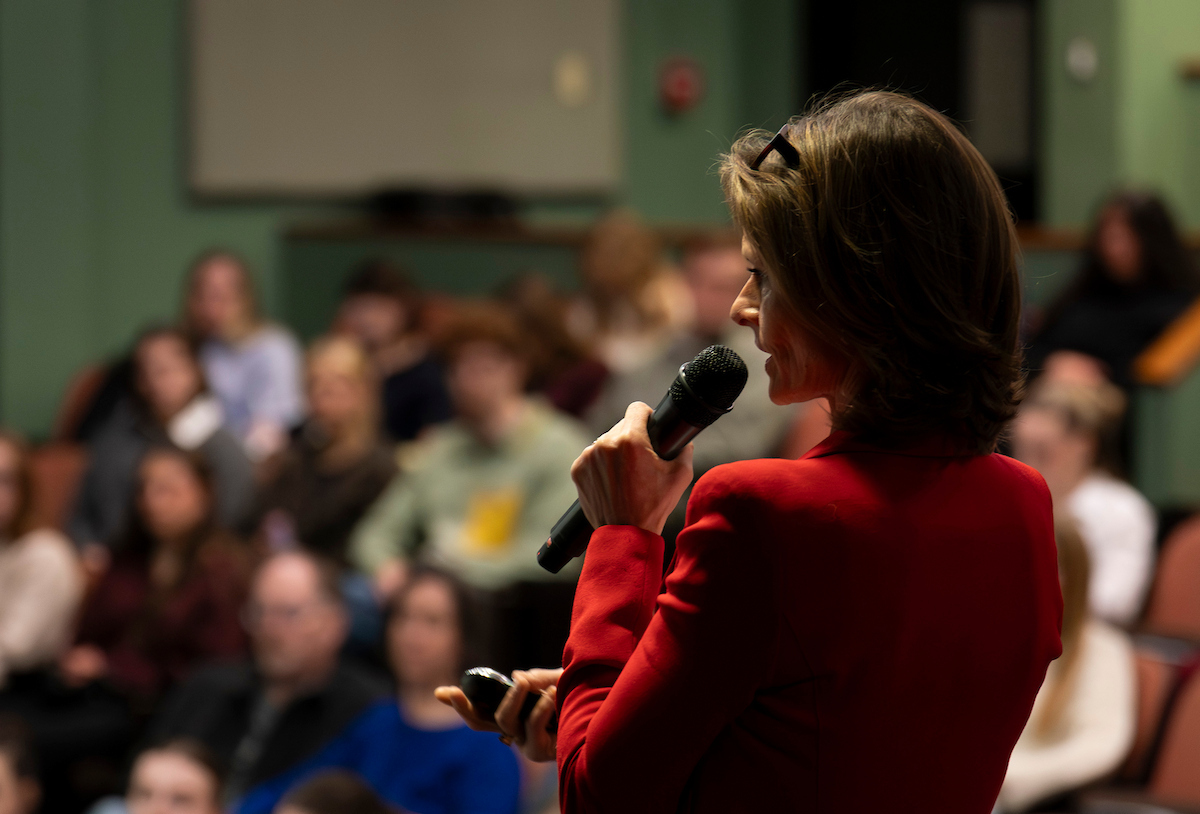
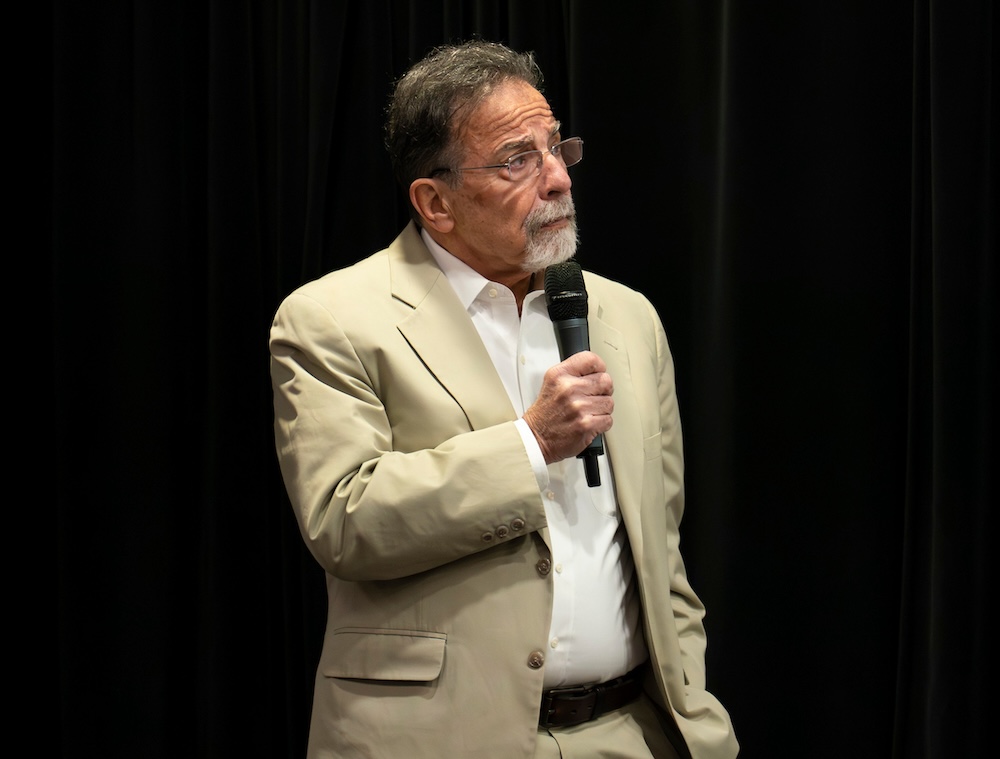
Pre-Law Day featured Sonya Pfeiffer (BSJ, ’95) and David Rudolf speaking to students and community members about cognitive bias and their experience as defense attorneys.
Marshall Smittle BA ‘29 | March 31, 2026
Share:
Extensive work went into this year’s Pre-Law Day, held February 26 at the Athena Cinema. As a pre-law associate in the Center for Law, Justice, & Culture, I helped plan the event with Larry Hayman, director of legal engagement and the pre-law program: everything from inviting attorneys from around the country, preparing panels, advertising the event, securing parking and lodging for guests, collecting biographies and headshots, and answering questions.
The featured speakers at this year’s event were attorneys Sonya Pfeiffer (BSJ, ’95) and her husband David Rudolf, who were scheduled to speak about cognitive bias in the legal system.

Leading up to Pre-Law Day, I was concerned about meeting so many high-profile professional figures, knowing that it would be very important for me to start building connections and a good reputation at my first such event.
When the day finally got here, people started to arrive at the Athena Cinema, and Pfeiffer and Rudolf walked into the lobby with Larry Hayman, who is my advisor. Our two keynote speakers were here not only to give a speech to many eager pre-law students, but also to visit Pfeiffer’s alma mater.
Pfeiffer began working as an international television news reporter after graduation, covering major events like the Yitzhak Rabin assassination in Tel Aviv and the signing of the Dayton Peace Accords in Paris. Pfeiffer was working for ABC11/WTVD in Raleigh, NC, when she began reporting on a murder case that would lead her to a life tied to law, justice, and Rudolf.
The Michael Peterson murder case began in 2001 when Michael Peterson, a husband, father, novelist and critic of local government, was accused of murdering his wife Kathleen Peterson, who was found at the bottom of the staircase in their home. Michael Peterson was the only one at home at the time of her death, and the lead investigator determined it to be a murder based upon the sheer amount of blood, lacerations, and Peterson’s initial 911 call.
Rudolf had been on Michael Peterson’s legal team since 2001. He met Sonya Pfeiffer when she was an investigative reporter on the case. In 2003, Michael Peterson received a guilty verdict from the jury on the charge of first-degree murder and was given a sentence of life without parole.
Inspired in part by the Peterson case, Pfeiffer decided to go to law school to enhance her investigative reporting skills. She eventually decided to leave reporting for a career as an attorney, aiming to defend the public against the overreach of government. In 2007, Pfeiffer graduated law school, and she and Rudolf were married.
Pfeiffer and Rudolf’s presentation on Thursday night primarily centered around the “Staircase” case of Michael Peterson. They each explained their sides of the story as well as larger, overarching themes they find important to their work.
Two of the central themes they discussed were cognitive biases, and how they can lead to confirmation bias. Rudolf explained that while working on the case, lead detective Art Holland experienced a cognitive bias that led him to believe that Peterson was the killer. Because Holland had worked on many murder cases that involved crime scenes with large amounts of blood, when he saw the large amount of blood on the scene, he immediately began investigating as if there had been a crime committed.
Because of his cognitive bias based on previous experience, Holland experienced confirmation bias: when he looked specifically for any signs of a criminal case involving a murder, he found evidence that he believed indicated that this was true.
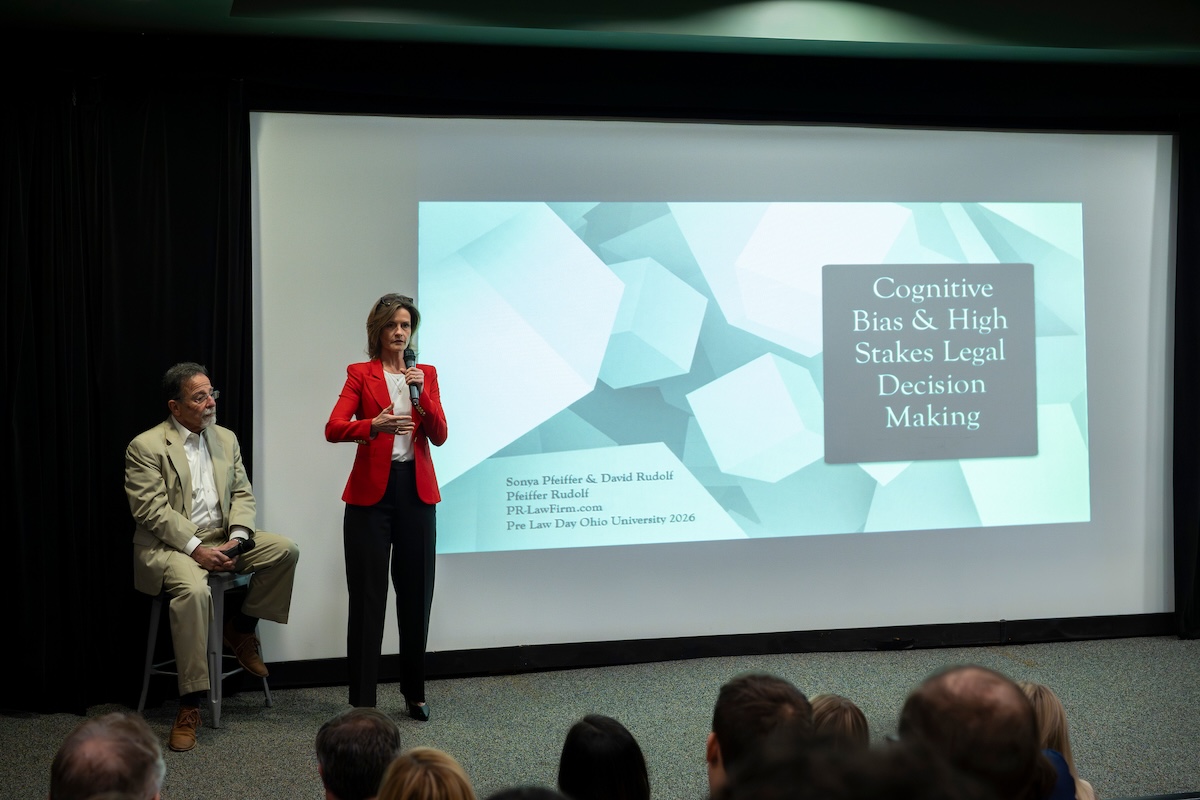
Pfeiffer proceeded to discuss biases and assumptions, and how they shape law and society. In the case of Peterson, the jury and investigators were influenced by the fact that Peterson had been hiding his bisexuality from most of the world, including his wife, as well as the fact that he lied in one of his books about the reason he returned home from Vietnam. Despite Rudolf’s contention that this information was not relevant and never should have been introduced to the jury, cognitive bias did play a part in shaping the verdict he received. Ultimately, Peterson served time until 2017, when he took an Alford plea deal.
Pfeiffer and Rudolf’s presentation concluded with a Q & A session with students in attendance. Students wanted to know about the high stakes that come with being a criminal defense attorney and whether or not the “owl theory” —the theory that the lacerations on Kathleen's skull and face were caused by a barred owl that damaged her skull enough for her to bleed to death— was believable or true. Students were also curious about the legal profession in general, as many of the attendees were pre-law students.
This year’s Pre-Law Day was an informative and invaluable experience. Most of the credit goes to Hayman for his tireless work. He made this event possible through his reputation and extensive legal connections. Hayman’s work with the Center for Law, Justice & Culture provides students with connections, entry into law school, and valuable opportunities such as social justice labs, internships and study abroad trips focused on legal justice.
Marshall Smittle is a first-year student in the Honors Tutorial College, majoring in history. He is a pre-law associate in the Center for Law, Justice, & Culture.