
The first to build what’s next: How the initial grads of OHIO’s Artificial Intelligence degree are shaping the future of AI
As members of the inaugural graduating class in Ohio University’s artificial intelligence program, three students share what it was like to launch a new degree, what they learned building real-world AI solutions and where they’re taking their skills next.
May 1, 2026
Share:
At Ohio University Russ College of Engineering and Technology, the first graduates of the Artificial Intelligence B.S. have explored both the technical possibilities and the real-world responsibilities that come with that work.
Launched in 2024, the program combines technical depth in machine learning and neural networks with hands-on problem solving, research and real-world application.
For Dalton Muck, Sheil Iyer and Carson Bartholic, being part of the inaugural class meant more than studying a new discipline. It meant helping define what an AI education could look like through research, hands-on projects and close collaboration with faculty and classmates.
As they move into careers and graduate study, their experiences offer a window into what it means to prepare for a fast-moving field. Here, they share why they chose AI, what they learned at OHIO and where they see the future of the field heading.
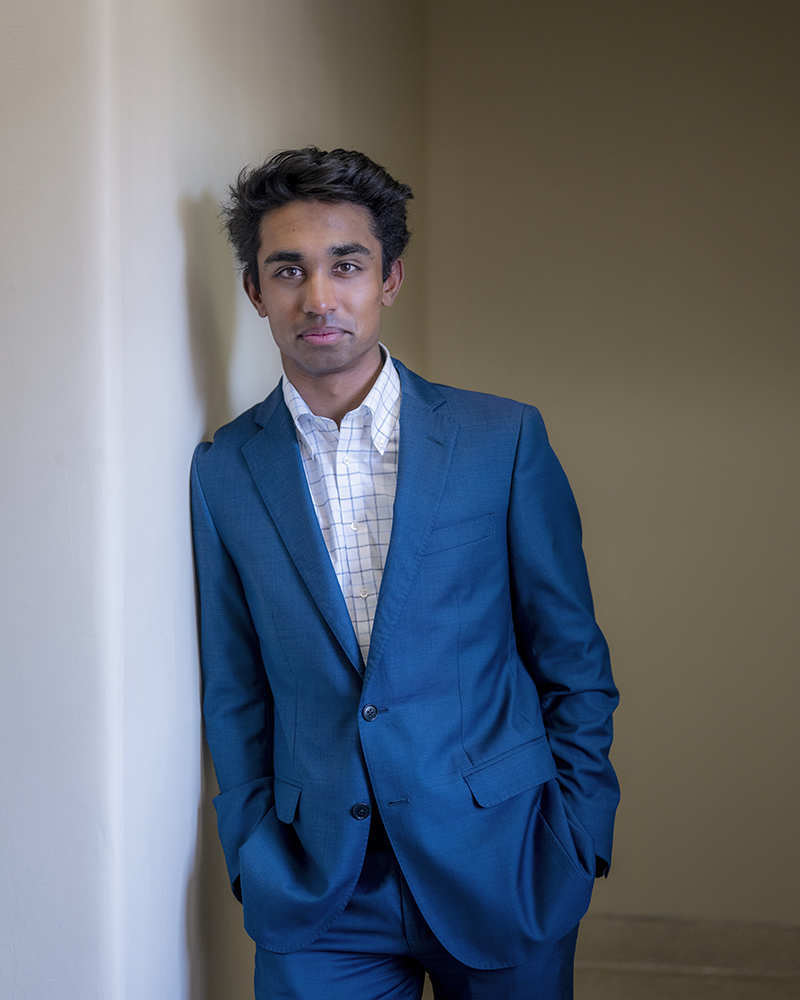
Sheil Iyer BS ’26
Machine Learning Engineer, Glia Intelligence
What drew you to the Bachelor of Science in AI program when it was still new?
Dalton: I wanted to learn about an exciting field from some of the newer AI professors who have a ton of experience and knowledge.
Carson: Everything in the field of computer science seems to be heading towards AI. I did not want to fall behind the current trends.
Sheil: A lot of it comes down to how I was raised. My parents are my heroes, and watching them operate at the highest level in their respective fields instilled in me a standard for what it means to show up and do meaningful work. AI was always the space that felt most alive to me, the most consequential, the most worth going all in on. So when the AI program launched, I was already two years into my computer science degree and the decision was obvious. It felt less like picking a major and more like doubling down on something I already knew was the future.
What was it like being part of the very first graduating class?
Dalton: Being part of something new is exciting and challenging at the same time, but the support systems Ohio University has in place made this a good challenge. The advisors at the Russ College made this whole new process worthwhile.
Sheil: Being part of the first graduating class means a lot to me, but not just for the personal milestone. More than anything, I want it to mean something to the next person. A few years down the line, I want some ambitious kid to look at what this first class was able to build, the reputation we established, the things we went on to do, and realize that if we could do it coming out of a brand new program, so could they. The thought of being someone's north star when they're not sure things are going to work out is what actually drives me.
When you're early, you're not just passing through a program, you're shaping what it becomes. There's a responsibility in that, and that pressure brings out the best in you.
Carson: Being in a graduating class of three people made me a lot closer with Sheil and Dalton. We had taken classes together during the regular computer science curriculum but with the small AI class sizes we were able to have more open discussions with each other and the professor.
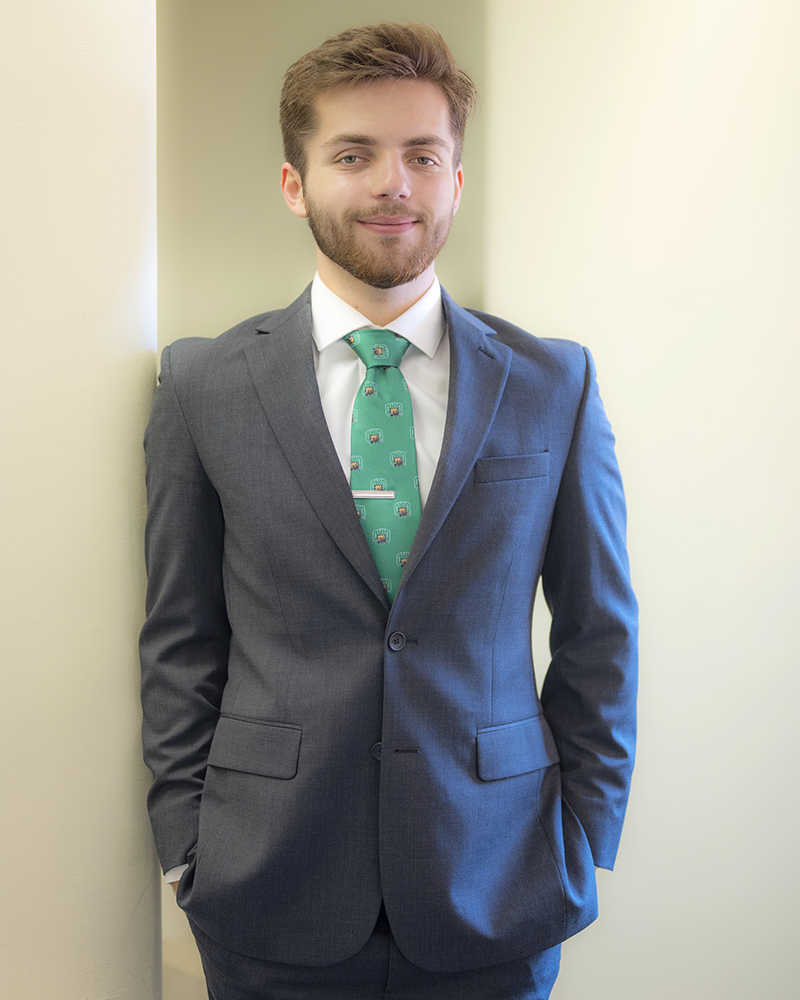
Carson Bartholic BS ’26
Incoming graduate researcher at Ohio University
Tell us about a project, class or experience that shaped your skills
Dalton: The last class in the sequence, AI 4010 on neural networks, really helped me understand how complex AI systems work at their simplest level. That course sharpened my problem-solving skills. For senior design (AI 4560/4561), my team and I got to design an AI solution for our clients. Working with a team to navigate customer communication and deploy a web app by the end of the semester really excited us and our clients. I’m very thankful for how that experience shaped my communication and problem-solving skills.
Sheil: The course that genuinely shaped my technical foundation was Deep Learning. Working through backpropagation, CNNs, RNNs, attention mechanisms; it was one of those classes where the complexity was the reward. You came out of it actually understanding why these systems work the way they do at a fundamental level, not just how to use them.
What brought all of it to life was working at Glia Intelligence, an AI transformation and engineering firm, where I was doing applied AI research in a real production environment. I led the development of a large-scale behavioral research project evaluating frontier language models, and doing that kind of work meant I had to deeply understand post-training processes, how different model architectures diverge in behavior, and what that means at inference time. The gap between classroom theory and production AI closed fast, and that's also where the deep learning foundation really proved its worth. I signed a full-time offer with Glia before the start of my second semester of senior year.
Carson: In AI 4010 - Foundations of Deep Learning, our final project was designing a convolutional neural network (CNN) for image classification. We had been learning the math behind each step of the process throughout the semester and putting things together helped to reinforce all the difficult concepts we learned in a way that can actually be used in industry and research.
How has the program prepared you for what comes next?
Sheil: The program definitely gave me a solid foundation, but what really mattered was the ability to apply it to real problems. I led our senior design project with my teammates where we built a multi-agent AI orchestration platform. It's the kind of work that sits at the intersection of systems thinking and applied AI. We placed second at the Senior Design Expo, but honestly the more valuable outcome was just the experience of taking something ambitious from concept to a working product under real constraints and inspiring your team to follow that same vision.
Layer that on top of the technical depth from coursework and the program ends up preparing you in a way that's hard to replicate. It's not just theory, it's the combination of knowing why these systems work and having actually built them that sets you up for a role like this.
Dalton: The projects I worked on in this program prepared me well for the kinds of challenges I’ll be facing after graduation at my company.
Carson: It has given me a solid foundation in many aspects of machine learning and other artificial intelligence topics.
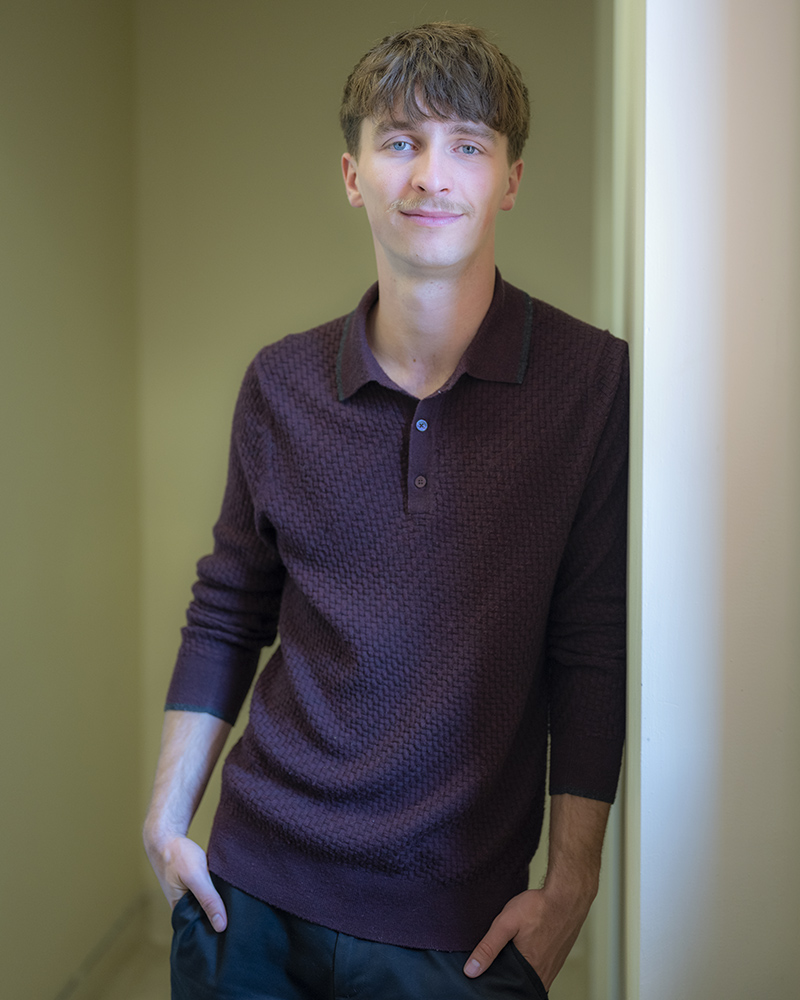
Dalton Muck BS ’26
Future AI/platform engineer
Tell us where you’re heading next
Dalton: I’m excited to work as either an AI or Platform Engineer, and to keep finding ways to connect with people and help them reduce manual, strenuous workloads.
Sheil: I'll be working as a Machine Learning Engineer at Glia Intelligence, on problems that are truly at the frontier of what's happening in AI right now: Running evals on frontier models, building reinforcement learning environments, and shipping production systems that directly impact client outcomes. The team has high velocity and the work is tied directly to real business results, which makes it both technical and high stakes. What excites me most is the ownership. It's a small team with a large scope, so the expectation is that you figure things out and deliver. I've already been part of this environment part time, so going full time feels like stepping further into something I know I can perform in.
Carson: I will be attending graduate school at Ohio University, continuing to work with artificial intelligence to further enhance my skills working with AI in real world applications.
How did you land an opportunity, and what role did OHIO’s AI program play?
Dalton: Every position I’ve received an offer for had 4-5 rounds of interviews. The program prepared me for that process in three ways: first, making connections and learning how to communicate through conflict. Second, learning how to learn and attack difficult problems. And third, teaching me relevant technologies and skills that I used verbatim in one of my technical interviews.
Sheil: I was introduced to Glia through a referral from someone who knew both me and the founder. That got me in the room, and from there it was on me to prove I could actually operate at the level of a lean, modern AI team. I started part time and delivered on real work from day one, including leading the development of PsychBench, a large- scale evaluation framework benchmarking the behavioral patterns of frontier language models across thousands of scenarios. Over time, that built into a full-time offer before I finished my degree.
The program gave me the theoretical grounding to perform once I was in it. When you're working on real AI systems from day one, having a curriculum that goes deep into how these models work matters far more than people might think.
Carson: I was connected to my faculty research partner by one of the AI professors. The professor thought I would be a good fit for the research topic after doing so well in the AI classes.
What would you say to someone considering the AI program at OHIO?
Carson: Even though the AI degree is in its infancy, the curriculum will allow you to learn many aspects of the field, giving you everything you need to start working on real world projects on your own.
Dalton: Stay curious and believe in yourself. Doing hard and scary things is the most fulfilling lifestyle.
Sheil: The AI field is moving faster than any other industry right now, and the people who are going to shape it are the ones who go deep and tune out the noise. This program puts you in that position. The curriculum is rigorous and genuinely reflects where the industry is heading, and the opportunities that open up when you combine that foundation with curiosity and ambition are ones I've experienced firsthand. I came in with a vision for where I wanted to be in this field and left with the technical depth to lead meaningful research, ship production systems, and step into a full time role doing frontier AI work on the other side of graduation.
I'd also be remiss not to mention the faculty. I genuinely can't think of a single computer science professor in four years that I didn't learn something meaningful from. That says a lot about this place. Ohio University and Russ College gave me the tools I needed to compete at the highest level. The opportunity is real. What you do with it is up to you.