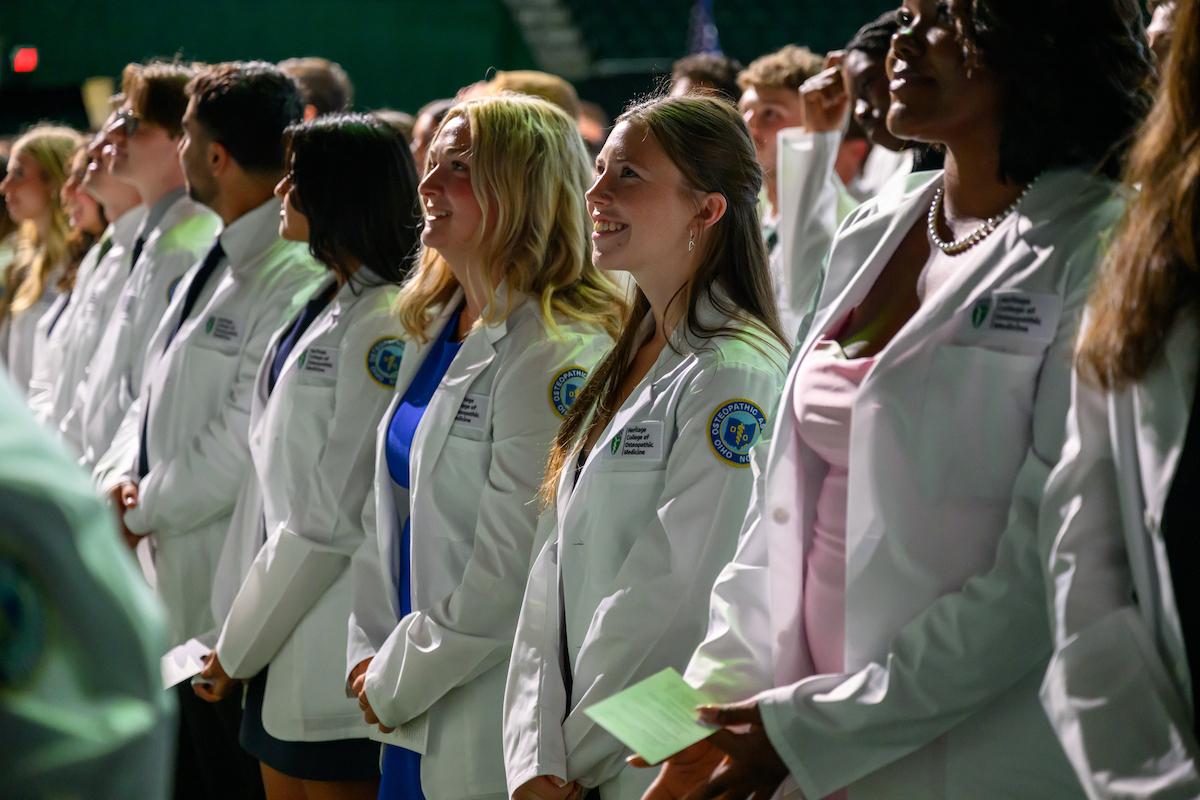
Image
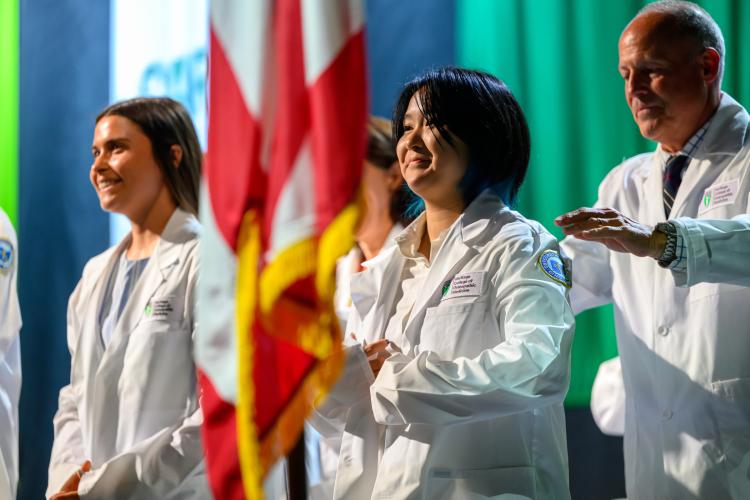
Ohio University’s Heritage College of Osteopathic Medicine officially welcomed the members of the Class of 2030 during the college’s 51st Convocation and White Coat ceremony. The event marks the beginning of students’ medical education journey with the presentation of a white coat and recognition of the highly competitive path they took to earn a place in the incoming class.
This year's class was selected from a pool of 4,896 applicants, with only 260 seats available across the college's three campuses. Demand for admission continues to grow, with the Heritage College already receiving 3,158 applications for next year's entering class.
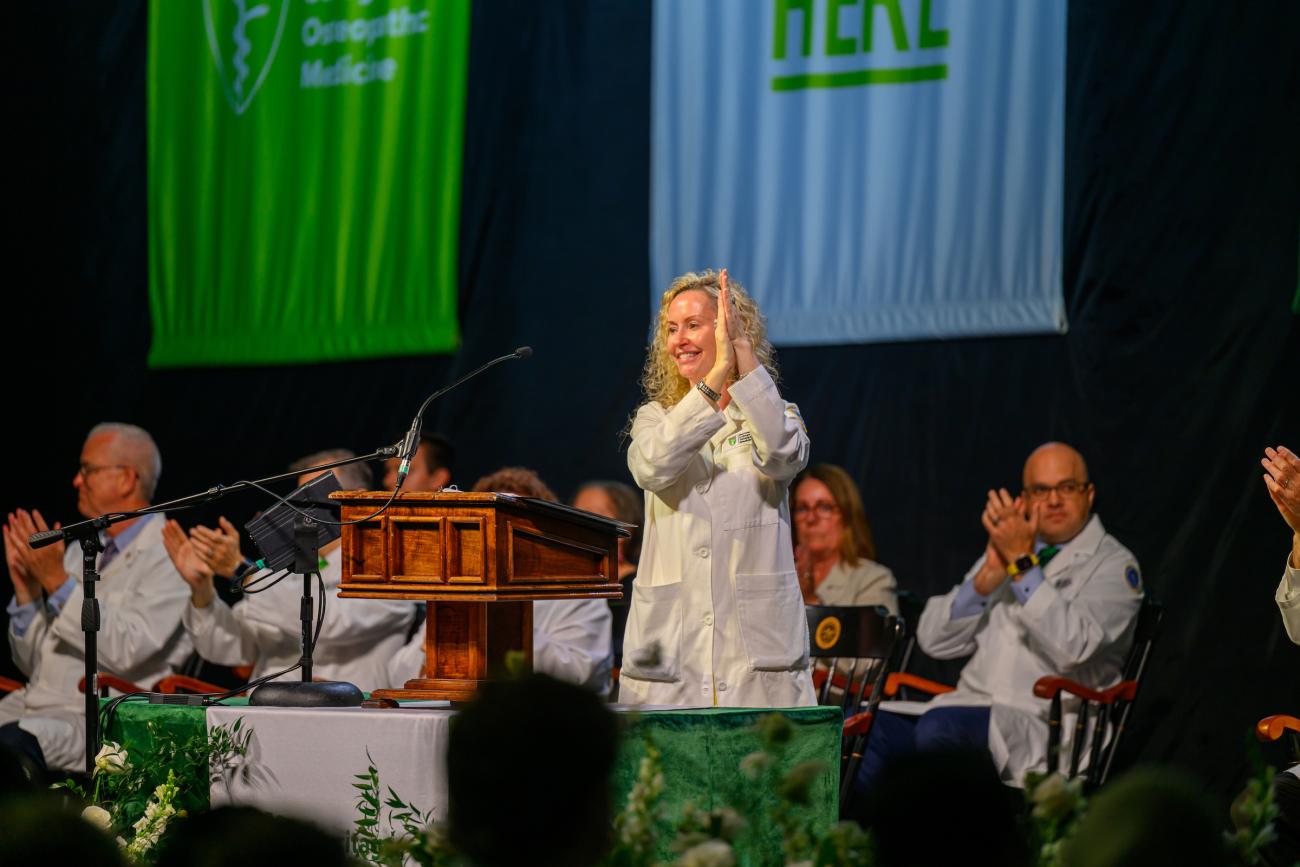
During the Aug. 7 ceremony, Jennifer Gwilym, D.O. ('03), interim senior dean of the Heritage College, reminded students that their presence at Convocation was the result of both hard work and a rigorous selection process.
“Convocation is more than just a celebration of where you are. It's a statement about who you are becoming,” Gwilym said. “It's the moment you begin your transformation from student to healer.”
Gwilym emphasized that the white coat represents far more than academic achievement.
“It marks the beginning of a journey that will challenge and shape you, not only in knowledge and skill, but in character and compassion,” she said. “Today marks the beginning of something extraordinary, not only for you, but for every life you will touch throughout your journey.”
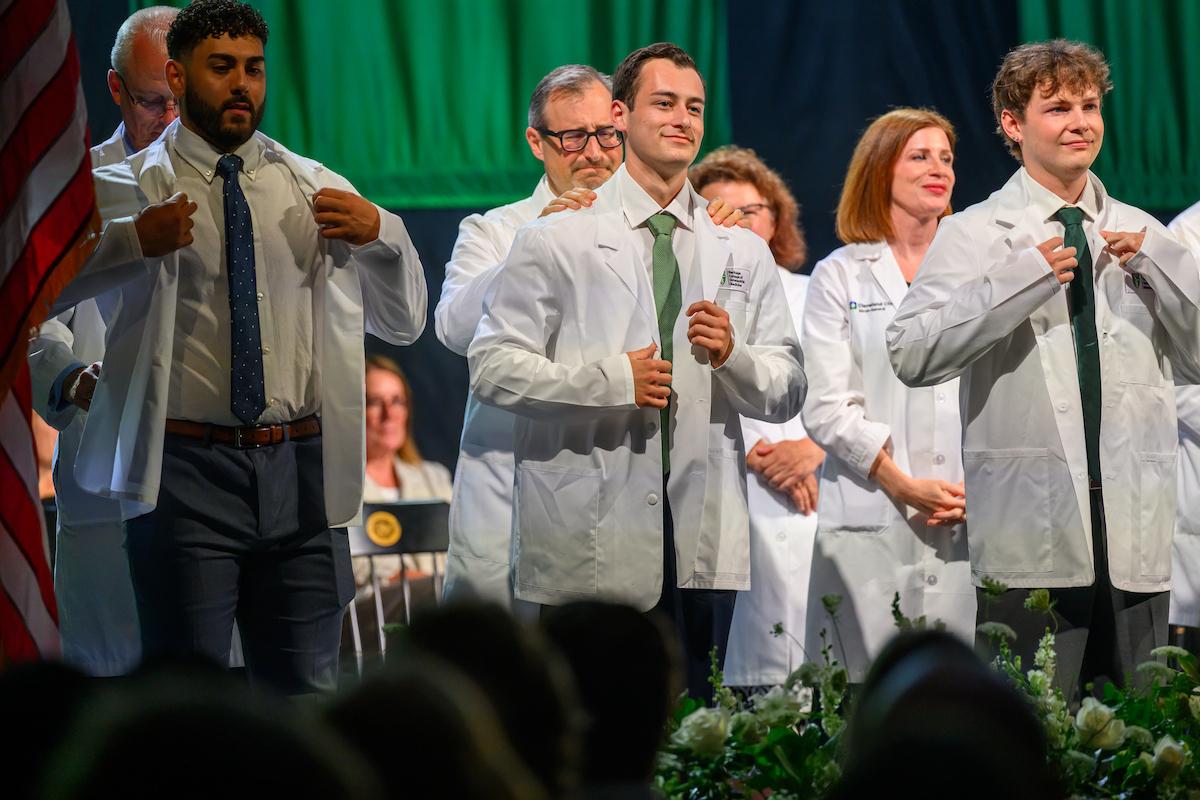
As the largest public medical school in Ohio, with more than 1,000 students enrolled across its campuses, the Heritage College strives to educate physicians from Ohio who will remain in Ohio and serve communities throughout the state. The incoming class reflects that mission, with 92% of students coming from Ohio and 11% identifying as first-generation college students.
Acknowledging the self-doubt many students experience when entering medical school, Gwilym reassured the class that they had earned their place among a highly selective group of future physicians.
“You didn't land here by accident,” she said. “You were hand-picked because we believe you possess the potential to be an extraordinary physician.”
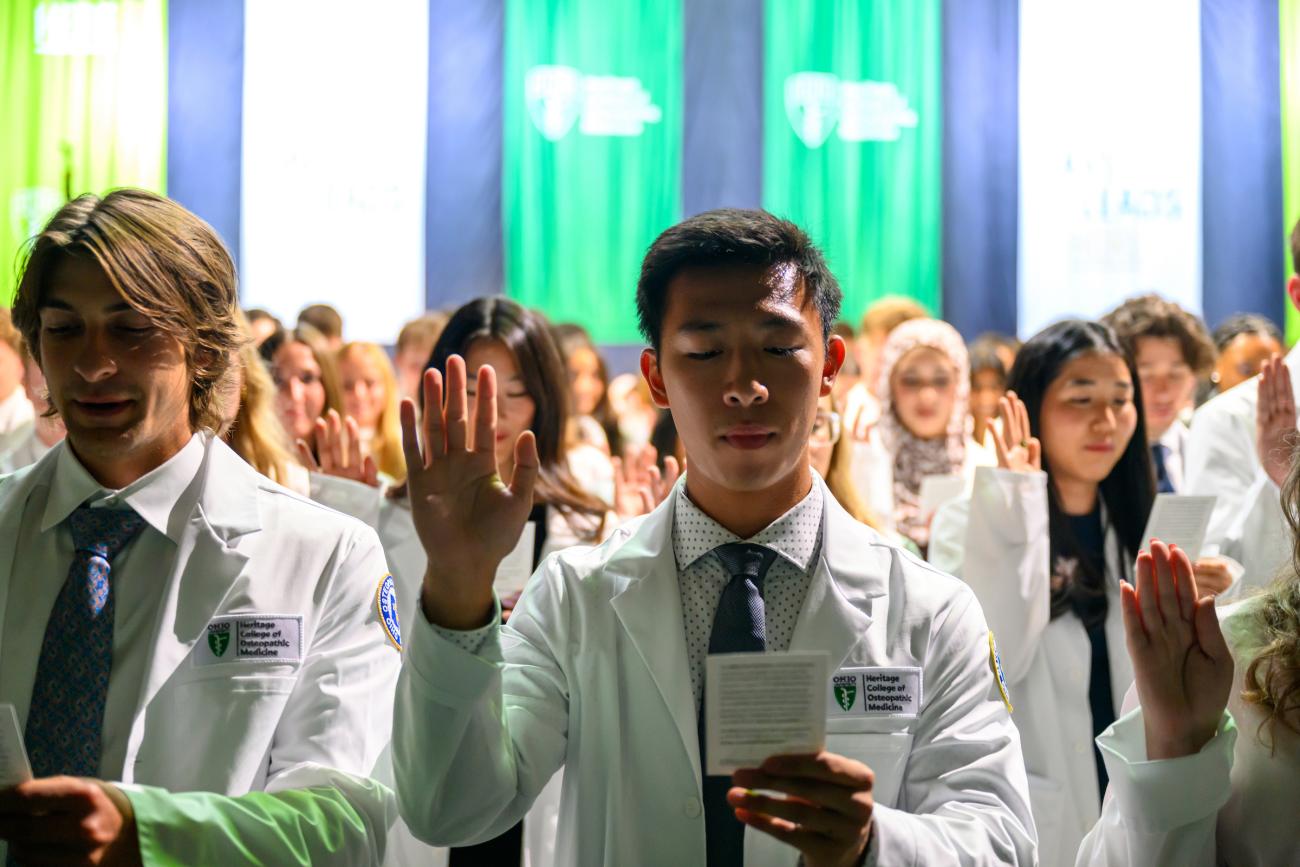
While academic excellence played a role in admissions decisions, Gwilym said the college also sought students who demonstrated “compassion, resilience and a deep commitment to serving others.”
For many students, those qualities were shaped by personal experiences and a desire to make a difference in the lives of others.
Maurice Furet, who will attend the Dublin campus, said Heritage College stood out because of the sense of belonging and community he felt during the admissions process, something he didn’t sense as strongly at other institutions.
Furet said personal experiences with his family’s health inspired his interest in medicine.
“I knew medicine could have a profound effect not only on individuals’ health, but their long-term physical and mental wellbeing as well,” he said.
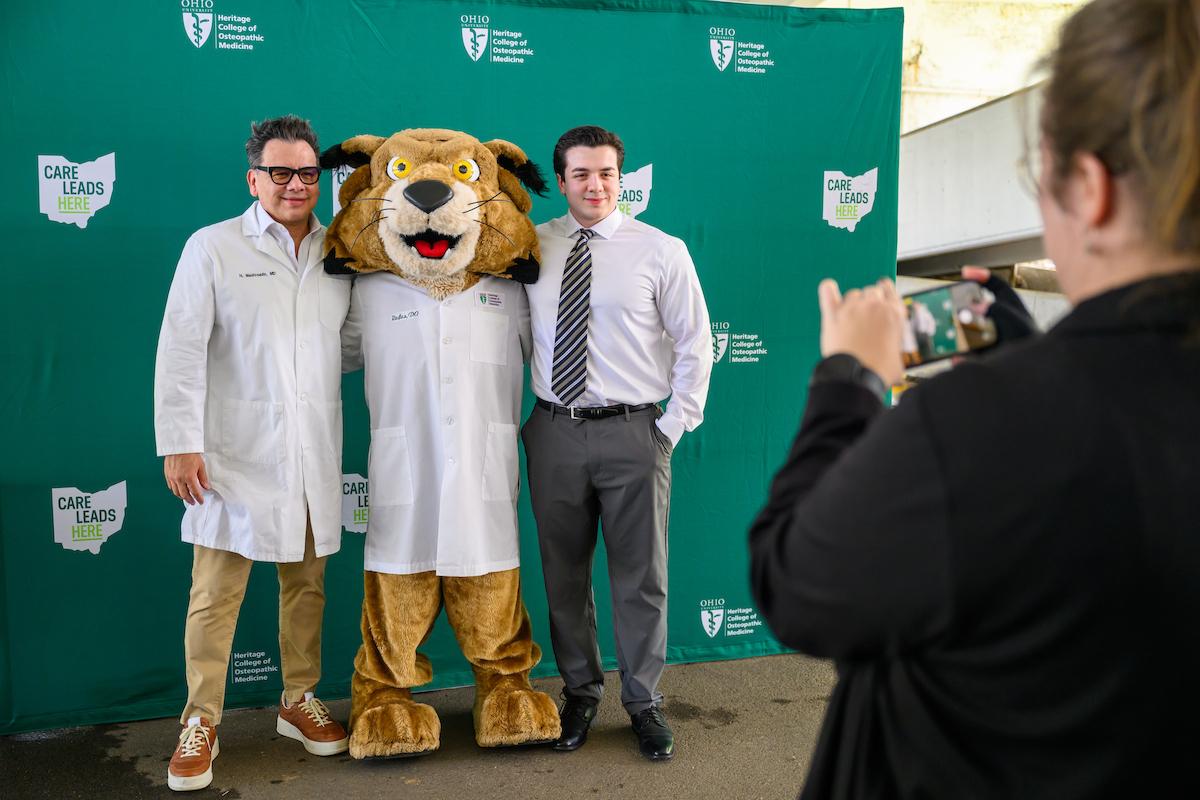
That emphasis on community was echoed by many students entering the Class of 2030.
Stephen Adeniyi, who will study on the Athens campus, said the college's welcoming culture influenced his decision.
“As soon as I stepped on campus here, they treated me as one of their own,” Adeniyi said. “When you have that massive support system, that is a stepping stone for you to do well and be the best doctor that you can be.”
Haley Humphreys of Jackson, Ohio, said Heritage College's longstanding commitment to rural Ohio resonated with her career goals.
“I’m from Southeastern Ohio and I want to stay in Southeastern Ohio serving rural communities, and so I thought this was the perfect place,” Humphreys said.
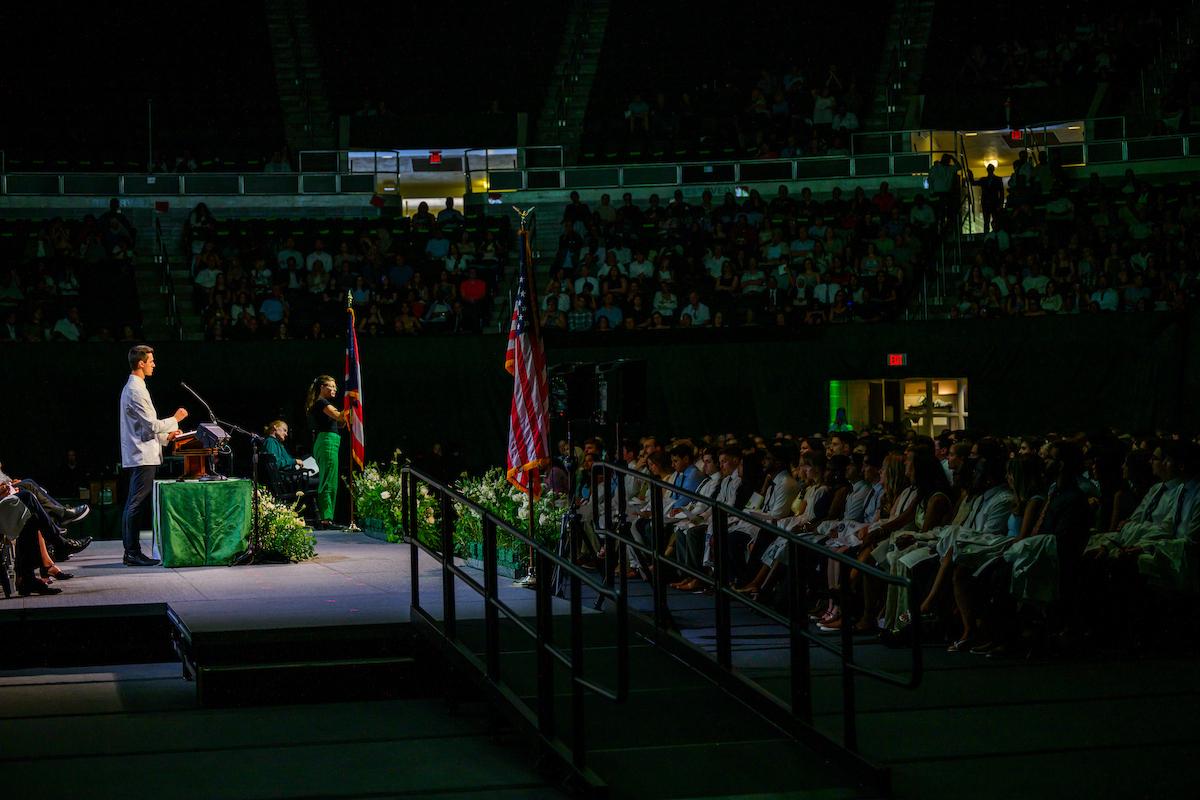
During Convocation, student speaker Ryan Steere, an OMS II student, president of the Athens Campus Student Government Association and the Heritage College’s National Student Government Association representative, told students that medicine is ultimately grounded in service to others and that the white coat represents a responsibility to patients and communities.
“When we first dreamed of becoming doctors, many of us imagined the stethoscope, the knowledge, the ability to heal,” he said. “But standing here today, I want you to realize we're not just putting on a coat, we're accepting a sacred responsibility.”
He challenged the Class of 2030 to listen carefully to patients, remain humble, advocate for vulnerable populations and support one another throughout their medical careers.
“At the very core of osteopathic medicine is this simple fact: It's about the patient,” Steere said. “In mind, body and spirit, I ask that you carry these words with you.”
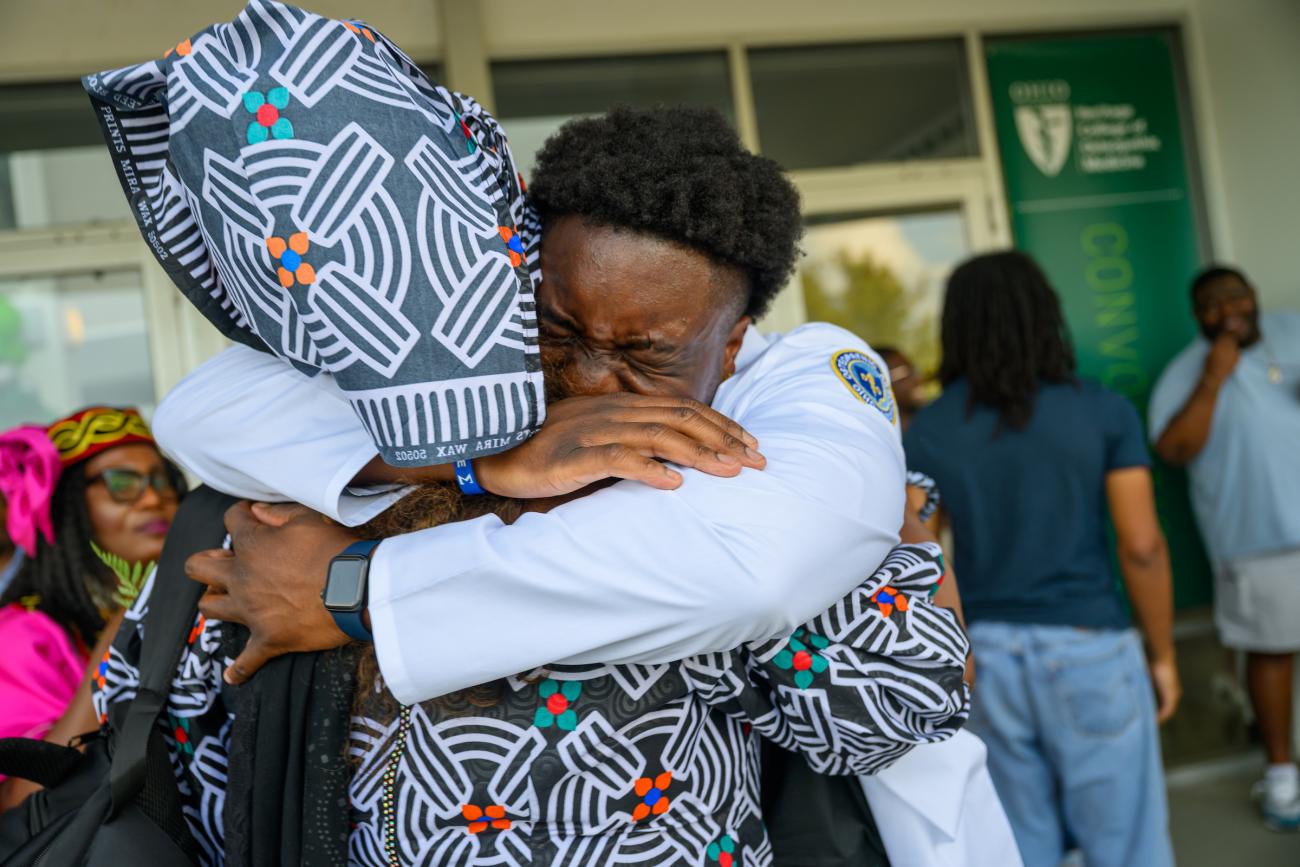
Steere also encouraged students to recognize the family members, friends and mentors who helped them achieve their goal of becoming physicians.
“You would not be sitting where you are today if not for the impact that your loved ones have had on your life,” Steere said. “It indeed takes a village, especially through the long journey it takes to become a physician.”
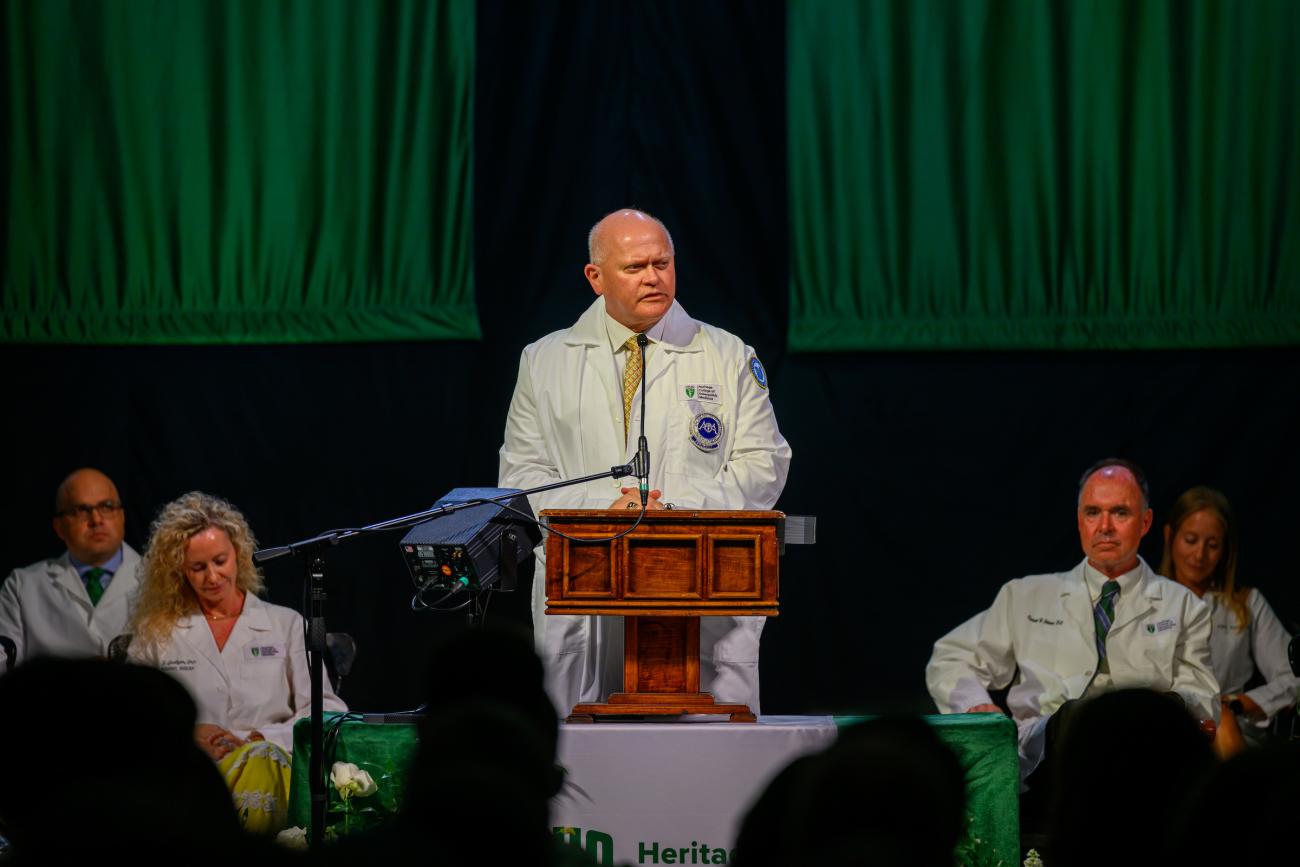
Richard Thacker, D.O., the 130th president of the American Osteopathic Association, welcomed students into osteopathic medicine, a profession that continues to experience significant growth nationwide.
Thacker noted that there are more than 207,000 osteopathic physicians and osteopathic medical students across the United States, with nearly 30% of all U.S. medical students pursuing a Doctor of Osteopathic Medicine degree.
He highlighted the Heritage College’s longstanding impact on Ohio.
“You are joining a college that has spent 50 years sending physicians into the communities of Ohio that need them most, and that has graduated more than 5,000 of them,” Thacker said. “That is the standard you inherit today.”
Thacker encouraged students to lean on one another throughout their training.
“The road ahead is demanding, and no one walks it alone,” he said. “Your classmates will become your colleagues and your support system, your faculty are dedicated to your success, and your families believe in your potential to make a difference.”
As he welcomed the students, Thacker asked them to remember that the white coat is more than a garment.
“It is a promise: to treat the whole person, body, mind and spirit, and to care for every patient who comes to you,” he said.