Image
Before receiving their white coats and officially beginning their journey as student doctors, members of the incoming class at the Ohio University Heritage College of Osteopathic Medicine spent orientation week learning an important lesson: a person's health is affected by much more than medical conditions alone.
Through a workshop called Rethinking Poverty and a community service project assembling hygiene kits for people in need, students gained a better understanding of the challenges many patients face every day.
“One of our goals as a college is to fill gaps in the physician workforce, especially in rural and underserved areas across Ohio,” said Jennifer Gwilym, D.O. (’03), interim senior dean of the Heritage College. “By helping students understand how poverty, access to resources and community support all play a role in a patient’s health and well-being, we can reduce stigma and encourage students to consider a career serving communities in our state that have the greatest need.”
Among Ohio medical schools, the Heritage College has one of the highest percentages of graduates working in rural and underserved areas. Nearly half of all graduates practice in primary care.
Understanding the challenges patients face
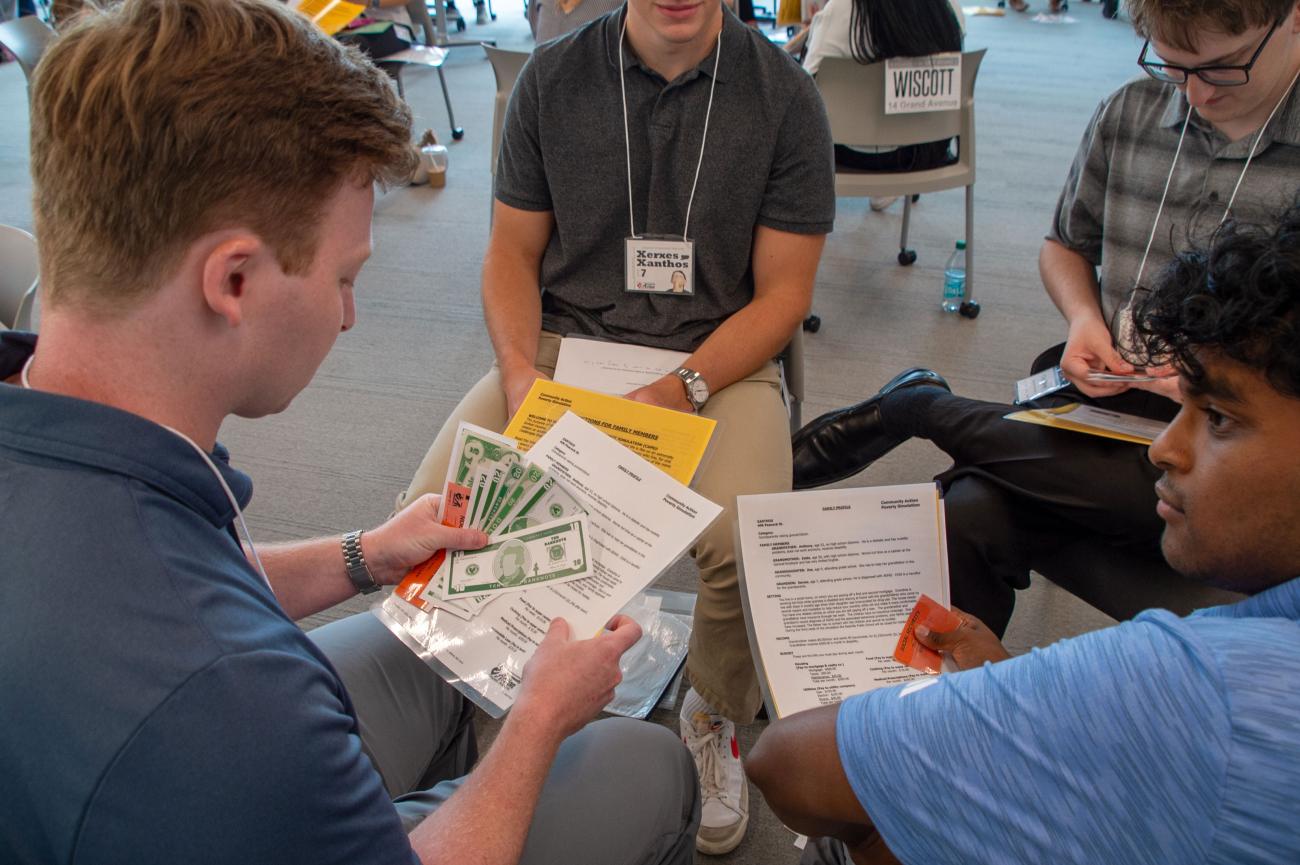
The Rethinking Poverty Experience, organized by the Office of Rural and Underserved Programs, was designed to help students better understand the daily realities of living with limited financial resources.
"As future physicians, you will care for patients whose lives are shaped not just by biology, but by housing instability, food insecurity, transportation barriers, childcare needs and many other social determinants of health," said second-year student Kate Hickey, who introduced the activity.
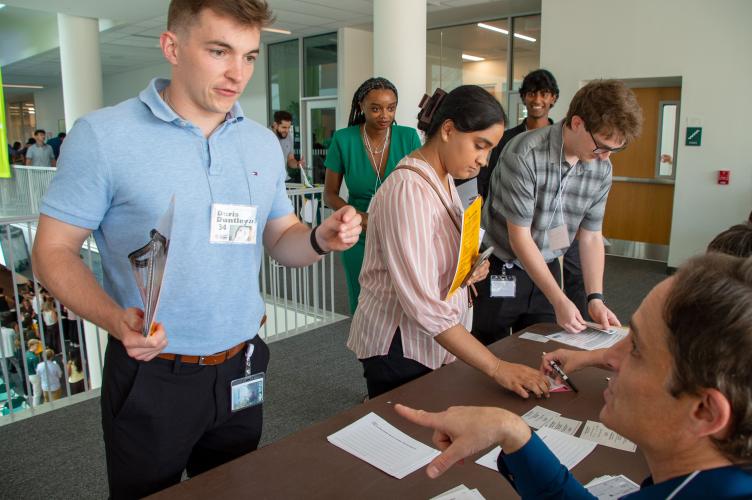
Students were divided into small groups that represented families. Each participant was assigned a role, ranging from a child to an older adult, and received identification cards, money and family information. Stations representing banks, schools, employers, social service agencies and even a jail were located around the atrium of Heritage Hall.
Throughout the experience, students worked to pay bills, find transportation, keep jobs and meet basic needs.
Sharon Casapulla, Ed.D., director of RUSP, explained that the workshop, developed by the Missouri Community Action Network, challenges common stereotypes about poverty and helps students understand how social and economic barriers can affect a person's opportunities and health.
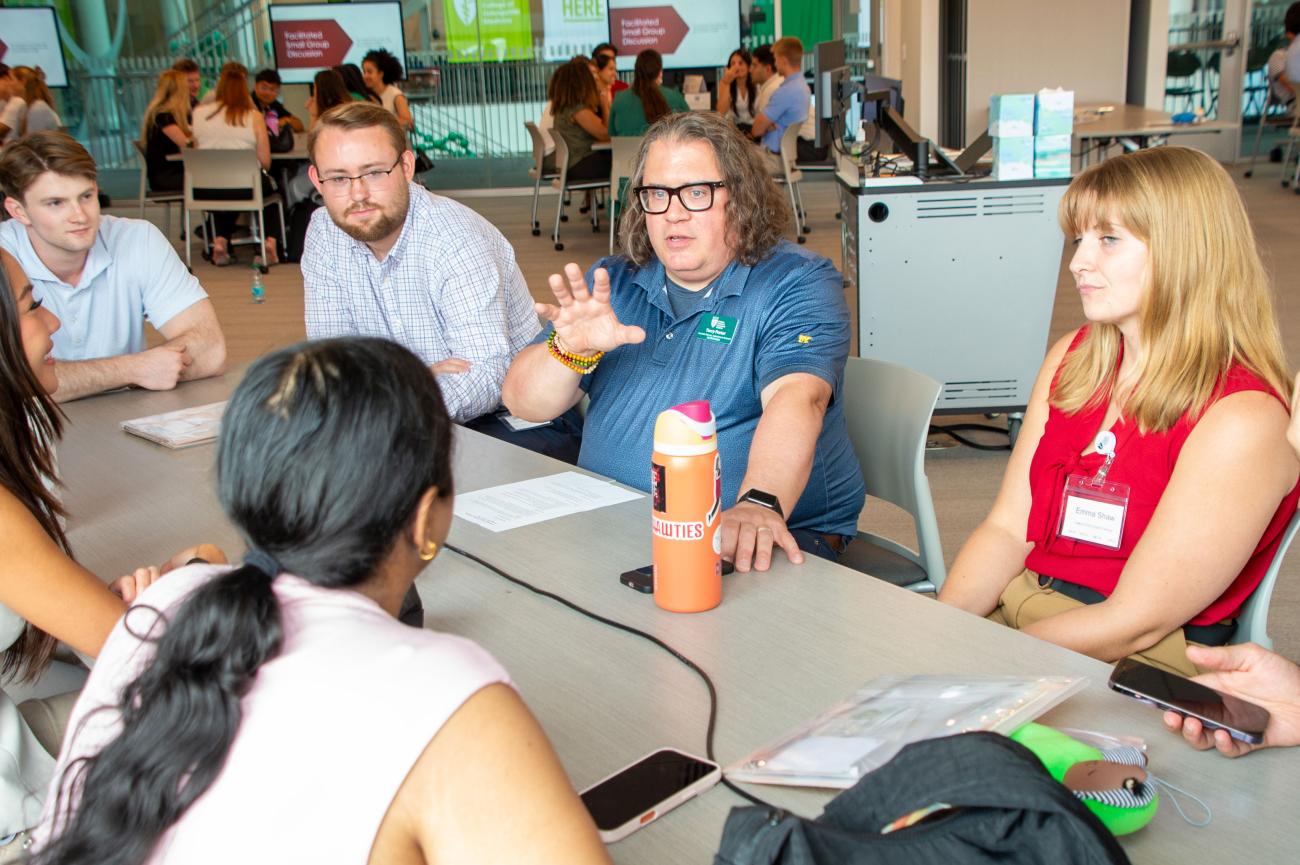
Many students said the experience changed their perspective.
First-year student Nolan Riley said the simulation quickly became overwhelming.
"It's been way more stressful than I thought it would be. I think it definitely changed my perspective on poverty itself and how people continue to manage their lives," said Riley.
Emma Kishiue, a first-year student from the Cleveland campus agreed, saying, "I'm learning about the struggles of people in poverty in our community, but also how to manage finances."
She said the activity reinforced an important lesson for future physicians.
"You'll have to encounter situations like this and be empathetic. I think that's the main thing."
For Sanjana Duvvuri of Aurora, Ohio, the experience highlighted how many different factors influence a patient's life and that physicians must continually challenge their own assumptions to understand what patients may be dealing with beyond the medical issues that brought them to the doctor's office.
"It will definitely help inform me and stay culturally aware and competent, knowing what's going on in the community you're serving," she said.
Transportation barriers stood out to Carter Carpenter of Mount Vernon.
"The biggest surprise is the transportation part," Carpenter said. "I actually get it now."
He noted that in many rural communities, patients may not live close to a hospital or physician.
"As a physician you may see a lot of patients, but there's a whole lot of people in your county you might never see because they're 50 or 60 minutes away and they can't get to where you are," he said.
Putting lessons into practice
The day after the workshop, before receiving their white coats during convocation, students put those lessons into practice by participating in a community service project. It was the first time the college planned a service project for incoming students during orientation week.
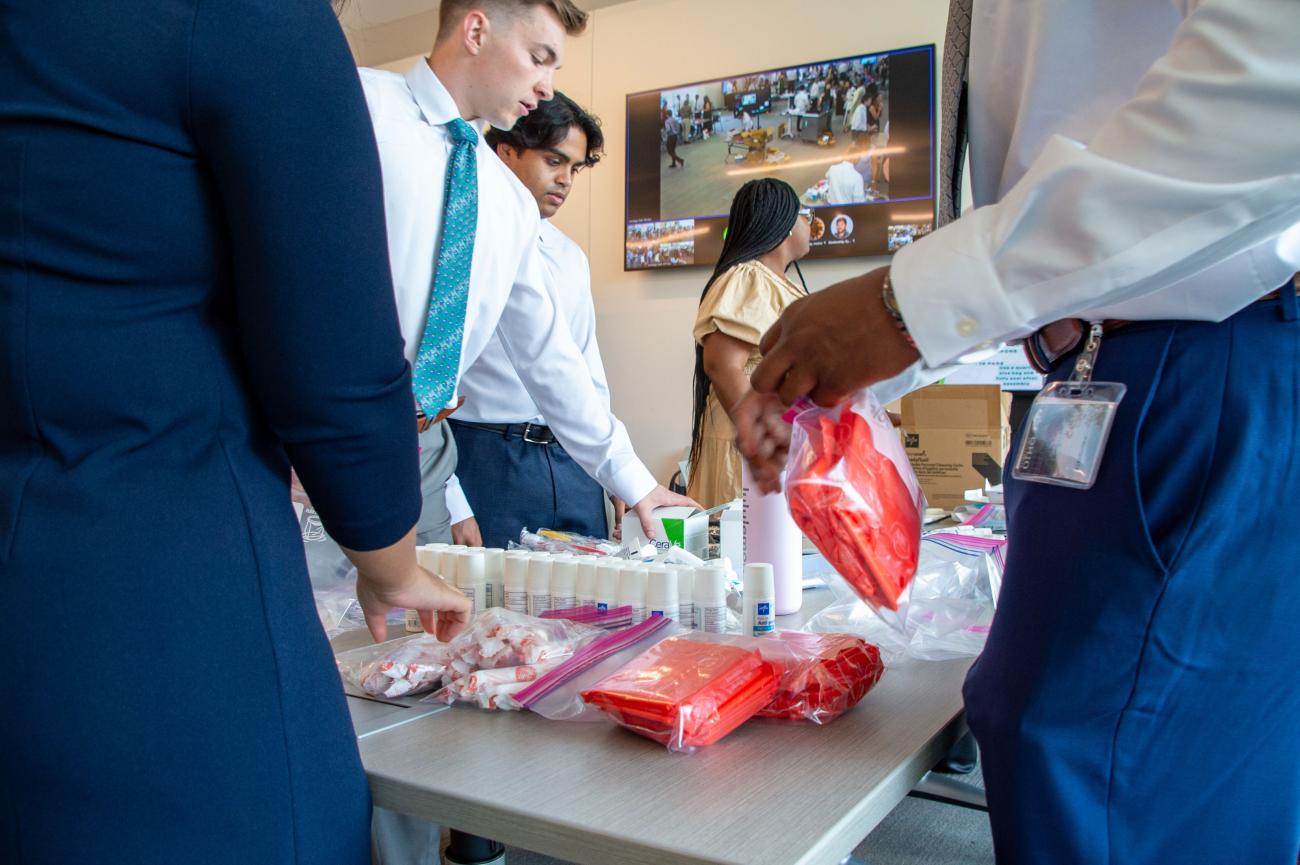
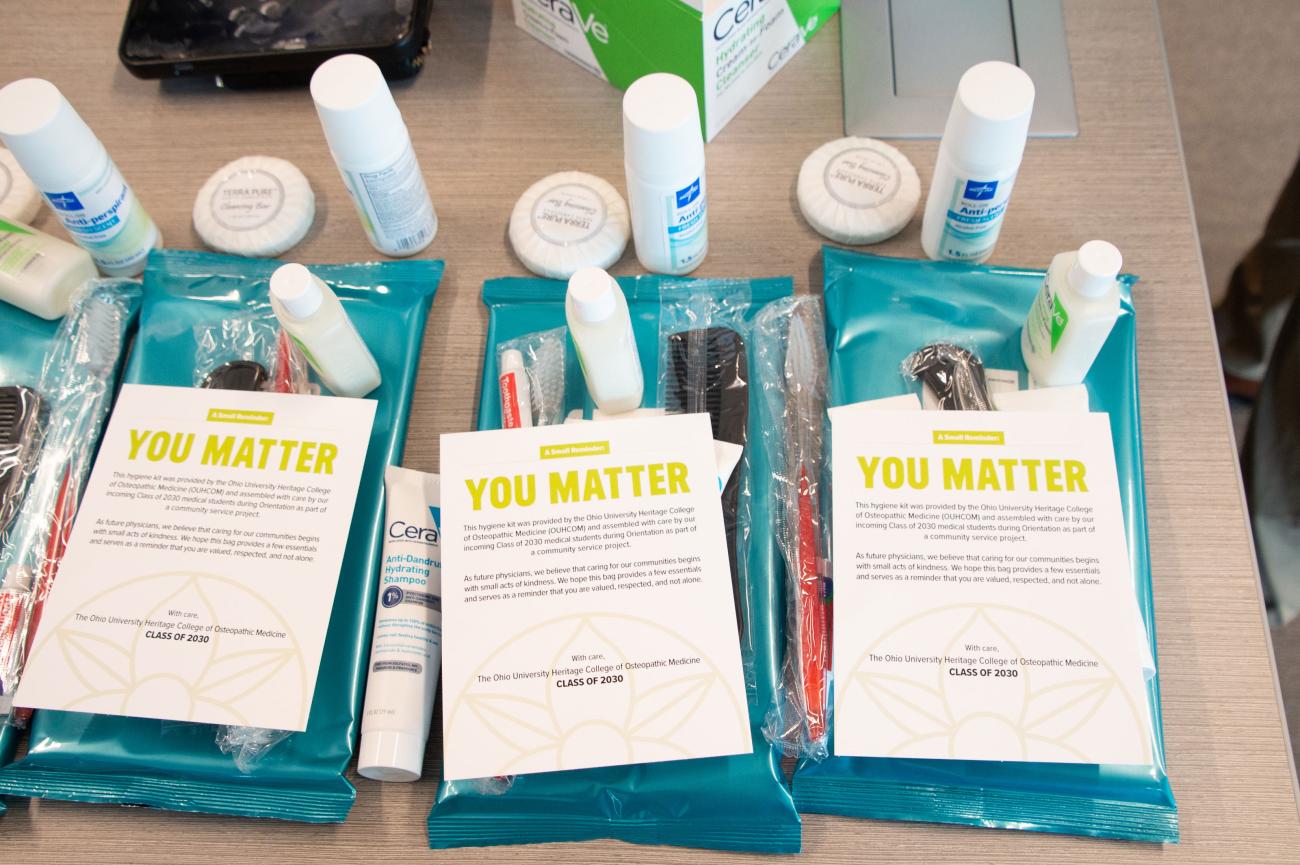
In small teams, students assembled 900 hygiene kits and 200 feminine hygiene kits that will be distributed to community members in need throughout Athens, Dublin and Cleveland.
Donations from the Heritage College, CeraVe and Columbus dentists supported the project.
"At the Heritage College, service isn't simply something we do. It's part of who we are," said Kayla Duty, assistant director of student affairs, who helped lead the project. “Thank you for beginning your medical school journey by serving others.”
Duty reminded students that physicians serve their communities both inside and outside the clinic.
"As future osteopathic physicians, your responsibility extends beyond caring for patients in the exam room," she said. "You will be advocates, leaders and trusted members of your communities."
She encouraged students to remember that each hygiene kit represented much more than basic supplies.
"It is a tangible expression of care, respect and hope for someone in your community," Duty said. "It also reflects the osteopathic philosophy of treating the whole person and recognizing the social factors that influence health and well-being."
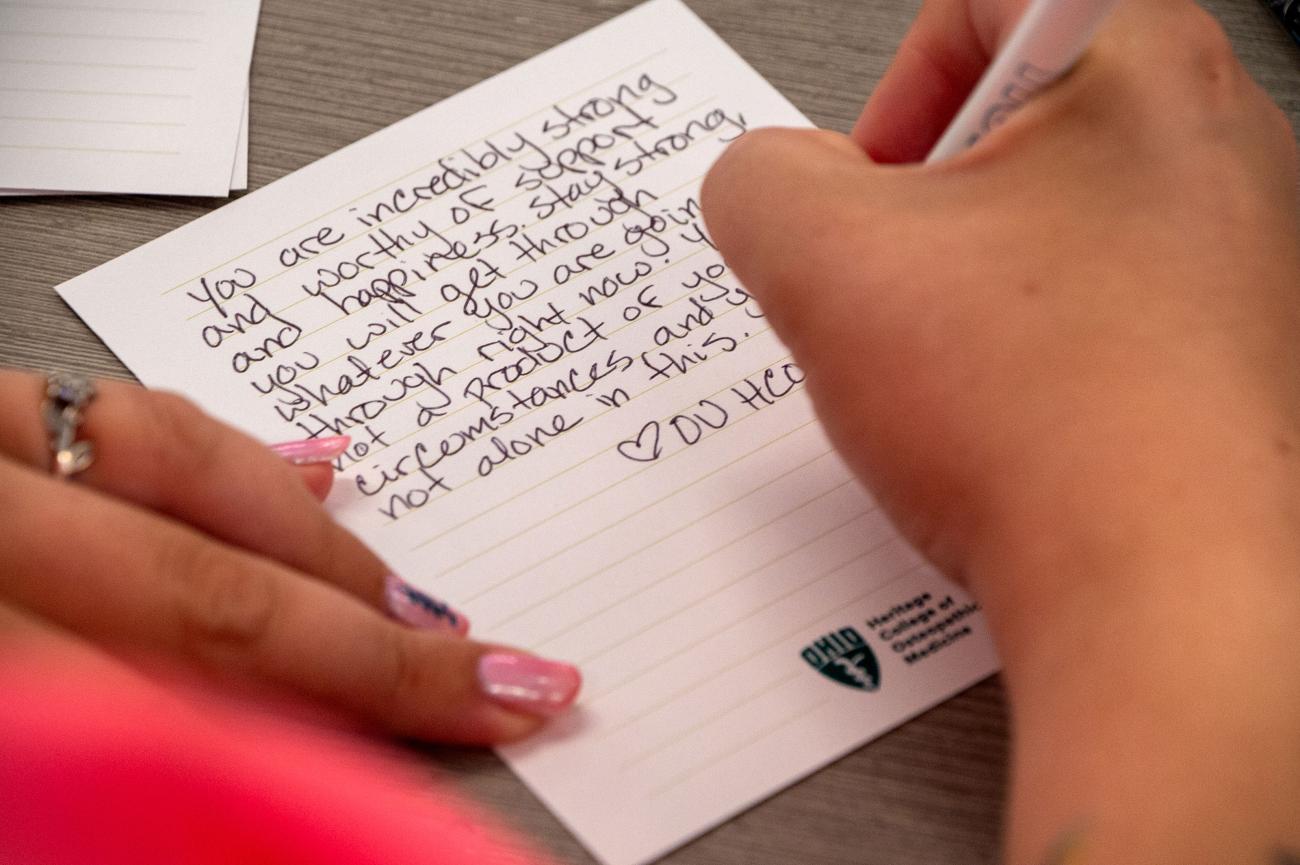
Students included handwritten messages of encouragement in each kit.
For Trystine Chellis of the Dublin campus, those notes were an opportunity to offer support to someone facing a difficult situation.
"People that are getting these resources are probably people that are going through a tough time," she said.
When asked what she wanted the notes to convey to those receiving them, she said, "Making sure they're not alone and making sure they know that the circumstances they're going through don't define them."
Connecting service and osteopathic medicine
Several students said the service project felt like a natural extension of the lessons learned during the poverty workshop.
"When we did [the Rethinking Poverty] experience, we talked about how stressed out we were from the activity even though we are not actually in that situation…It was interesting to see how much we didn’t know ourselves about poverty, and you realize how many people are impacted by it," said student Tara Bhatnagar. "We ran out of money for groceries, we got evicted and all those small things really add up."
She said the hygiene kits addressed some of those same struggles.
"Basic necessities are so important," she said. "It's important that we give back to the community that we are going to be a part of really soon."
Athens campus student Max Welsh said the week’s activities reinforced that future physicians must remember that patients facing difficult circumstances are often doing the best they can.
"As providers, we need to keep that in mind," Welsh said. "As long as we have a little bit of empathy toward that, I think we're in a good place."
Welsh also said community service and advocacy are important parts of osteopathic medical education.
"I think providing health care, especially osteopathic health care with that holistic mindset, stretches beyond health care itself," he said.