Image
UCM
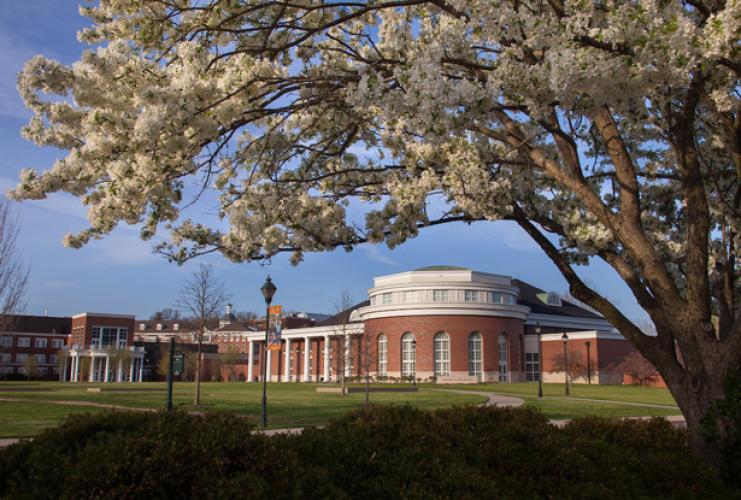
Walter Hall
The Ohio University Board of Trustees received an update on initiatives underway as part of implementation of OHIO’s Dynamic Strategy, now in its third year, during meetings on Thursday, Oct. 15, and Friday, Oct. 16, on the Athens campus.
Additionally, President Lori Stewart Gonzalez highlighted that the University welcomed more than 7,700 new students across its campuses, medical schools and online and how following the New Student Convocation during opening weekend, students gathered on College Green for an involvement fair featuring hundreds of student organizations and opportunities to connect with the OHIO community. Gonzalez also reflected on her September State of the University address, which celebrated OHIO’s distinctive strengths while emphasizing the importance of coming together to navigate challenges and protect the University’s legacy.
Gonzalez also celebrated milestones in philanthropy and alumni engagement, recognizing the naming of Burtch House in honor of alumnus Bruce Burtch, whose experiences with the Cambridge educational model helped inspire the Honors Tutorial College, the dedication of a Manasseh Cutler statue funded entirely through alumni gifts and the opening of Hurley Field, a new practice facility for the Marching 110. She also highlighted the Takes This Town alumni initiative, which brought approximately 650 alumni and friends together in cities across the nation and Homecoming, which welcomed alumni back to campus to celebrate OHIO traditions and connections across generations.
Additional highlights from the Board of Trustees’ October meetings include:
Dynamic Strategy Year Three Implementation and Planning Framework for Years 4 to 6
Interim Executive Vice President and Provost John McCarthy shared an update on initiatives underway through the LEARN and WORK pillars during the third year of implementation of OHIO’s Dynamic Strategy. A major LEARN initiative focuses on reducing DFW rates in gateway courses, while another effort seeks to define teaching excellence through a T1 designation. Additional goals include improving student learning and engagement, supporting faculty-led assessment and course redesign, integrating academic support resources and creating a scalable, sustainable model for cross-unit collaboration. WORK initiatives aim to strengthen OHIO as a destination employer by prioritizing employee well-being, listening and responding to employee needs, expanding employee excellence and fostering stronger communication and shared purpose.
Vice President for University Communications and Marketing Robin Oliver also shared that planning is underway to extend the Dynamic Strategy through 2030. During the 2026-27 academic year, University leadership will engage stakeholders across OHIO to build on the first three years of implementation, establish shared goals and key metrics and align priorities across units and strategic pillars. The next phase will balance innovation with long-term financial sustainability while strengthening the value OHIO delivers to students and the state. The proposed plan, including key actions and resource allocations, is expected to be presented to the Board for approval in June 2027.
Enrollment Management Update
The Board received an update from Vice President for Enrollment Management Candace J. Boeninger on preliminary fall 2026 census headcount and enrollment trends across undergraduate, regional campus, online, graduate and medical programs. While overall enrollment is down 3% year over year, OHIO remains in a historically strong period, with an incoming first-year class of just under 4,300 students, reflecting an intentional approach to managing and shaping enrollment. Boeninger highlighted the University’s three-year recruitment pipeline, which begins as early as students’ sophomore year of high school and builds a pool of 400,000 to 500,000 prospective students through college search platforms and other outreach efforts. She also noted a record four-year graduation rate of 60.3% among first-time, full-time Athens undergraduates and mentioned how the state’s new direct admission program is expected to benefit regional campuses. The update also included an overview of recruitment, enrollment marketing and pipeline development efforts in advance of fall 2027.
Course and Program Vitality Update
McCarthy discussed the course and program vitality analyses being conducted by Athens campus deans, including the factors informing the analyses and progress through the first two phases. The effort provides a consistent, University-wide, evidence-based approach to evaluating courses and programs and identifying where additional attention or changes may be needed. Phase one results included analyses of undergraduate and graduate programs, helping inform potential next steps such as adjusting course delivery methods, locations, section sizes or frequency of offerings. McCarthy emphasized that program vitality is multidimensional and not determined by an automatic score, and that the process will support more precise annual course reviews and informed decision-making across the University.
General Education Proposal
Vice Provost for Academic Affairs Sarah Poggione updated the Board on OHIO’s ongoing general education compliance obligations under House Bill 96, including a review of the BRICKS general education program and recommended changes to ensure compliance while enhancing the student experience. The proposed OHIO Core program would integrate civics, culture and society, artificial intelligence, STEM and computational thinking and entrepreneurship, innovation and workforce readiness. Organized around three components, foundation, exploration and integration, the new general education program is expected to launch for incoming first-year students in fall 2028.
OHIO Student Investment Programs
The Board received an update on the performance and progress of the OHIO Student Investment Programs, which provide hands-on experiential learning opportunities for students managing approximately $16 million of the University’s long-term working capital pool.
Established 25 years ago with an initial $100,000 investment, the programs have grown into one of the nation’s largest student-managed investment programs. The Student Equity Management Group (SEMG) and Fixed Income Management Group (FIMG) operate under the direct supervision of Associate Professor of Finance David Stowe, with administrative oversight from Chief Investment Officer David Gaume. Both groups continue to perform consistently with historical benchmarks while providing students with practical investment management experience.
Students highlighted the programs’ emphasis on professional development, including alumni conference calls, student-led seminars, industry and earnings report analysis, and presentations to the broader group. Members also compete in national stock pitch competitions, with the team recently placing second among approximately 200 teams nationwide.
Students also discussed ongoing efforts to incorporate artificial intelligence into their investment research through Project Atlas, as well as highlighted the continued value of alumni connections in supporting student learning and professional growth.
Community Standards Update
Interim Dean of Students Scott Bye and T. Dane Bennett, interim assistant dean of students and director of Community Standards and Student Responsibility, presented a community standards update to the Board. The update included four-year comparison data on student conduct trends, sanctions and case resolution methods, updated student experience survey data and testimonials and an overview of the department’s review process and assessment efforts.
Capital Projects
The Board approved several new capital projects, including:
In other business, the Board also approved: