Image
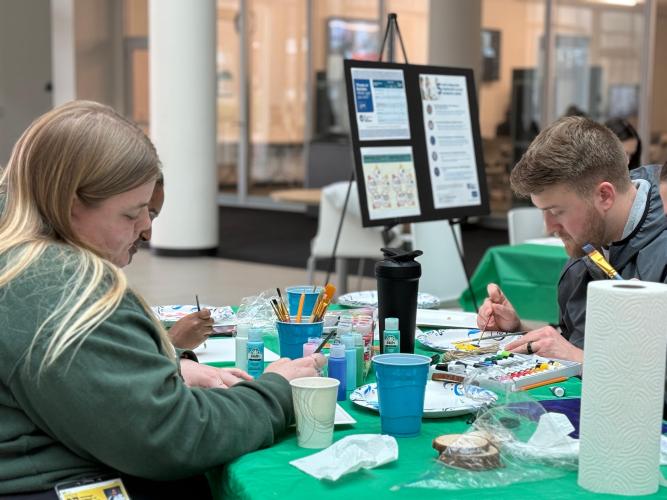
The Infectious and Tropical Disease Institute (ITDI) at Ohio University turned science into art recently, hosting a painting event to mark World Antimicrobial Resistance (AMR) Awareness week. The interactive session brought together students, researchers and staff to creatively explore one of the most pressing global health threats of our time.
Held on the Heritage College of Osteopathic Medicine’s Athens campus in the Heritage Hall atrium, the event invited participants to paint their interpretations of antimicrobial resistance, using color, symbols and imagery to represent bacteria, antibiotics and the consequences of drug misuse. Tables were lined with canvases, brushes and paint as Mario Grijalva, Ph.D., executive director of ITDI, briefly introduced the science behind AMR and why it matters for communities in Ohio and around the world.
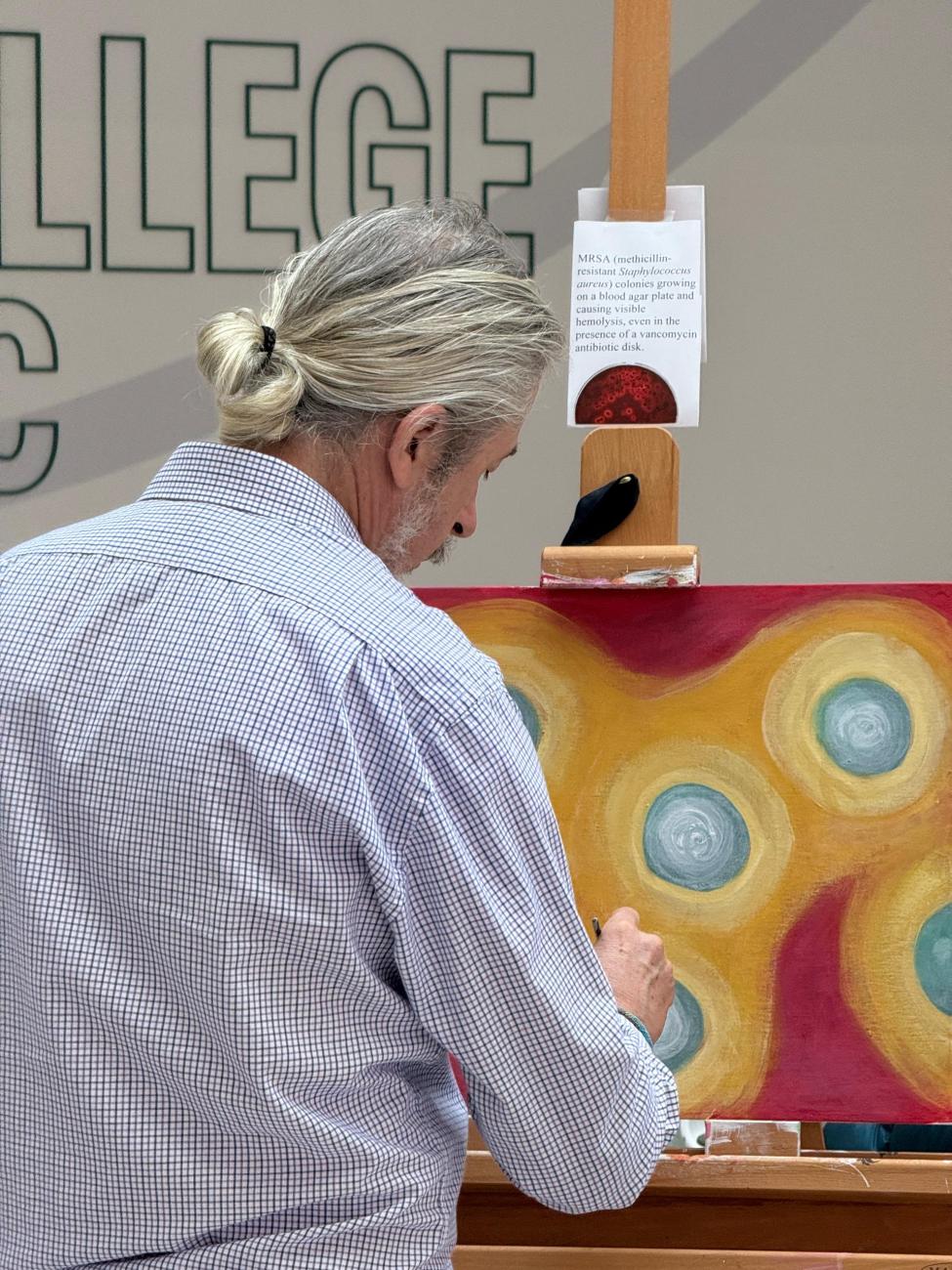
“Antibiotic resistance is one of the most important challenges we are going to face as a society in this century. It is already a major problem, and it is only going to get worse,” Grijalva said, explaining that raising awareness through art and creativity helps the fight against AMR.
“Painting is a medium that allows people to express themselves, but in the context of a medical and research environment, it also gives students and trainees a bit of a break,” he added. “Through creativity, they can release some of the tension and daily pressures they experience. Art is a good way to provide that breathing space while still sharing a serious message that we need to be thinking carefully about the challenges that antibiotic resistance poses to our society.”
Antimicrobial resistance is an urgent global public health threat, killing at least 1.27 million people worldwide and associated with nearly 5 million deaths in 2019, according to the Centers for Disease Control and Prevention.
More than 2.8 million antimicrobial-resistant infections occur each year in the United States. More than 35,000 people die as a result, according to the CDC’s 2019 Antibiotic Resistance Threats report.
Grijalva said ITDI has a group of researchers who are “actively pursuing studies to identify better targets for antibiotics by investigating the molecular mechanisms of virulence. Their work is instrumental in providing the basic knowledge we need to fight the ‘superbugs’ that are emerging.”
As participants painted, conversations flowed about antibiotic stewardship, the role of health care providers and how ordinary people can help slow resistance by following prescriptions, avoiding self-medication and supporting vaccination and infection-prevention measures. Many of the finished pieces featured powerful themes: the fragility of life, the race between drug discovery and resistance and hope for innovation and global cooperation.
“I think art creates an accessible way to talk about serious problems like antimicrobial resistance. It adds some fun to a serious topic and helps spread awareness,” said Samantha Hunter, a Ph.D. student in the lab of College of Arts and Sciences Director of Molecular and Cellular Biology Nathan Weyand. They study Neisseria gonorrhoeae and related species in the lab.
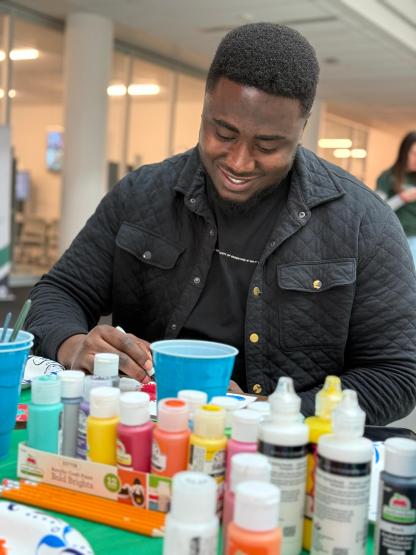
Shaniqua Kamara, an undergraduate in biological sciences, added, “People hear about antibiotic resistance, but I don’t think it’s always taken seriously. Having a fun activity where you can still express the issue is very valuable. These paintings can be hung in our lab or even used in different lab sections with undergrads, and that becomes another way to start conversations about a serious topic.”
The painting event is part of ITDI’s broader commitment to science communication and community engagement around infectious diseases. By pairing creativity with public health education, organizers hope that the messages from AMR Week will extend beyond the classroom and clinic, sticking in minds long after the paint has dried.
“We’ve found that students engage more freely and meaningfully in this setting than in a formal classroom, which makes it easier to learn about complex or difficult topics,” reflected Carolina A. Herrera Céspedes, one of the organizers of the event.
A graduate assistant at ITDI and a doctoral student in Communication Studies, Herrera Céspedes said she hoped the event provided students of the Heritage College of Osteopathic Medicine the opportunity to “learn something new about AMR and leave with a clearer sense of how future doctors of osteopathic medicine can help prevent resistance through their everyday clinical practice.”