Image

Nearly every music streaming platform increasingly relies on artificial intelligence-driven algorithms. School of Media Arts and Studies Director Josh Antonuccio discusses AI's role in the age of personalized music curation.
Alex Semancik | February 3, 2026
Share:
Whether it’s during a long drive, exercising or unwinding at home, sometimes you just want to hear your favorite tunes. Naturally, you shuffle through the songs you’ve taken the time to save, or “like,” on your preferred music streaming platform, but somehow, out of those countless songs, you always seem to hear the same ones.
That’s no accident. Nearly every music streaming platform increasingly relies on artificial intelligence-driven algorithms designed to analyze your listening habits and recommend songs that will keep you listening.
Some music streaming platforms like Pandora have actually been using algorithms to curate music for more than a decade. What’s changed is the importance of these algorithms in the music industry landscape and their effectiveness at filtering and recommending music—thanks to artificial intelligence (AI).
Streaming is everything in 2026. More than 80% of revenue from recorded music comes from streaming in the U.S., and it’s almost exclusively the preferred mode of listening for younger fans. Streaming can open the world of music for listeners giving them seemingly endless options. Spotify, for example, gives users access to a massive library of more than 100 million tracks.
Ohio University School of Media Arts and Studies Director and music industry expert Josh Antonuccio says that with so much content to choose from, AI algorithms are now being used by many music streaming platforms to shape the listening experiences of users.
“In this ocean of content, how do you get connected with something that you really care about—the algorithm is going to be the determining factor,” said Antonuccio. “It's attempting to tap into something very deep, personal and predictive.”
This “magical” recommendation system is known as a collaborative filtering algorithm. Your data is collected every time you listen to a song, “like” a song or save it to a playlist. This collection of preferences is stored and cross-referenced with the preferences of other users with similar tastes. The next time you go to listen to music, you are then recommended related songs based on this data. Artificial intelligence does much of the legwork of sifting through the data to surface that ultra-engaging musical sweet spot.
More engagement ultimately means more money, so like other streaming services, social media platforms and search engines, the music industry has embraced AI-driven algorithms as a core part of delivering content to audiences. When an artist can get their song recommended by the algorithm that gives them a big leg up in the music marketplace.
“To get recommended [by an algorithm] is now the way to get discovered on a platform,” emphasized Antonuccio. “A lot of people call this the attention economy because that’s essentially what it's a fight for. The back-end money is all tied to how much time a listener willing to give to something.”
What algorithms ultimately succeed at is personalization. People enjoy having content they want to consume available at their fingertips, and artificial intelligence is exceptional at delivering it. Antonuccio says that platforms like Netflix and TikTok are no different than music providers in this way.
“[On any of these platforms] you immediately feel the personalization, you feel like you can find things quickly,” he said. “If you’re not logged in as yourself you feel like you’re in a foreign country. This is one of the reasons why TikTok has become so popular”
Antonuccio says that streaming algorithms seek to recommend songs that balance novelty with familiarity, in a way that is powerfully appealing. This principle is known as “MAYA,” Most Advanced Yet Acceptable.
“People like things within a certain range. It can’t be too new that you have no idea what you’re listening to, but it also can’t be too familiar because then you’ll be bored by it.” explained Antonuccio. “In Spotify’s early days, when they developed their algorithm, it was initially set to just recommend new music, but they were accidentally allowing known songs to get recommended and they found that their engagement with that algorithm spiked.”
Some music streaming algorithms can be so effective that they tend to push users toward a hyper-specific genre or type of music. This concept is known as a filter bubble. Merriam Webster defines filter bubble as an environment and especially an online environment in which people are exposed only to opinions and information that conform to their existing beliefs.
“An algorithm might take a user in a certain direction, but it’s not necessarily a direction that’s going to open a listenr to new things,” Antonuccio said. “If someone takes you to a new restaurant that's outside of your comfort zone and you experience a type of food that you didn’t know existed, it broadens your world. Algorithms don't necessarily account for that kind of discovery. It can easily become a sort of digital cul-de-sac.”
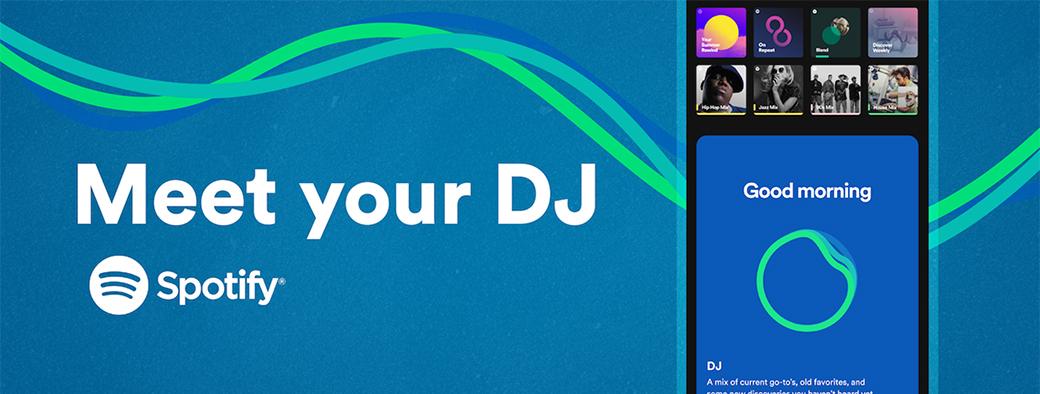
When it was released in Feb. 2023, Spotify’s AI DJ intensified personalization beyond even the algorithm. The AI DJ sorts through the latest releases as well as music listeners have previously played, reviews what users might enjoy and delivers a stream of “handpicked” songs. Listeners can then speak with the AI bot directly, sharing their preferences and expressing what they like and don’t like based on what they hear.
According to a release from Spotify, “the DJ is a personalized AI guide that knows you and your music taste so well that it can choose what to play for you. This feature, first rolling out in beta, will deliver a curated lineup of music alongside commentary around the tracks and artists we think you’ll like in a stunningly realistic voice.”
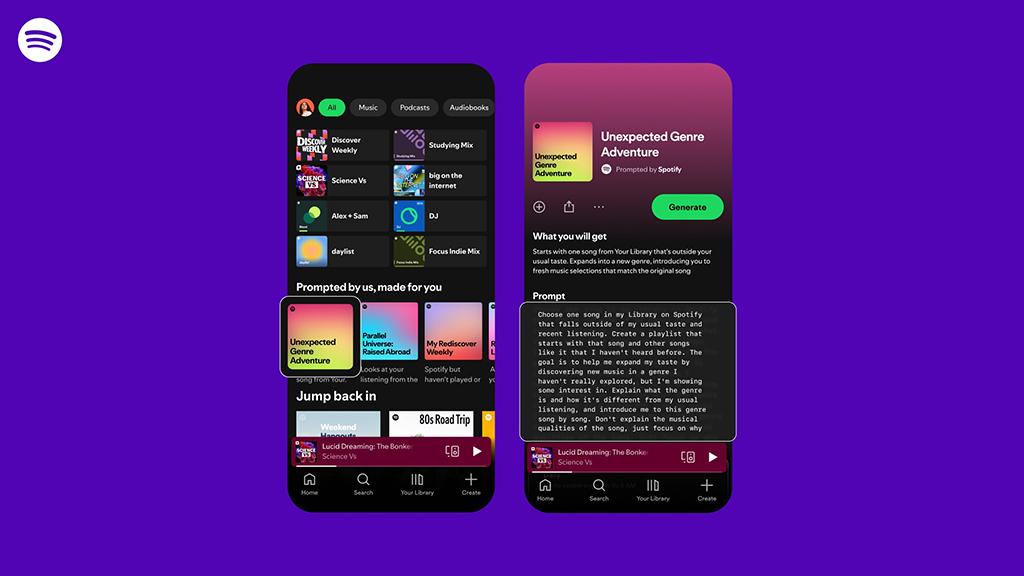
In Jan. 2026, Spotify expanded its use of AI even further by integrating AI prompt building directly into playlist creation. The new feature promises to hand control of curation back to the users, and invites them to “collaborate” with the algorithm.
According to the streaming platform, Prompted Playlists let users describe exactly what they want to listen to using their own words, then generates a playlist informed by their listening history and what’s happening in music right now.
With new artificial intelligence-based features becoming more common, Antonuccio believes Spotify is accelerating a reliance on AI for music listeners.
“With newly released features such as prompted playlists, Spotify is looking to build highly personalized algorithmic curation via AI,” he explained. “Of course, given the deluge of AI artists and AI-generated content on that platform, a user has no way of knowing whether their playlist recommendations are human or computer generated.”