Two days, one film
Despite a Level 2 snowstorm, filmmakers pushed through the conditions to collaborate, create and complete short films during the 24th annual 48-Hour Shootout.
Bella Moyers-Chavez, BSJ '26 | Photos by Emma Stevenson, BS '27 | April 1, 2026
Share:
A Level 2 snowstorm blanketed Athens in white on Friday evening, but inside Schoonover Center, 14 teams were not paying attention to the weather. The 48-Hour Shootout, put on by the School of Media Arts and Studies, gives student filmmakers one weekend to write, shoot and edit a complete short film from scratch. Now in its 24th year, the clock starts at 5 p.m. on Friday and does not stop until 5 p.m. on Sunday.
The competition began with a kick-off meeting where required elements for the film were revealed through a series of games and puzzles. Each team walked away with a genre, a mandatory prop and a required line of dialogue.
Senior Zack Reed's team drew the thriller genre with a cupcake as their required prop. Student producer Scarlett Fried's team drew the Western genre with a potted plant as their prop.
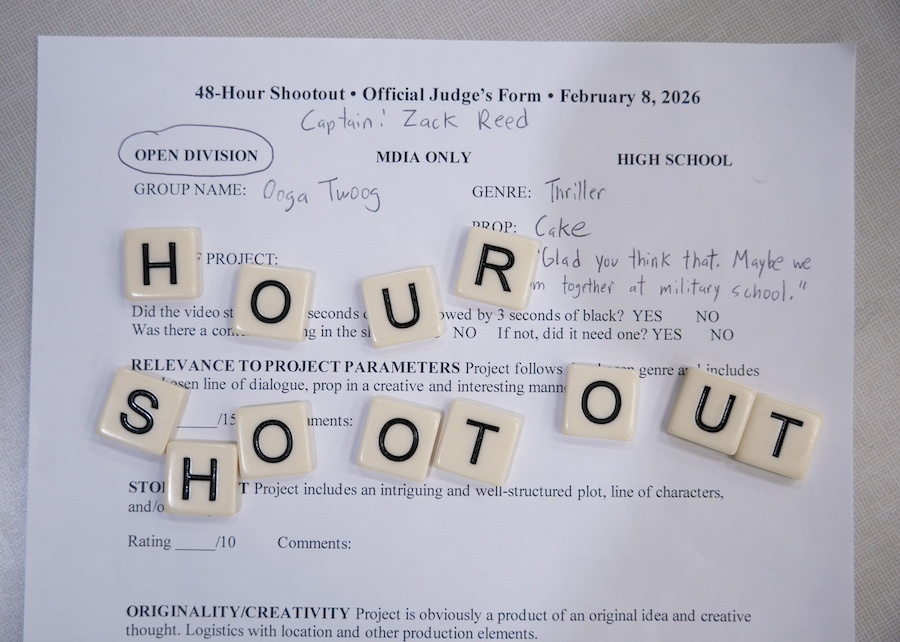
Photo credit: Anders Saling
The kick-off
With their elements in hand, both teams settled into Schoonover to figure out what story they were going to create. Reed's team worked two floors above Fried's as each group huddled separately over scripts and story ideas and the snow came down outside. Later during the night, the two teams crossed paths in the building, serving as a brief reminder of just how many people were grinding through the same pressure at the same time.
Reed's team pushed through the night, building out their thriller while working through ideas and shaping a script they felt confident taking into production. Fried's team did the same, mapping out a Western that would eventually pull them far outside the warmth of the building.
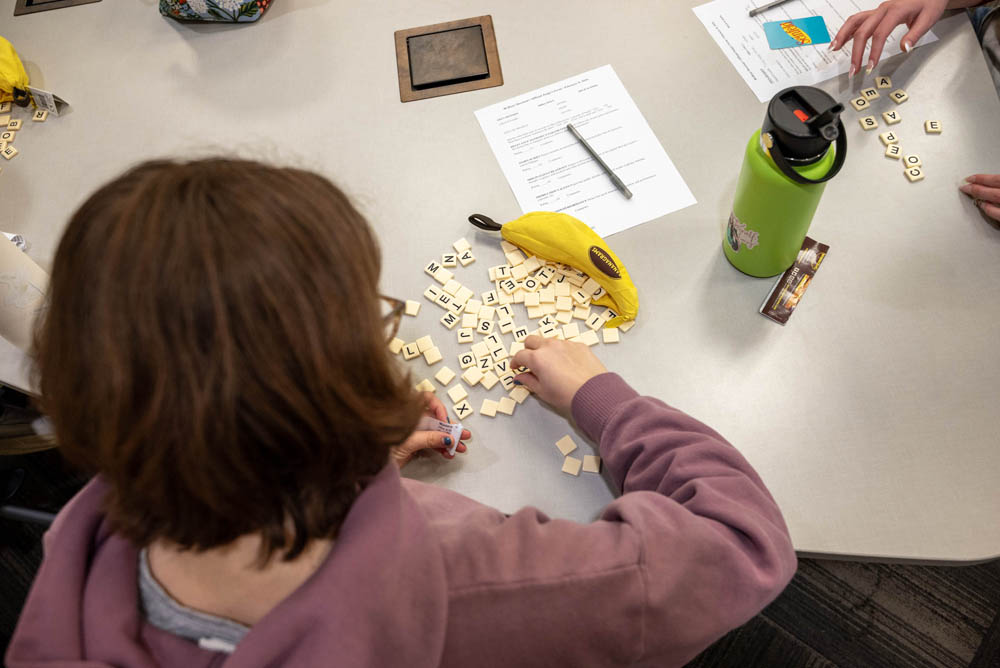
Photo credit: Emma Stevenson
Into production
Reed's team packed up Saturday morning and moved to the Central Classroom building, where they spent the day shooting inside a small room they had chosen for the weekend. The group came together much like the year before, with students returning from the previous competition and a few new members joining the fold. The confined space demanded that every shot be deliberate and every setup make use of the room they had.
For senior Nate Gardner, a media arts production major, the weekend marked his directorial debut. The talent both in front of and behind the camera made his job easy, and the team approached production as a group effort from start to finish. With everyone bought in and pulling in the same direction, Gardner was able to steer the team confidently through their thriller from the first shot to the last.
"I was incredibly privileged to direct alongside such a focused and passionate team," Gardner said. "I'm thankful for the opportunities the 48-Hour Shootout has provided us to sharpen our skills and have fun doing it."
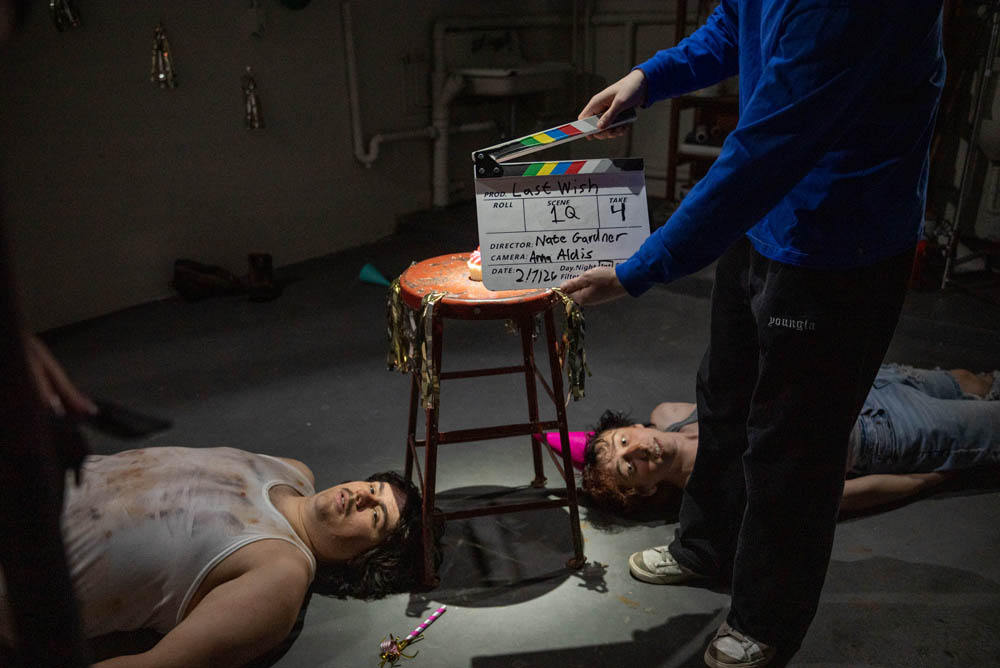
Photo credit: Emma Stevenson
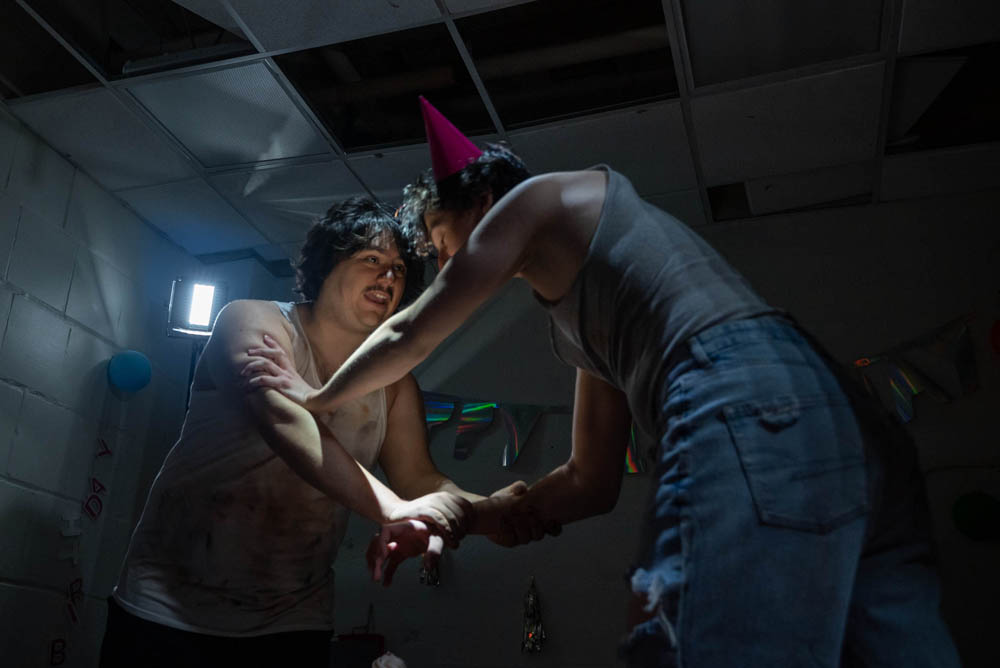
Photo credit: Emma Stevenson
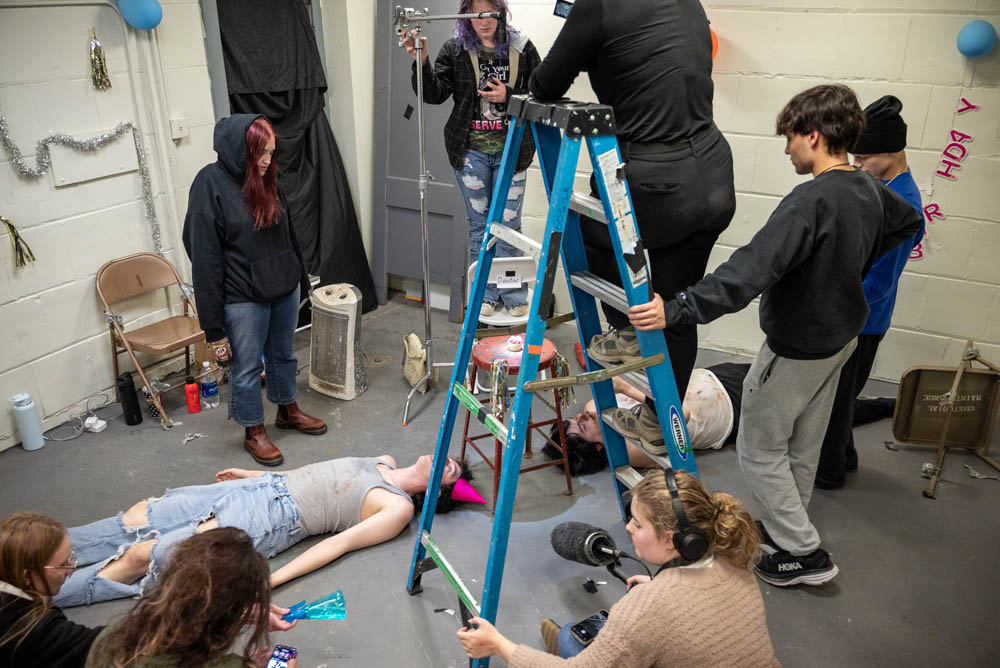
Photo credit: Emma Stevenson
Fried's crew headed in a different direction. The 2026 48-Hour Shootout marked her fourth time competing, and she carried that experience into how her team of six approached the weekend. With every team member wanting to appear on screen, the team split themselves in two. While three members stepped in front of the camera, the other three handled directing, cinematography and the technical work needed to make each shot come together. Then they swapped, putting the second group on screen while the first took over behind the scenes.
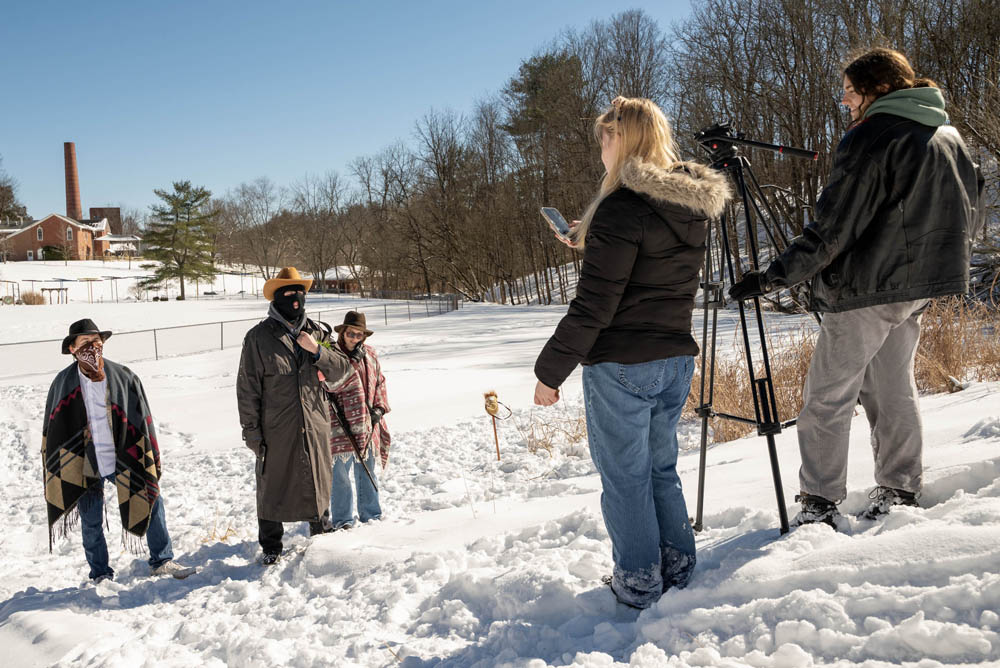
Their western took them outside and straight to a baseball field that held its own history for Fried. She had filmed there during her first year at Ohio University and was back on it now as a senior, with cowboy boots sinking into the snow at 17 degrees. The students rotated through both sides of the camera throughout the day, each contributing to a film that required everyone on the team to show up in more ways than one.
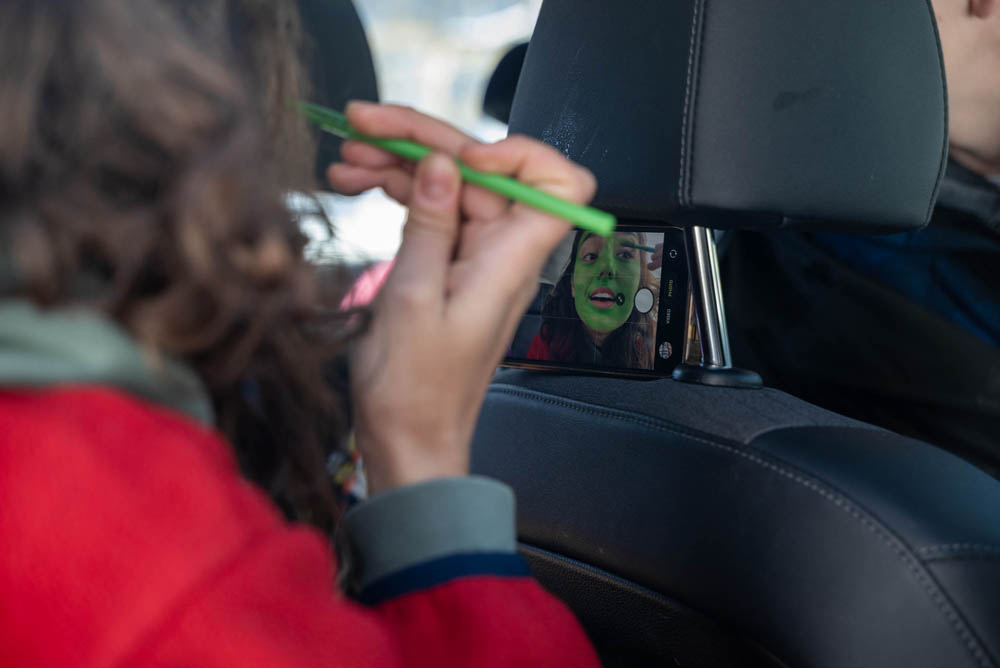
Photo credit: Emma Stevenson
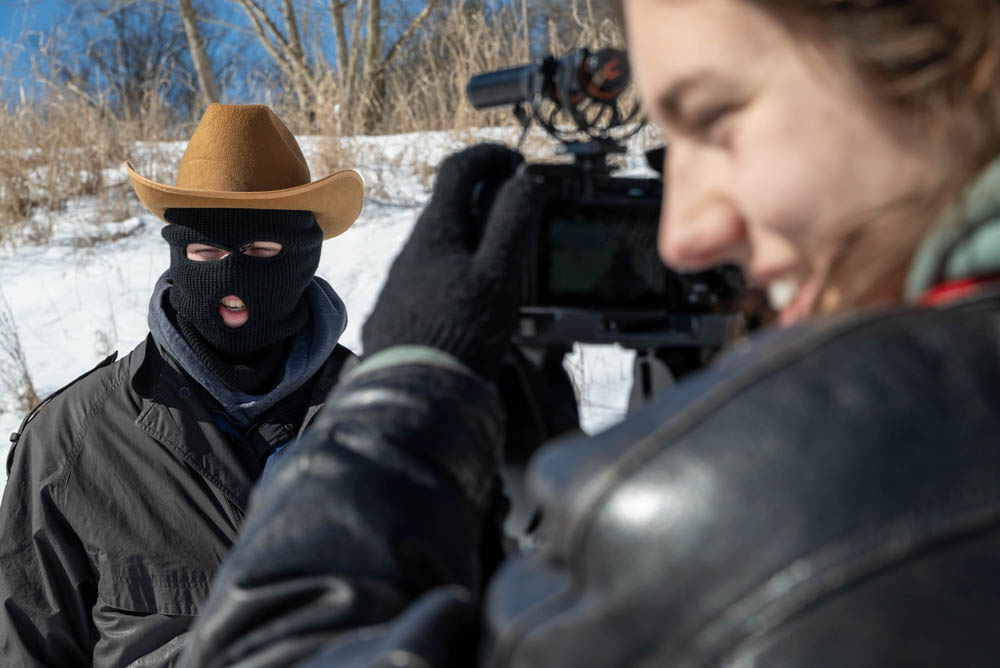
Photo credit: Emma Stevenson
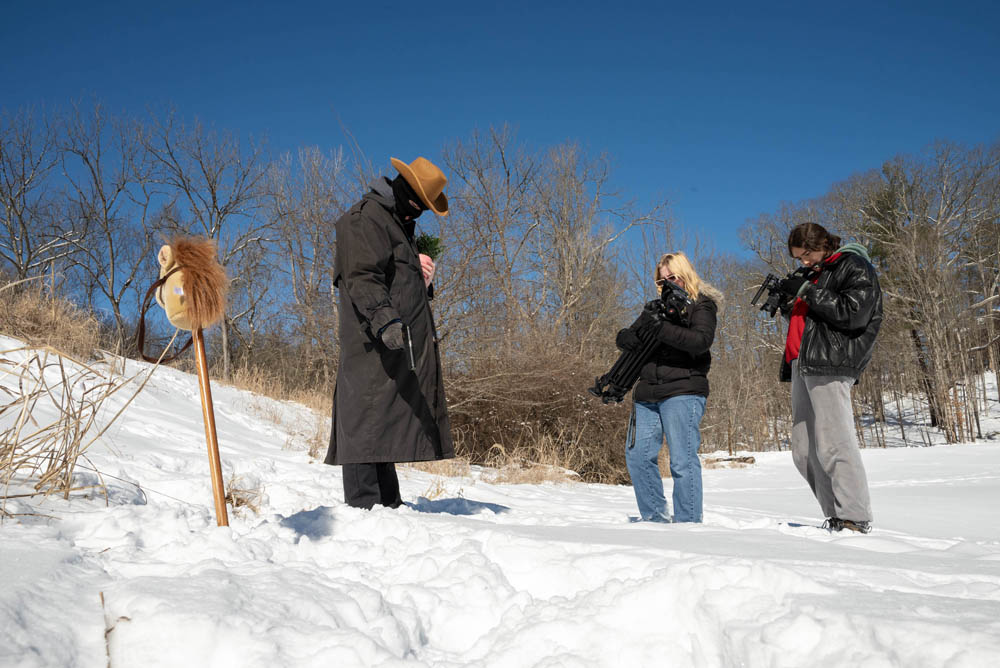
Photo credit: Emma Stevenson
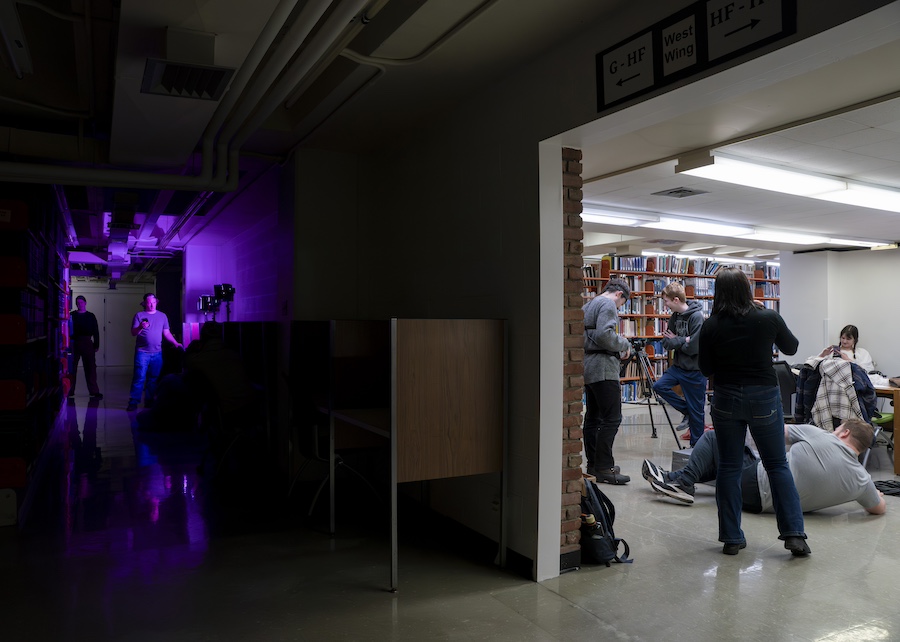
Photo credit: Anders Saling
The final cut
By Sunday, the locations were behind both teams and the editing labs filled up. Footage got reviewed, cuts got made and everything that had been building since Friday night came down to a deadline. It is the part of the 48-Hour Shootout that never changes, no matter how the weekend goes.
Associate Professor Andie Walla, who serves as outreach coordinator for the School of Media Arts and Studies, did not just oversee the competition this year. She entered it alongside a graduate student, working through the same constraints every other team faced over the weekend.
"We didn't overthink things and tried to have fun," Walla said. "I hope that more faculty members will join us next year."
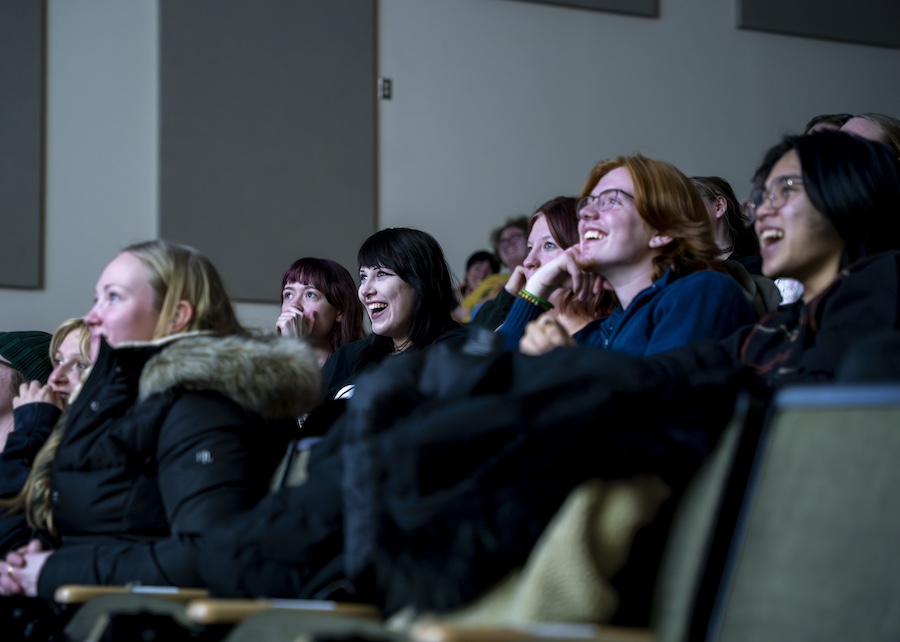
Photo credit: Anders Saling
Walla has watched the competition grow over the years and sees its value extend well beyond the weekend itself.
"Our students have really improved the quality of their work in the last few years, leaving me impressed with their technical skills," she said. "It leads me to believe we are doing something right in the classroom. Overall, the experience has a high learning impact, pushing students to work quickly and effectively while using their resources wisely."
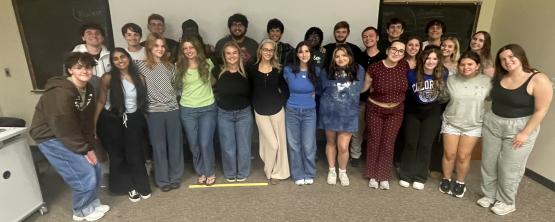
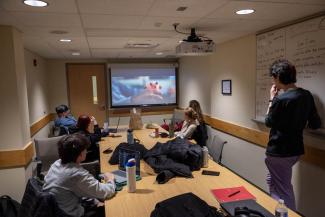
When the deadline passed, 14 teams submitted their films and gathered for a live-streamed screening where judges reviewed each film in person before casting their votes. Fried's team took first place, an animation team placed second and Reed's team finished third.
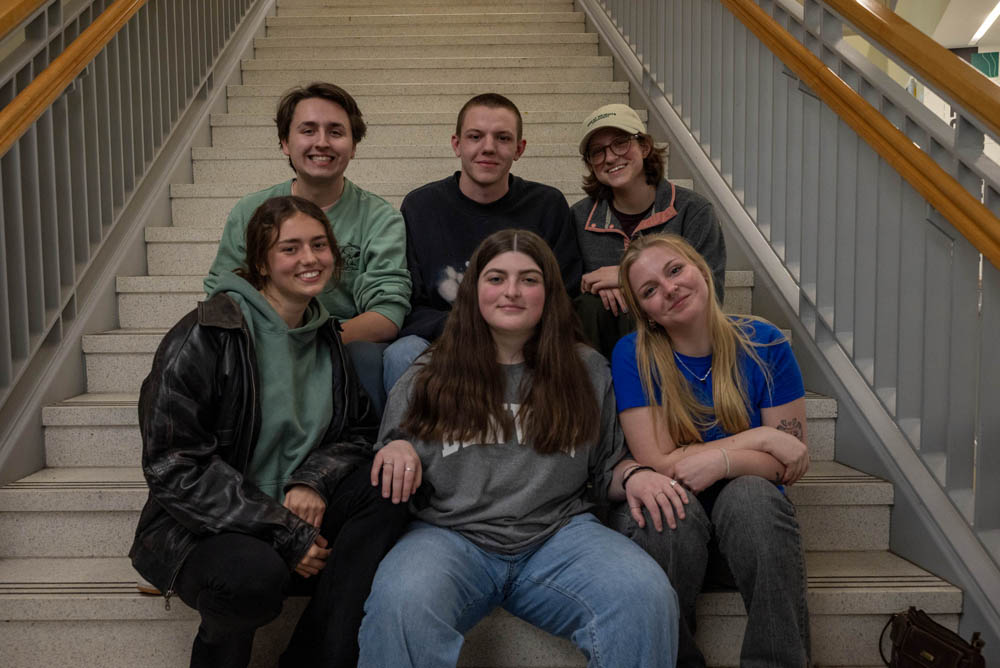
Fried's team after winning the 2026 48-Hour Shootout Competition
Photo credit: Emma Stevenson