Image
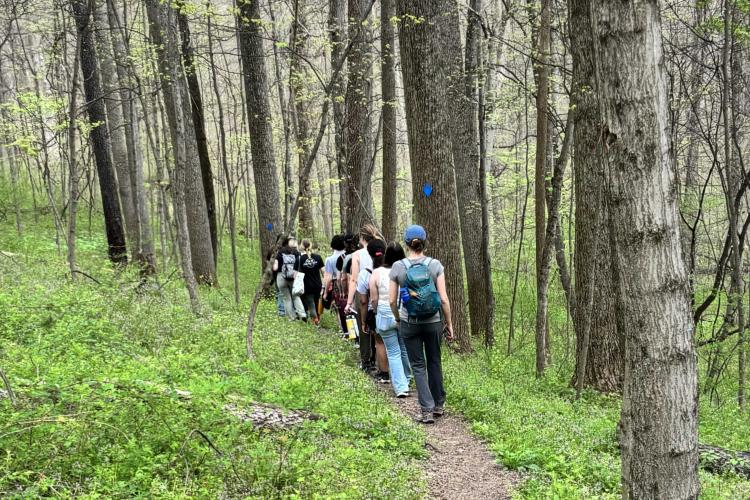
Students from Ohio University’s Athens and Eastern campuses recently stepped beyond the traditional classroom and into one of Ohio’s last remaining old-growth forests through an immersive Honors special topics course focused on conservation, community and stewardship at Dysart Woods.
The course, “Defending Dysart: The Story of Southeast Ohio’s Old Growth Forest,” was led by Dr. Jacqueline Yahn, associate professor of middle childhood education at Ohio University Eastern, in partnership with Marshall Dyer, land protection manager for the Captina Conservancy. The experience brought together Honors students from across Ohio University for a weekend of experiential learning centered on ecology, activism and environmental stewardship.
Designed as a hybrid experiential course, students participated in virtual class sessions before traveling to Dysart Woods for guided hikes, collaborative problem-solving activities, community discussions and hands-on conservation work.
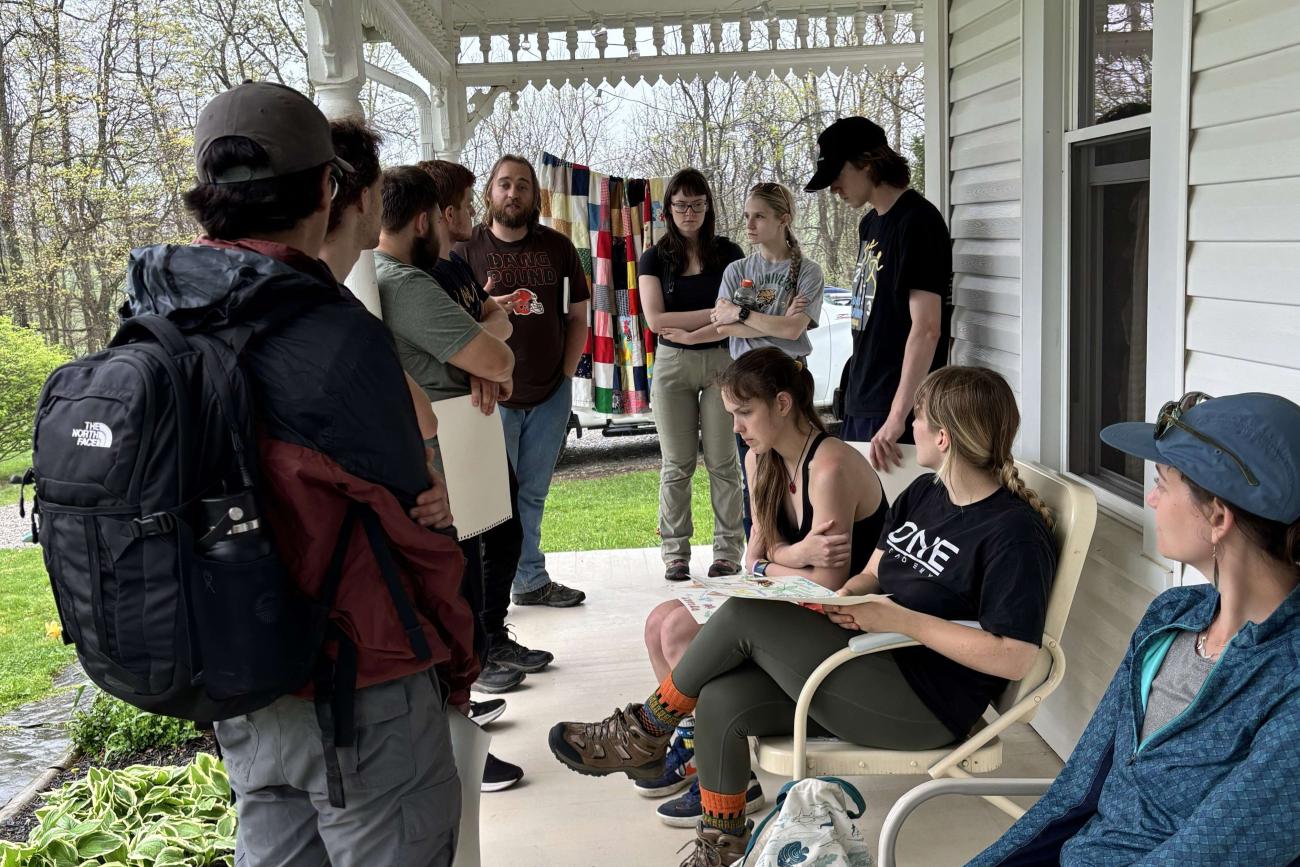
“This course pushes students to think critically about rural places,” Yahn said. “By directly engaging with the people and landscapes of Dysart Woods, we emphasize a form of stewardship and conservation that is deeply rooted in community responsibility. It’s a powerful way to show students that rural environmentalism is real, it just looks different when it's driven by people who have a generational connection to the land rather than outside perspectives.”
Throughout the weekend, students explored the ecological and historical significance of Dysart Woods through guided hikes along the Red Trail led by Yahn and Dyer. Discussions focused on forest ecology, biodiversity, land stewardship and the broader environmental challenges facing Appalachian Ohio, including climate change and extractive industries.
Students also worked through Real World Problem Scenarios, or RWPS, an applied learning model developed in partnership with community organizations to help students address real challenges facing communities and nonprofits. During evening campfire sessions, students developed communication and outreach ideas focused on supporting long-term conservation and public engagement efforts connected to Dysart Woods and the Captina watershed.
“The most meaningful part of this trip was meeting all of the people behind the scenes at Dysart Woods and Captina that make it work,” said Grace Vance, a biological sciences student from Ohio University’s Athens campus. “Seeing people passionate about conservation inspires me to do the same. The guided trail hikes were incredibly engaging, and I appreciated the down-to-earth yet professional conversations I was able to have with other students and Captina employees.”
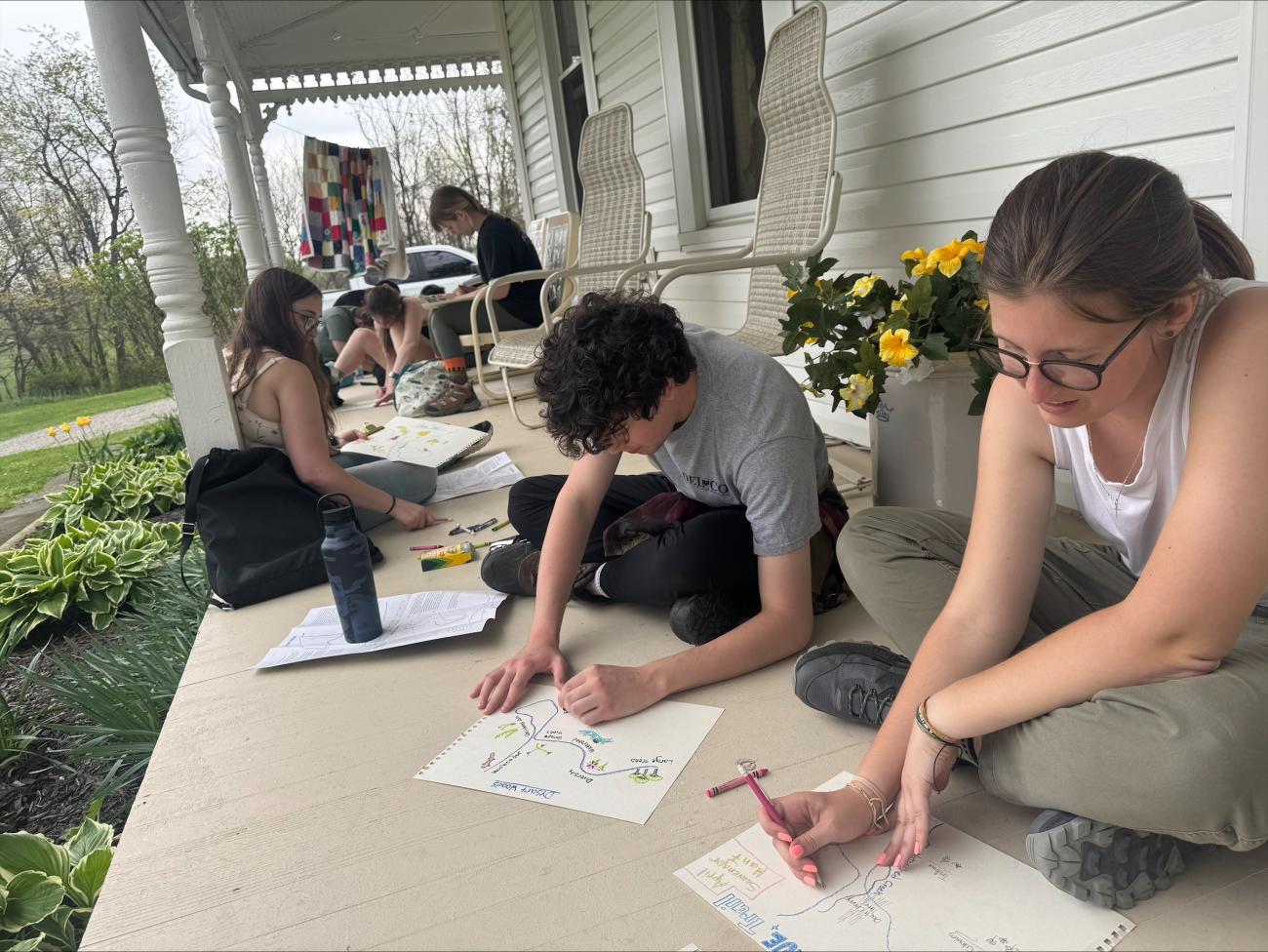
Students also participated in “Blue Trail Buddies” activities alongside members of the OHIO Eastern Rural Teacher Corps, fostering collaboration between university students and community partners through trail-based learning and mapping activities. Before departing, the group completed a roadside and trailhead cleanup project to support ongoing conservation efforts at Dysart Woods.
For Ohio University Eastern student Dessie Morris, the course provided an opportunity to connect personally with both nature and fellow students.
“I enjoyed being outside while learning and making new friends,” said Morris, a biological sciences student at OHIO Eastern. “The time I spent in this course and at Dysart Woods was very meaningful to me. A long time ago, I learned to see the beauty around me. Being out in the woods made it easy to see beauty. I enjoyed having to think and problem-solve to come up with a real-world problem-solving scenario.”
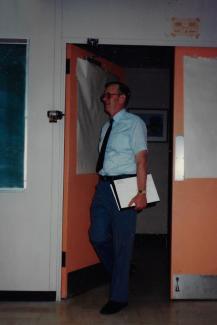
A similar course was taught by Bill Bartels, Yahn’s grandfather and one of the original professors at Ohio University Eastern, during his tenure at the university, serving as an early foundation for experiential environmental learning at the campus. Yahn said her course was intentionally built upon many of her grandfather’s original concepts surrounding stewardship, conservation and community engagement connected to Dysart Woods.
“This course is deeply personal for me because it continues a family tradition of stewardship that started generations ago,” Yahn said. “Growing up, I heard stories about the role my grandparents played in caring for Dysart Woods. To now bring students into that same space for hands-on learning, reflection, and community building feels incredibly meaningful, it’s a way to honor the values they brought to this land decades ago.”
The experience also carried a longstanding family connection to the property. Bill Bartels, one of the original professors at Ohio University Eastern, and his wife, Bernice, became the first caretakers of Dysart Woods after moving into the property’s farmhouse decades ago. Bartels actively farmed portions of the land while Ohio University established hiking trails and supported research focused on tree dynamics, hydrology, moss and lichen communities and other environmental studies.
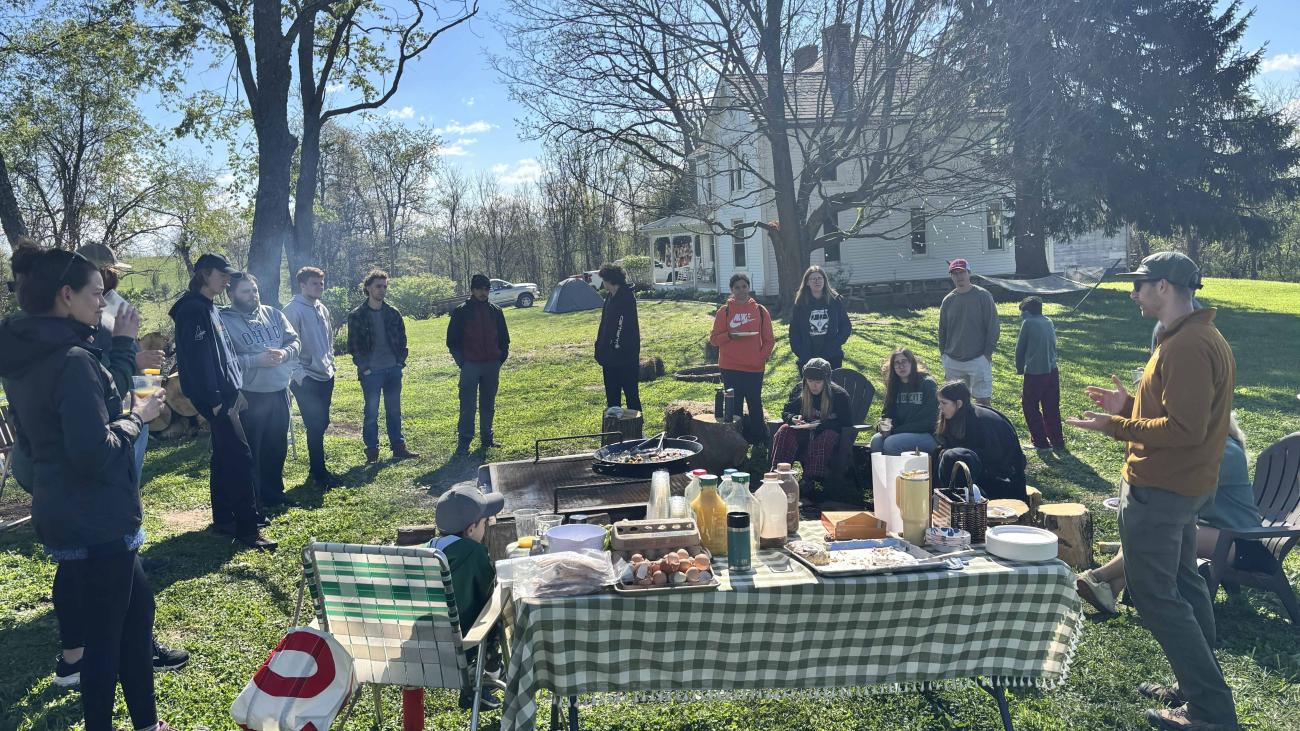
That legacy remained central throughout the weekend as members of the Bartels/Cross family welcomed students into their home and shared stories about the history of Dysart Woods and their family’s connection to the land. The family also hosted a community dinner and breakfast that gave students the opportunity to engage directly with local residents, conservation advocates and community partners.
“Dysart Woods has always been shaped by people who care deeply about protecting it for future generations,” Dyer said. “Experiences like this help students understand that conservation is not just about science, but also relationships, storytelling and community commitment.”
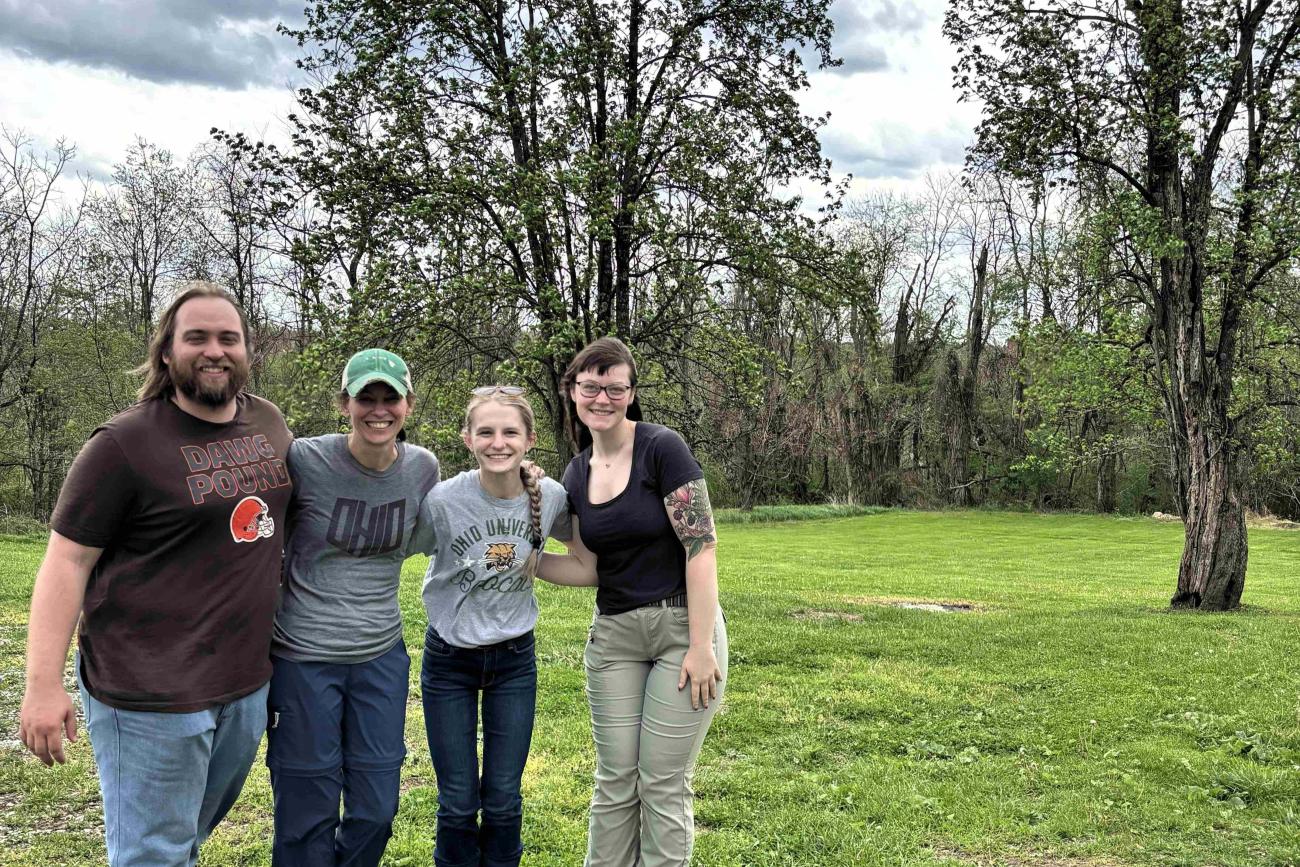
The course was developed in partnership with Captina Conservancy and supported through collaboration with the OHIO Eastern Rural Teacher Corps and community partners throughout Belmont County.
Now serving as executive director of Captina Conservancy, OHIO Eastern alumnus Turner Provost said opportunities like this help strengthen the connection between higher education and environmental stewardship in Appalachian Ohio.
“Programs like this give students the opportunity to experience the region in a meaningful and personal way,” Provost said. “When students can connect directly with the land, the people and the history behind conservation efforts, it creates a deeper understanding of why stewardship matters.”
As part of the course, students were challenged to consider a central question woven throughout the experience: “Whose woods are these?” Through community conversations, field experiences and collaborative learning, students explored not only the ecological significance of Dysart Woods, but also the shared responsibility of preserving it for future generations.