Image
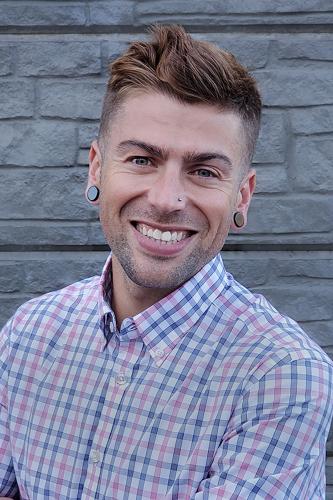
Cory W. Baumann, Ph.D.
The Ohio University Heritage College of Osteopathic Medicine has received a five-year, $2.8 million award from the National Institutes of Health to investigate how skeletal muscle adapts to exercise and why those adaptations decline with age.
The study is led by Cory Baumann, Ph.D., assistant professor and investigator in the Ohio Musculoskeletal and Neurological Institute and in the Institute for Molecular Medicine and Aging. Collaborators on the project include Michael Tranter, Ph.D., and Onur Kanisicak, Ph.D. with The Ohio State University; David Barefield, Ph.D., with Loyola University Chicago; and Robert Bloch, Ph.D. with the University of Maryland.
The research focuses on two proteins — human antigen R (HuR) and myosin binding protein H (MyBP-H) — that early findings suggest may play a critical role in protecting muscles from exercise-related injury and improving muscle resilience.
“The population of older adults in the United States is growing rapidly, and with that comes an urgent need to better understand and address age-related muscle loss,” said Baumann, the Osteopathic Heritage Foundation Ralph S. Licklider, D.O. Endowed Faculty Fellow in Aging Systems Physiology. “Our research is focused on uncovering the molecular mechanisms that help muscles adapt and remain resilient.”
The United States is projected to have 90 million adults over the age of 65 by 2050, creating significant health care and economic challenges related to aging and mobility. Sarcopenia is associated with increased risks of falls, disability, hospitalization, nursing home admissions and early mortality. Although exercise remains the primary treatment for preventing muscle decline, many older adults are unable to exercise effectively due to frailty or existing health conditions. Currently, there are no FDA-approved drugs to treat sarcopenia.
Baumann and his collaborators have already identified promising findings in preclinical models. Their research demonstrated that reducing or inhibiting HuR activity protected skeletal muscle from strength loss following exercise-induced injury while increasing levels of MyBP-H, a protein believed to enhance muscle resilience. The team also found that a novel small molecule inhibitor known as KH-3 produced protective effects similar to exercise training.
The NIH-funded project will explore whether targeting the HuR-MyBP-H pathway can improve muscle adaptation and resilience across the lifespan. Researchers will use genetic and pharmacological models to study how muscles respond to exercise injury, aging and recovery. The study will also examine whether increasing MyBP-H expression can mimic the protective effects of exercise training.
“We hope this work will ultimately lead to new therapeutic strategies that improve strength, mobility and quality of life for aging individuals, especially those who are unable to benefit fully from exercise alone,” said Baumann.