
Using data to fight human trafficking: OHIO researchers help state agency disrupt exploitation
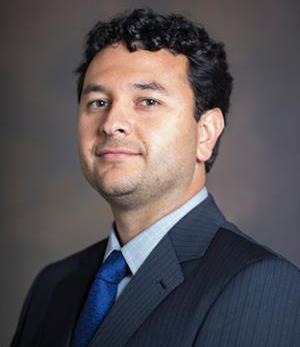
OHIO Associate Professor Felipe Aros-Vera successfully used data, decision sciences and engineering to support the investigation and prosecution of human trafficking cases in Ohio, and the results have the potential to have a global impact.
Alex Semancik | June 26, 2026
Share:
It is estimated that as many as 50 million people globally are subject to various forms of exploitation through human trafficking. This number is staggering. Unfortunately, it is also likely still increasing. The United Nations Office on Drugs and Crime (UNODC) says that human trafficking is one of the fastest growing crimes, and a disgustingly lucrative business generating an estimated $150 billion in profits each year.
UNDOC defines human trafficking as the recruitment, transportation, transfer, harboring or receipt of people through force, fraud or deception, with the aim of exploiting them for profit. Individuals of any age and from all backgrounds can become victims of this crime, which occurs in every region of the world. The U.S., and even our own state of Ohio is no exception.
Ohio University Associate Professor of Industrial and Systems Engineering Felipe Aros-Vera, Ph.D., successfully used data, decision sciences and engineering to support the investigation and prosecution of human trafficking cases in Ohio, and the results have the potential to have a global impact.
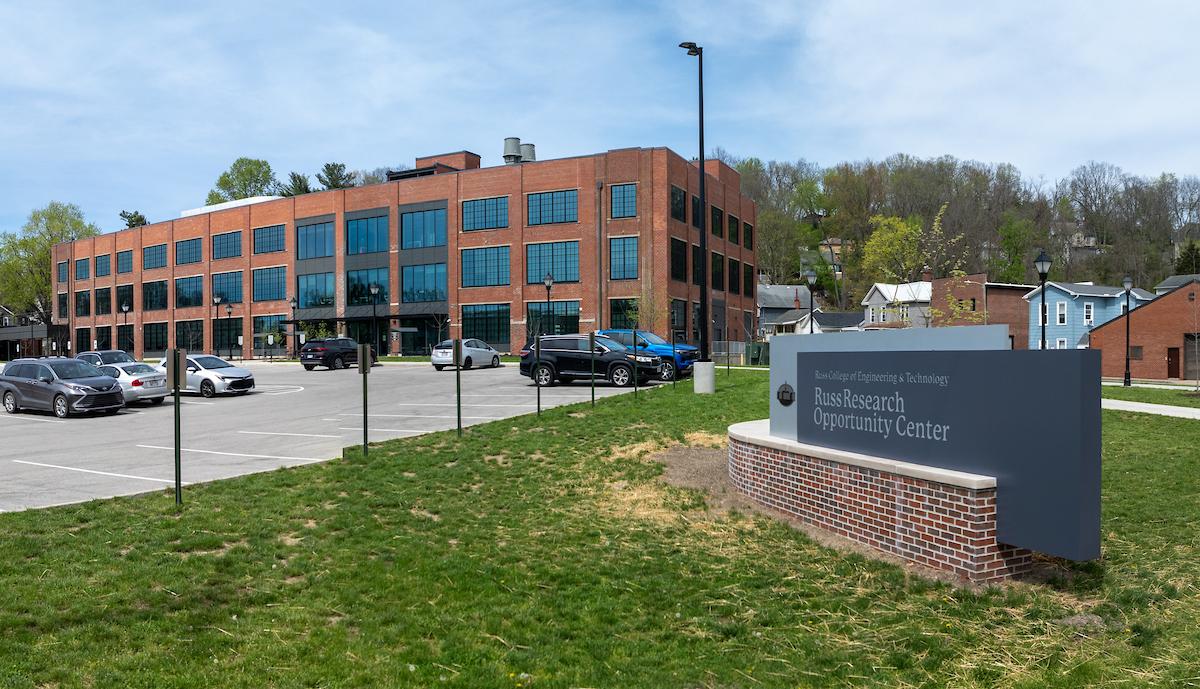
Aros-Vera and his team of OHIO Russ College of Engineering and Technology researchers were awarded $324,000 in grant funding from the U.S. Department of Justice (DOJ) to aid in this effort. Partnering with the Northeast Ohio Human Trafficking Task Force and Risk Slate, they developed a Decision Support System platform with functionalities including a case management repository/system, data storage and visualization capabilities, analytics on human trafficking interactions and a coaching module that provides guidance to law enforcement throughout investigations.
Data that destroys human trafficking networks
Aros-Vera’s work on this project was inspired by a need from human trafficking task forces and law enforcement to help better organize their investigations and the data associated with them. Cases can include a massive amount of data from subpoenas, search warrants, defendants and many other sources—a lot of information that agencies previously would have to sort, organize and track by hand. The decision support system that Aros-Vera and his team designed efficiently and effectively integrates modern data and analysis into human trafficking investigations.
“In my collaborative work with the Northeast Ohio Human Trafficking Task Force, we decided to put a team together to design a decision support system (DSS),” Aros-Vera said. “You can think about it like a platform, in this case a website, that the task force can use to upload data and make sense of what’s happening.”
The DSS platform Aros-Vera designed has many different capabilities including:
- A dashboard for case metrics
- Displaying all active cases
- Creating event timelines
- Sorting and filtering cases by jurisdiction and location
- An AI chat bot “coach” that can help guide personnel through an investigation
- Visualizations of cases and investigations
- Info webs showing connections
- Charts, graphs and other visual aids
- Many more features and tools
The research officially concluded in Sept. 2025, and the platform has already helped get results. The DSS was utilized in a case that was closed in March 2025 which resulted in 35 years of jail time for human trafficking. Investigators used the platform to clean data and prosecutors were able to use it to build a timeline of events which they presented to the court.
The final project report is currently under review by the Department of Justice, and Aros-Vera is hopeful it will soon be published.
Throughout the process of creating the platform, an important data categorization system was created that was crucial in helping investigators stay organized and put information into different silos to more easily form connections and get results. Risk Slate, the implantation partner that produced the infrastructure required to build the platform itself, is also working to expand and commercialize some of the technology developed from the project.
Image

From building networks to destroying them
Funding for the Ohio University, Northeast Ohio Human Trafficking Task Force and Risk Slate collaboration was officially approved in 2023, but Aros-Vera began work years prior.
It started in 2018 when he attended an informational community workshop in the City of Athens. The event was led by Tonya Folks, a leader in the Ohio anti-human trafficking space. Folks illustrated the signs of human trafficking and guided participants through how to recognize the crime.
When Folks showed the audience a diagram of the “business” of human trafficking that’s when Aros-Vera really made an important connection. The structure of human trafficking operated as a network. At the time he had a federal grant working on transportation network resilience—helping networks withstand, absorb and recover from disruption.
Image

“For me, that’s when it clicked. At the time I was trying to make networks more resilient, but then I thought, ‘what if I tried to destroy them,’” emphasized Aros-Vera. “That’s when I went down a rabbit hole of research and quickly realized that there is an entire field that is coming from computer science called network interdiction models.”
Network interdiction models are very important because they are trying to determine the single point failure problem—a particular point in the network that when attacked it destroys its entirety. Aros-Vera quickly applied this concept to human trafficking and began forming relationships with the Cuyahoga County Sheriff’s Office, Westlake Police Department and Northeast Ohio Human Trafficking Task Force.
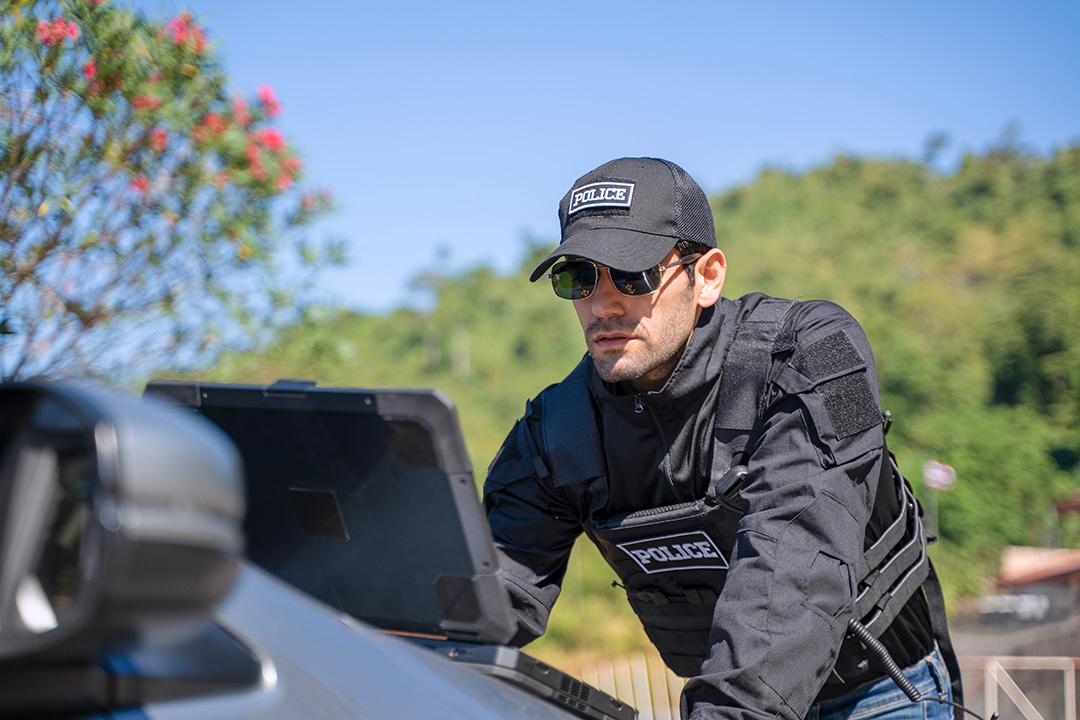
To gain a better understanding of the way investigations transpire, Aros-Vera sat in on three days of sting operations. Seeing how things operated on the ground gave him a better understanding of human trafficking, something that further guided his research. The DOJ grant helped fund these experiences, as well as expenses like travel, equipment and overtime for the officers and agents involved in the project who helped identify data and make it available to the OHIO team.
Image
OHIO involvement and experiential learning
Beyond contributing a massive positive social impact and helping those who are most vulnerable, Aros-Vera said this research was also a valuable experience for the next generation of industrial and systems engineers. His students were also directly involved in data collection and cleaning and contributed to the project.
“This is valuable experience for students for multiple reasons. We are trying to have a positive societal impact; we are trying to help rescue people and identify the operation of human trafficking networks,” Aros-Vera said. “These are very challenging problems that are grounded in reality. In this case the research is ‘user inspired.’ What law enforcement and prosecutors needed guided our research. From a career development perspective that is very helpful because it teaches you a practical framework for conducting research.”
Aros-Vera also emphasized the importance of institutions of higher learning leading in the world at a societal level. He said he that OHIO exemplifies this, and he is grateful for the support he receives.
“I am thankful for the support and academic freedom I receive from Ohio University in my research, and the way that I can use it for the benefit of society and the people that are in the most vulnerable positions.”
Image
The future of human trafficking research and prevention
The social sciences typically lead human trafficking research efforts, according to Aros-Vera. These efforts provide valuable insight on how to help survivors recover and thrive, and provide processionals from different fields identify the signs of human trafficking and disrupt it. Real time data and data visualization in human trafficking investigations, however, is still relatively new and Aros-Vera has made strides in making these advances more commonplace.
Globally, and in the U.S. specifically, the opioid epidemic and COVID-19 pandemic have put even more people in stressful and vulnerable positions where they are more likely to be exploited through human trafficking. Aros-Vera said we must continue to advance to stay ahead of traffickers. He believes that platforms like the DDS his project yielded are an important step forward, but law enforcement must also be willing to adapt to these new technologies.
“This is a ‘moving target’ problem,” he said. “Traffickers continue to adapt, use new technologies, new transportation models and new methods. There are new challenges with every investigation.”
As he awaits the DOJ’s review of the final project report, Aros-Vera is still hard at work fighting against human trafficking. He is currently in England at the University of Nottingham’s Rights Lab—the world’s largest and leading academic center dedicated to ending contemporary slavery and human trafficking with comprehensive, data-driven research. At the Rights Lab, Aros-Vera is collaborating with other experts and prominent researchers in these areas and contributing to a proposal for the National Institute of Justice.