Kennedy Museum of Art to open renowned environmental artist and professor John Sabraw exhibition “Telluric” on Aug. 28
The Kennedy Museum of Art will open “Telluric,” a solo exhibition featuring recent work by nationally and internationally recognized environmental artist and Ohio University Distinguished Professor John Sabraw. Bringing together painting, sculpture and video, the exhibition explores the intersection of art, science and environmental sustainability while drawing on materials and themes rooted in southeast Ohio.
Samantha Pelham Kunz | August 24, 2026
Share:
Ohio University’s Kennedy Museum of Art will open “Telluric,” a solo exhibition featuring recent work by School of Art + Design Professor John Sabraw, on Friday, Aug. 28. The exhibition, which brings together painting, sculpture and video, will remain on view through Dec. 6, 2026.
For Sabraw, a nationally and internationally recognized artist whose work explores the intersection of art, science and environmental sustainability, the exhibition offers a unique opportunity to present work created specifically for the place where he teaches and for the region that has helped shape his artistic practice.
“This body of work has been coming together with a cohesive materiality (coal, iron oxide from acid mine drainage, etc.) drawn from this region for the past few years,” Sabraw, who is also a Distinguished Professor, said. “With my art being exhibited in other museums around Ohio it was perfect timing when the Kennedy reached out about a show. This was about a year ago and gave me enough time to make new works of art specially designed for this space and this area. My hope is that audiences leave the exhibit with a rich possibility for deeper community in southeast Ohio, anchored in the very substances that are the foundation of this land.”
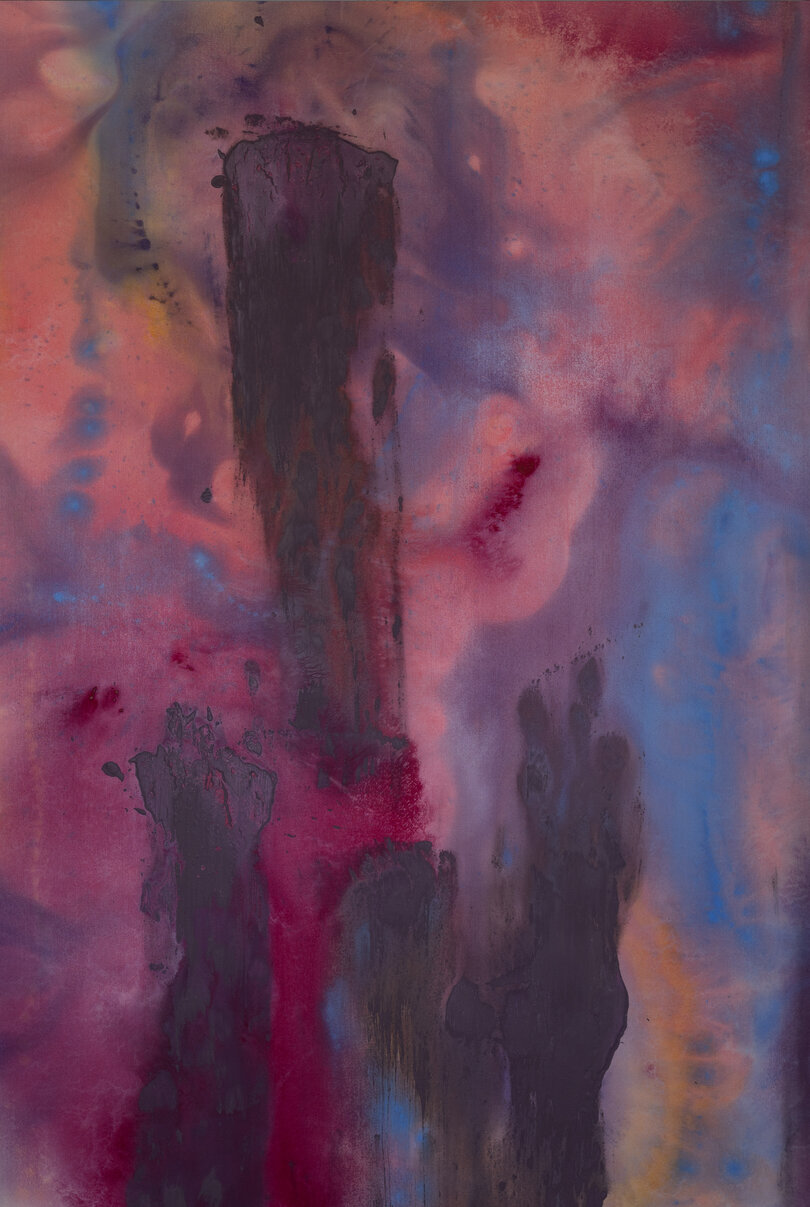
Bound by John Sabraw, 2025
Acrylic, iron oxide pigments from acid mine drainage, Appalachian coal,
mixed media and other artist colors on stretched canvas
Recognized for his environmentally focused artistic practice, Sabraw has spent more than two decades exploring the relationship between art and the natural world. His work examines natural phenomena, the complexity of Earth’s ecosystems and humanity’s often fraught relationship with the environment, while challenging audiences to consider how creative practice can contribute to environmental awareness and restoration.
“Telluric” continues this exploration through a collection of abstract works that combine deliberate artistic processes with organic and material forces. Sabraw’s paintings are developed through layers that interweave and evolve over periods of up to several months, resulting in luminous, complex compositions that reflect his interest in the forces and processes shaping the natural world.
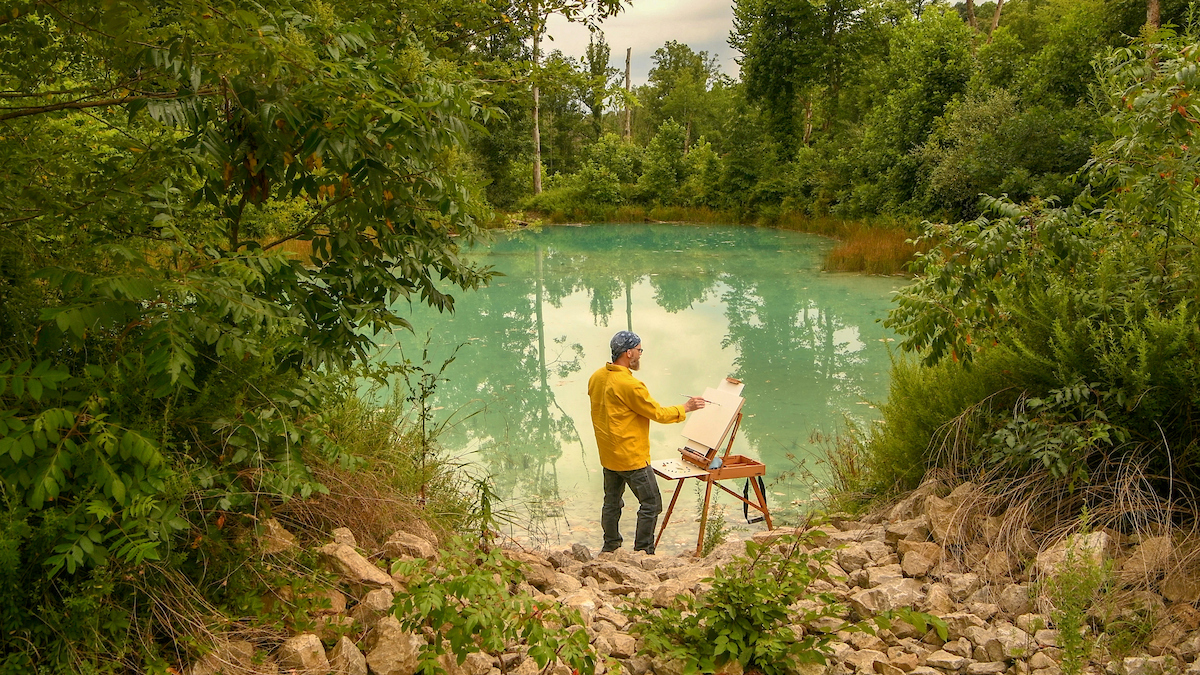
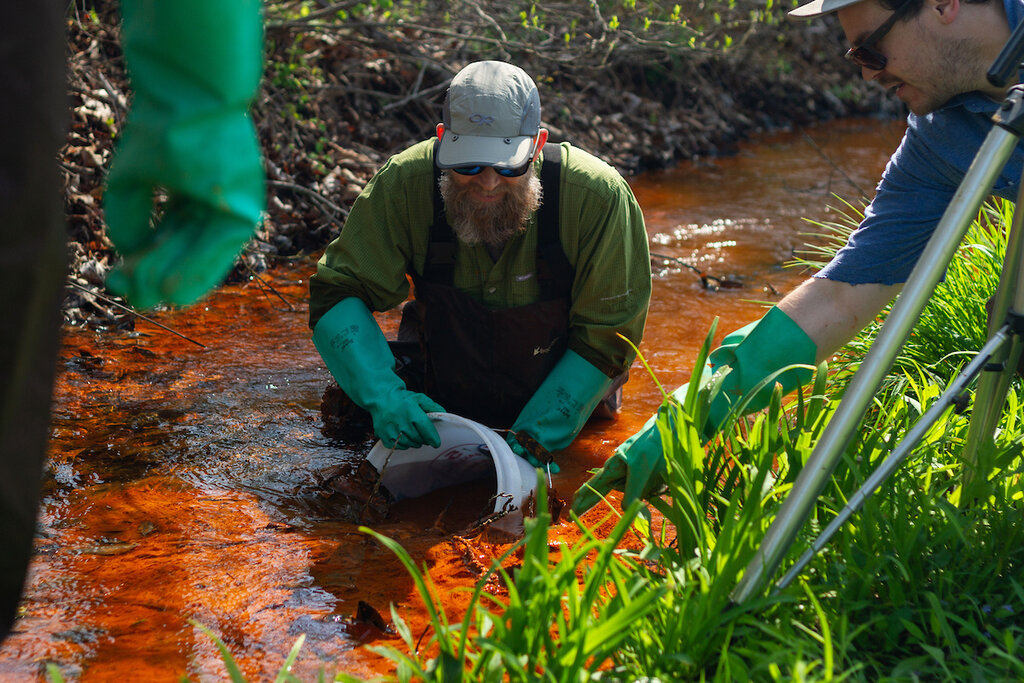
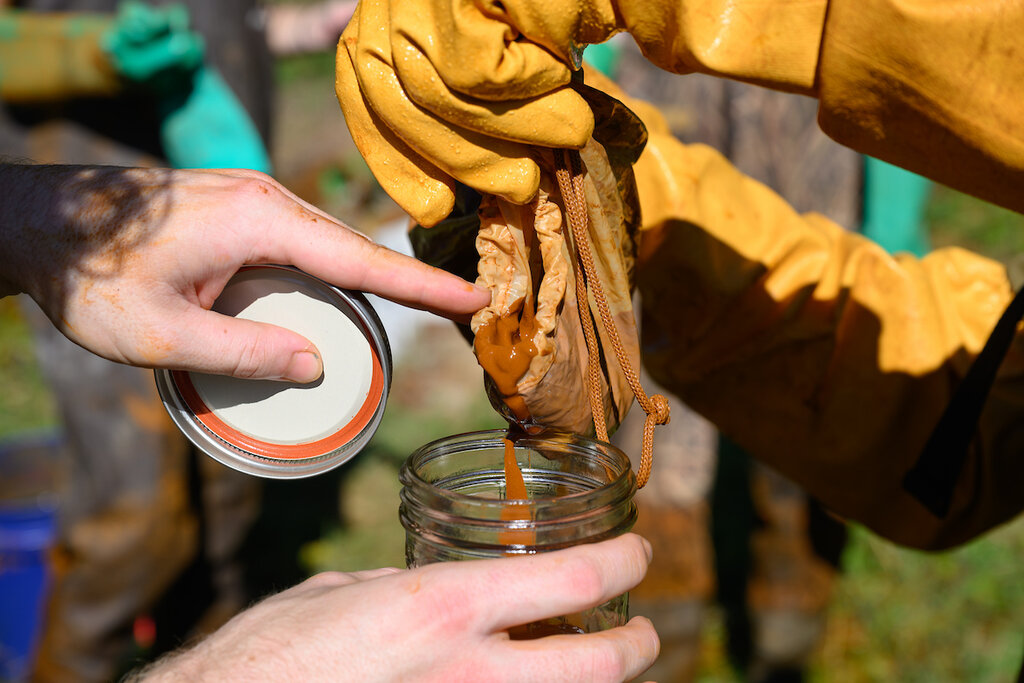
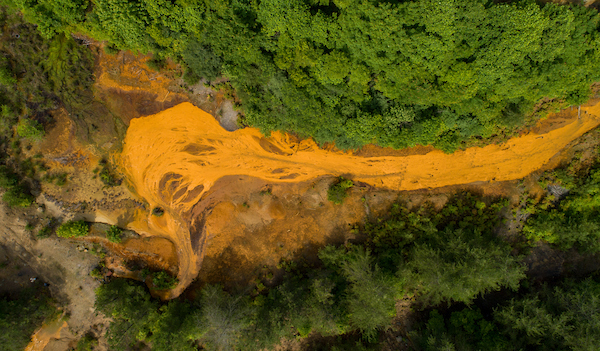
A central component of Sabraw’s current practice is his collaboration with scientists like Dr. Guy Riefler, professor and chair of Civil and Environmental Engineering at OHIO and Director of Project Development at True Pigments Michelle Shively-MacIver, as well as environmental organizations to develop sustainably sourced pigments from iron oxide extracted during the remediation of streams polluted by acid mine drainage. Through this process, a pollutant removed during environmental restoration is transformed into a usable artistic material, turning an environmental challenge into a creative resource.
The exhibition also incorporates Appalachian coal and other materials drawn from the environmental and industrial history of the region, making southeast Ohio not only a source of inspiration but a physical presence within the work.
“There is something especially meaningful about presenting this work here in Appalachian Ohio,” Courtney Kessel, interim director of the Kennedy Museum of Art, said. “The materials John uses carry the environmental history of this region. Iron oxide recovered through the remediation of streams damaged by legacy coal mining becomes pigment, and Appalachian coal itself becomes material within the paintings. The landscape is therefore not simply represented in the exhibition—it is materially present.”

For Kessel, “Telluric” reflects the unique role an academic museum can play in bringing together disciplines, ideas and audiences.
“'Telluric’ feels particularly important for the Kennedy Museum of Art because it brings together many of the things an academic museum can do best,” Kessel added. “John’s work creates connections across art, science, environmental research, sustainability and public engagement. It allows the museum to become a space where those disciplines meet and where complex issues can be approached through visual experience.”
According to the museum’s Registrar Lisa Quinn, the Kennedy Museum of Art has wanted to host an exhibition of Sabraw’s work for some time, however, because his work is consistently booked in national and international exhibitions, the opportunity to present a large-scale solo exhibition had not previously materialized.
“We are fortunate to have the opportunity to schedule this exhibition while John is on campus where he can provide his artistic insights through talks and programs to both students and the larger southeastern Ohio community,” Quinn explained.
The exhibition also creates a rare opportunity for Ohio University students to experience the work of one of their own faculty members at a museum scale. While School of Art + Design faculty regularly exhibit and publish their work nationally and internationally, current students do not always have the opportunity to see those exhibitions in person.
Recently, the Kennedy Museum of Art showcased a group exhibition featuring School of Art + Design faculty members, but space constraints meant that each artist was able to exhibit only one artwork.
“What makes the ‘Telluric’ exhibition exciting and unique is that current students can walk into a large-scale exhibition focused on one artist's vision,” Mateo Galvano, head of Learning and Engagement at the Kennedy Museum of Art, said. “Some of these students have worked with John or will work with him while the exhibition is on view. By magnifying his practice, this exhibition creates a special opportunity for his students and colleagues alike.”
For Sabraw, having the exhibition on the campus where he teaches adds another layer of significance. The people who will encounter the exhibition include students, collaborators and community members who have participated in or supported the interdisciplinary work that has helped transform pollution from acid mine drainage into a usable artistic material.
In the campus and surrounding areas are so many students, collaborators, supporters and citizens who have been a part of our efforts to turn pollution into a valuable product. I am really happy to now get to share the art I make from this pollution in a location where we get to come together. And when I am teaching my students about their professional art careers, it is hopefully impactful for them to see examples of how museum exhibitions might be executed. And to mildly roast this professor at the same time.
The work exemplifies Sabraw’s broader commitment to developing an increasingly sustainable artistic practice while using art as a vehicle for public engagement. Kessel said she hopes the exhibition encourages visitors to reconsider both the materials around them and the potential role of creative practice in addressing complex challenges.
“I hope visitors leave thinking differently about materials,” Kessel said. “Something we understand as pollution or environmental damage can become the starting point for research, collaboration and creative transformation. That doesn't erase the environmental harm, but it asks us to imagine what responsible intervention might look like. For our students especially, I hope the exhibition expands their understanding of what artistic practice and research can be. John’s work moves across disciplines—painting, science, environmental activism, material research, and collaboration. It demonstrates that artists can participate meaningfully in conversations that extend far beyond the traditional boundaries of the studio.”
Sabraw similarly hopes visitors will see beauty and possibility in materials that have long been associated with the region’s environmental and industrial history.
“I hope visitors share my perspective that these raw materials, so much a part of our history, are actually stunningly beautiful,” Sabraw added. “I also really look forward to hearing their interpretations and perception of the artwork, that is when good connection and deep conversation can emerge. And that is the most valuable thing to come out of a public exhibit.”
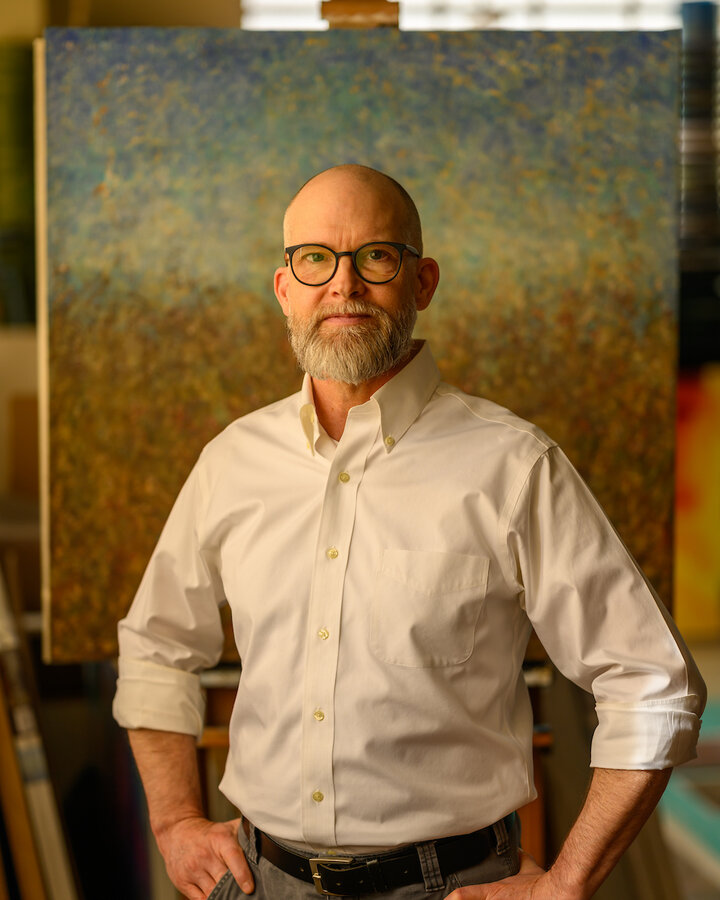
Sabraw is a professor of art at Ohio University, where he chairs the Painting + Drawing and Digital Art + Technology programs. He also serves as a board advisor at Scribble Art Workshop in New York. His work is included in collections at the Museum of Contemporary Art, Honolulu; the Elmhurst Art Museum in Illinois; Emprise Bank; Bank of America; and Accenture Corp. He is represented by Qualia Contemporary Art in Palo Alto, California, and McCormick Gallery in Chicago.
About the Kennedy Museum of Art
The Kennedy Museum of Art at Ohio University serves as a center for learning, discovery and engagement through the arts. The museum's exhibitions, collections and programs connect audiences with artists, cultures and ideas while supporting Ohio University's educational mission and providing opportunities for students, faculty and the broader community to engage with the visual arts.