Image
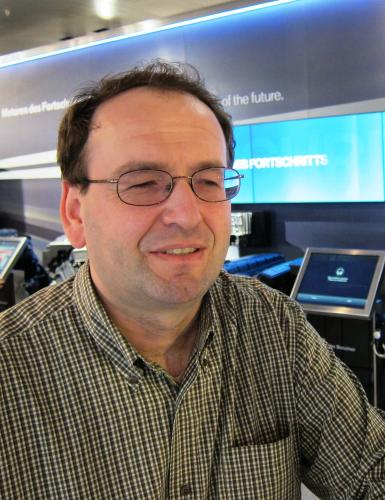
Ohio University Distinguished Professor Alexander Govorov, of the Department of Physics and Astronomy and the Nanoscale and Quantum Phenomena Institute (NQPI) in the College of Arts and Sciences, has co-authored a new study published in Science Advances with collaborators at Wuhan University in China and the Istituto Italiano di Tecnologia in Italy.
The study, “Ultrasensitive Chiral Detection by Nonlinear Chiroptics in Spiral Plasmonic Metastructures Surpasses Linear Limits,” addresses a major challenge in chemical and biological analysis: detecting molecular chirality, or “handedness.” Chirality plays a critical role in biochemical processes and drug function, yet conventional chiroptical measurements often produce weak signals that make sensitive detection difficult.
Most chiral chemicals (enantiomers) are synthesized with both left- and right-handed forms. Often, only one enantiomer is biologically active, while the other may be ineffective or even harmful. A classic example is thalidomide, in which one enantiomer provides sedative and anti-nausea effects, while the other can cause birth defects.
To overcome this limitation, the research team developed specially engineered spiral gold plasmonic metastructures that amplify both electric and “superchiral” optical near fields. The structures enhance nonlinear optical processes, particularly circularly polarized second-harmonic generation, creating a highly sensitive optical signal when chiral molecules interact with their surfaces.
The resulting platform achieved a detection limit of approximately 11 picomolar for adsorbed bovine serum albumin and a figure of merit as high as 3260 μM⁻¹, placing the system among the highest-performing chiral plasmonic sensors reported.
A particularly important feature is the system’s ability to distinguish between different enantiomers even when they are present together in a racemic mixture. Left- and right-handed spiral structures preferentially interact with corresponding molecular forms, allowing enantiomer composition to be quantified without first separating the molecules chromatographically. This capability could ultimately contribute to faster and more compact approaches for chiral analysis in areas such as pharmaceuticals, biotechnology and food quality control.
Q and A with Govorov:
Q: What do you see as the most important scientific advance of this work, and why does nonlinear chiroptical sensing offer advantages over conventional approaches for detecting molecular chirality?
Govorov: In this study, chirality sensing goes nonlinear. Traditionally, most established chiroptical detection methods have been linear, including conventional circular dichroism, or CD, and optical rotatory dispersion, or ORD, spectroscopy, which are widely used in research and industry.
So, why can the nonlinear approach be much more sensitive?
The key is the strong plasmonic enhancement. In linear spectroscopy, the enhanced optical response scales approximately as (P), whereas in our nonlinear CD approach, it scales approximately as (P2), where (P) is the plasmonic electromagnetic enhancement factor. This nonlinear scaling can dramatically amplify very weak molecular chiroptical signals and allow us to
detect chirality at extremely low concentrations.
Q: What are the most promising future applications of this technology, particularly in pharmaceuticals, biomedical analysis and other areas where distinguishing molecular handedness is important?
Govorov: One particularly promising direction is reliable and highly sensitive on-chip detection of chiral molecules and drugs. The goal is fast detection using very small amounts of material, potentially even directly in water or other biological environments.
There are many possible applications: pharmaceutical development and quality control, biomedical analysis, agriculture and environmental monitoring, and forensic studies. More broadly, this technology could be useful wherever we need to identify molecular handedness rapidly, reliably, and at very low concentrations.
Govorov is a pioneer in chiral bioplasmonics, recognized for seminal contributions such as the landmark 2012 Nature study and key investigations on chiral colloidal nanocrystals with strong chiroptical activity. This line of research has emerged as a cornerstone in colloidal nanochemistry and light-controlled nanomaterial synthesis.
Building on this momentum, collaborators at Ohio University and Wuhan University plan to continue advancing joint concepts and authoring comprehensive review articles in this rapidly growing field.