Image
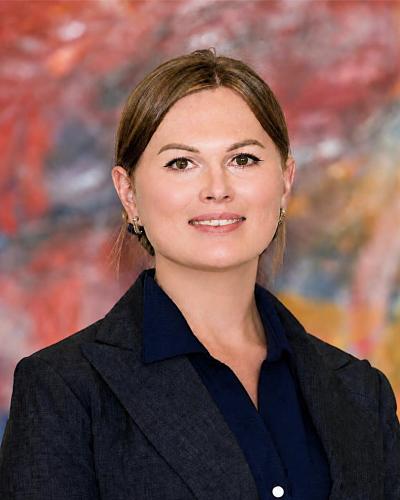
Rin Kirby
When you think of what careers one might pursue with a geological sciences degree, insurance jobs might not come to mind.
However, that's exactly what alumna Rin Kirby uses her OHIO Online Geological Sciences Master's degree for. Kirby graduated with her degree in August 2025 and today works for the Illinois Mine Subsidence Insurance Fund (IMSIF) as a geospatial manager.
The IMSIF is a state-created organization that provides financial counsel and reinsurance to owners whose houses are damaged from underground mine collapse. These collapses are also known as mine subsidence. According to the Illinois State Geological Survey, there are an estimated 360,100 housing units in Illinois with possible exposure to mine subsidence.
The IMSIF was created because many of the Illinois mining companies stopped operating long before mine subsidence began to appear. Additionally, traditional property insurance was not equipped to cover that type of damage. As a result, special insurance coverage through the IMSIF was created to address these challenges for people in need.
Kirby's role in the IMSIF is to lead its GIS and Spatial Research initiatives that help support the assessment and mitigation of mine subsidence hazards throughout Illinois. Her responsibilities include managing geospatial data sets, mapping systems and developing research projects that utilize remote sensing technologies.
Kirby explained that she brings together spatial data, remote sensing, geological information and environmental data for specific areas, then uses that information to support company decision-making. She also works closely with IMSIF geologists and geotechnical engineers, providing tools and analyses that strengthen their assessments and help them better support Illinois homeowners affected by mine subsidence.
One of the projects that she's currently leading is one related to Interferometric Synthetic Aperture Radar (InSAR). InSAR uses Earth orbiting satellites to measure changes to the Earth's atmosphere, including changes from disasters such as mine subsidence.
While Kirby already had a Bachelor of Science in Integrative Studies with an emphasis in Environmental Sciences and Geography when she started her career, she decided to go back to school for her master's to further her understanding of geological sciences and aid her research efforts.
One of the reasons Kirby chose the OHIO Online Masters of Geological Sciences program was for its dedication to real life applications and scientific rigor.
"The OUGO science program stood out to me because it gave me a strong earth science curriculum, and it gave me the ability to apply what I was learning directly to the real-world problems at my job here at the Illinois Mine Subsidence Insurance Fund,” Kirby said.
While her professional background was already rooted in geospatial analyses and GIS technology, the OHIO Online program helped to broaden her understanding of geologic and hydrogeologic processes.
“These are big components in how influential they are to hazards that I work with today," Kirby said.
In particular, she noted several courses that were impactful. Her geodata analysis class gave her insight into data interpretation and quantative analyses. She was also interested in hydrology, so she took the groundwater and watershed extreme hydrology course which gave her a deeper understanding of the environmental systems that can interact with mine subsides.
Additionally, her earth systems evolution course was especially useful for her current position.
“One of our discussions revolved around The Carboniferous period, which was great for understanding Illinois' geological history,” Kirby said. “That class kind of gave me a broader perspective on how large-scale earth processes shaped the landscape and environmental change throughout time."
"The Masters of Geological Science from Ohio University really helped me strengthen more of my scientific foundation and my ability to interpret complex environmental data sets. Being able to immediately connect the coursework with my ongoing professional geospatial and geologic challenges in Illinois made the experience really valuable to me,” Kirby said.
While the lectures and course curriculum were highly valuable, Kirby gained even more through the experience.
"Probably the most important thing was that the program encouraged me to think like a researcher rather than just a practitioner," Kirby said. She explained that the program gave her the confidence to continue to pursue independent research that fit with her knowledge and experience.
Just as other OHIO Online students also report, Kirby said that she felt more prepared to conduct research upon graduation from Ohio University, which is a Carnegie R1 designated institution. Ohio University prides itself on funding research and producing high-quality research programs, while also bringing in highly qualified faculty who are passionate about research.
"The faculty strongly challenged the students to really think critically and evaluate the evidence and connect these scientific concepts to everything in real life," Kirby said.
She especially was thankful to Dr. Charlene Estrada and Dr. Arindam (Ari) Mukherjee, who were very supportive of the students in the program and influential in her degree pursuits.
Since graduating from the program, Kirby has been busy leading research efforts at her job and going to conferences. Last fall, for example, she spoke at the National Association of State Land Reclamationists (NASLR) regarding her company's research on a displacement time series analysis of Illinois basin mine subsidence signatures.
This year, she helped co-organize and present at a new conference, the Illinois Geology, Engineering and Technology Consortium (IGETC). IGETC brought together industry leaders, researchers and engineers from across Illinois to engage in a technical forum dedicated to advancing the research, management and sustainable engineering of the state's geologic and subsurface environments.
Kirby is upholding both the OHIO motto of "thinking[ing] critically, caring deeply, and depart[ing] to serve" and her workplace values through her research:
“It’s part of our core values to continue to advance the scientific research and understanding of mine subsidence within Illinois,” Kirby said. “We organize with other departments and institutions to put our research through the scientific rigor it deserves. That way it continues to support the communities that are at risk for mine subsidence.”
To continue her research and education journey, she will be attending Saint Louis University next year as a PhD student where she will be working with the Remote Sensing Laboratory for a future publication on InSAR satellite sensors.
Kirby credits the OHIO program's flexibility as part of the reason for choosing OHIO Online.
“Since I was working professionally, I needed flexibility. That was really important to me. I’m a wife and mother outside of work, so I needed a program that allowed me to be able to focus on my family at the same time, while maintaining strong scientific standards." Kirby said.
As a working professional, the online format gave Kirby access to a high-quality graduate education without requiring her to leave her professional responsibilities behind.
“That allowed me to grow as both a scientist and a manager simultaneously," Kirby said