Image
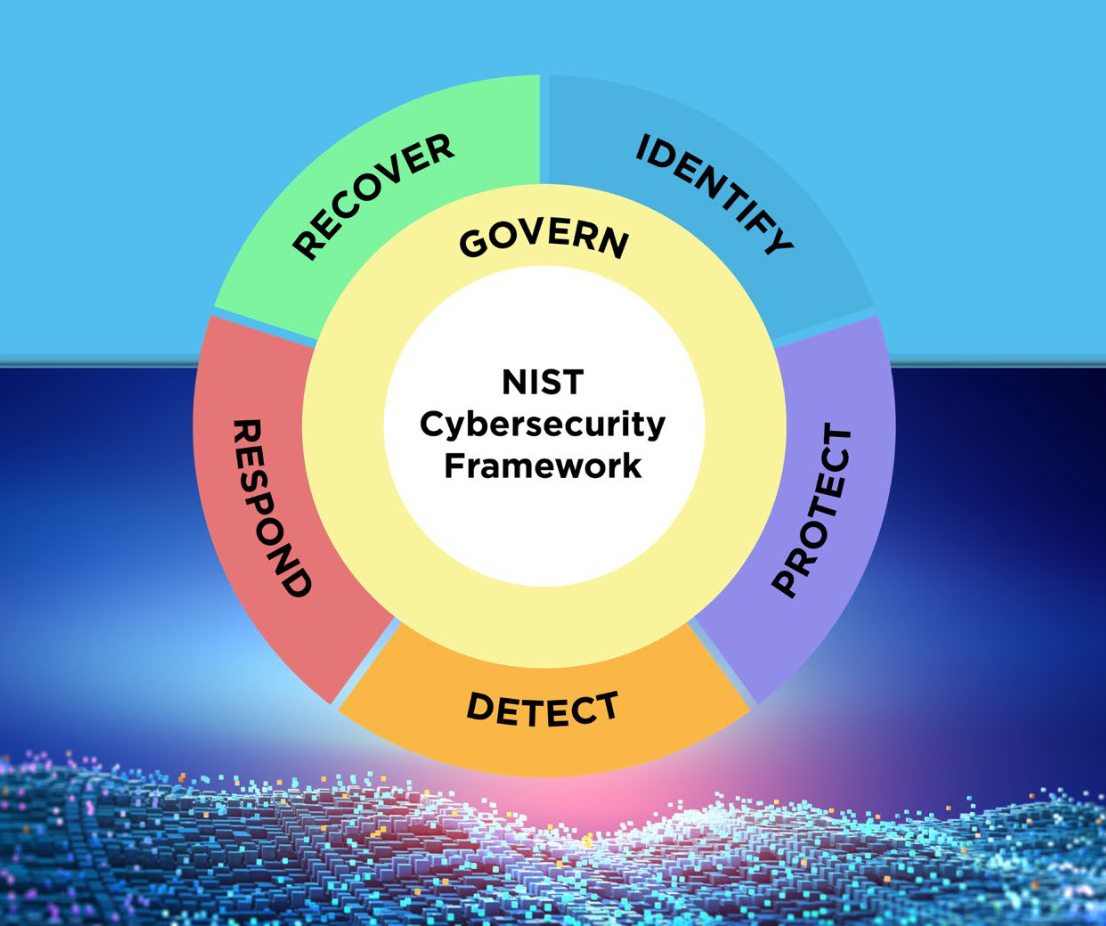

The National Institute of Standards and Technology (NIST) recently awarded Ohio University’s J. Warren McClure School of Emerging Communication Technologies with $100,000 in grant funding to enhance OHIO’s cybersecurity curriculum and have it serve as a global model.
Alex Semancik | December 11, 2025
Share:
In an increasingly digital world, cybersecurity is vital to protecting networks, data and even our critical infrastructure like nuclear power plants from nefarious threats, and ensuring the safety of business, governmental and social activities. Ohio University is doing its part to train the next generation of cybersecurity professionals to secure our future with the help of the National Institute of Standards and Technology and industry partners.
The National Institute of Standards and Technology (NIST) recently awarded Ohio University’s J. Warren McClure School of Emerging Communication Technologies with $100,000 in grant funding to enhance OHIO’s cybersecurity curriculum and have it serve as a global model. The J. Warren McClure School is housed within the Scripps College of Communication and prepares students to fill critical roles through targeted technical and cybersecurity education.
The funding will be used to infuse a total of seven courses at Ohio University with the NIST cybersecurity standards and then disseminate what is built to other higher education institutions across the world. The NIST standards serve as essential directives and guidelines for many cybersecurity roles, and students trained with them will have a significant advantage when entering the workforce.
Ohio University Assistant Professor and Principal Investigator Rishabh Das, Ph.D., says the core idea of the curriculum overhaul is to expose students to the NIST standards throughout their entire educational journey.
“New students who are joining Ohio University and taking entry-level cybersecurity courses will hear about the NIST standards and cybersecurity framework, and they’ll keep hearing about them throughout the curriculum in their time at Ohio University, in different courses and different contexts,” Das said. “Students who are entering the workforce after taking our cybersecurity curriculum will be well prepared to face the industry.”

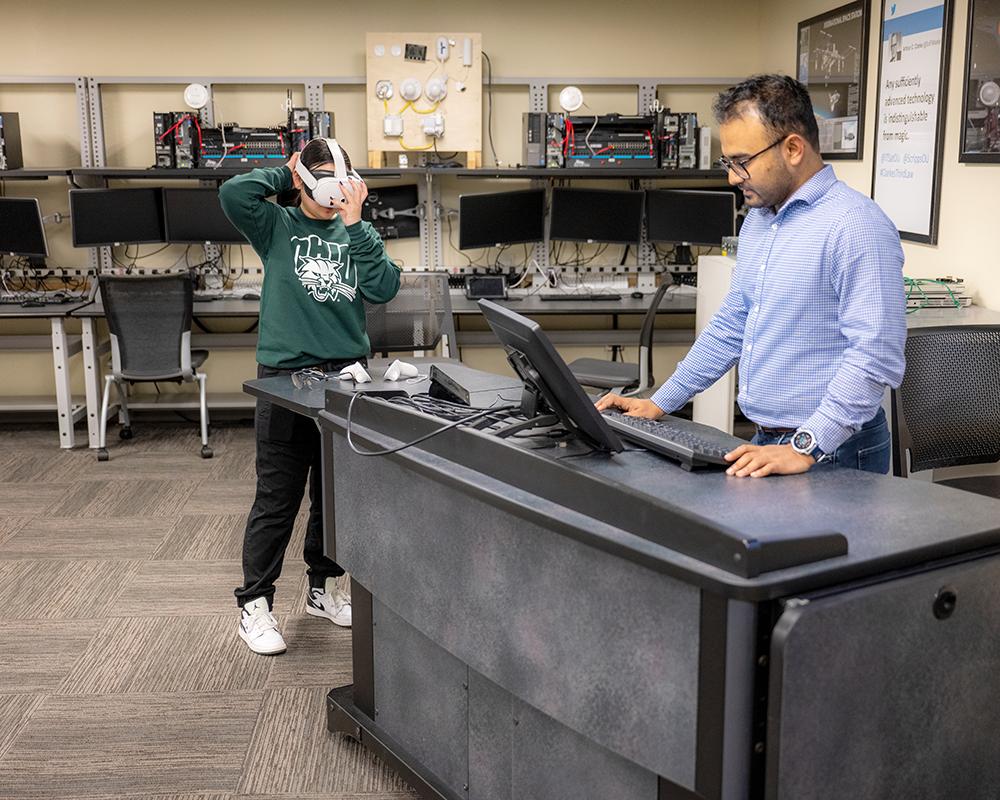
During their time in Ohio University’s cybersecurity curriculum, students will have the world brought into the classroom through cyber-physical environments where they can interact and test out cybersecurity techniques in real time. This is thanks to the state-of-the-art data center infrastructure based in Scripps College. Das says the infrastructure can support 450 lab environments in parallel and is a key differentiator of the program.
“You cannot have a physical water tank system in a classroom environment because of the scale and complexity of the system. That is true for any other cyber-physical domain as well—think about a gas pipeline or a nuclear power plant,” said Das. “Through our research we are able to simulate some of that in a virtual environment, which means that students taking our curriculum can actually interact with these cyber-physical systems, see how cybersecurity attacks work on those systems and create defenses, all in a classroom environment.”
Students will also be given different viewpoints on the NIST standards and securing a system in the classroom. In addition to Das’s expertise in critical infrastructure, Co-Principal Investigators Associate Professor of Instruction Brandon Saunders and Assistant Professor of Instruction Bruce Tong will impart expertise in networking and compliance throughout the curriculum.
While students are being exposed to all these unique perspectives, Das says they will be taught with a “top-down approach” to secure systems.
“We are teaching students to secure the entire pipeline that comes from the cloud and goes all the way to the sensor,” he explained. “If a student comes across networks which are managing water treatment plants, power systems, electrical substations, nuclear power plants or critical infrastructure in general, they will now know how to tackle those, not only from a theoretical and hands-on perspective, but in a standard-based approach that is accepted by the industry.”
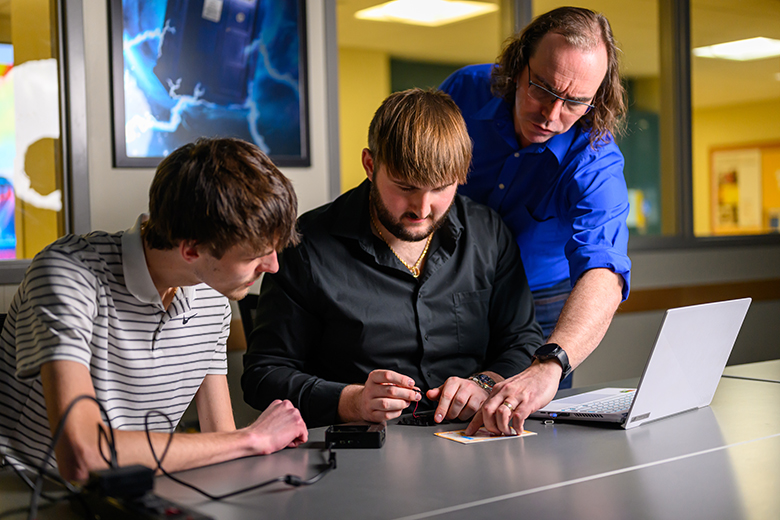
Associate Professor of Instruction Brandon Saunders brings a background in networking to OHIO's new cybersecurity curriculum.
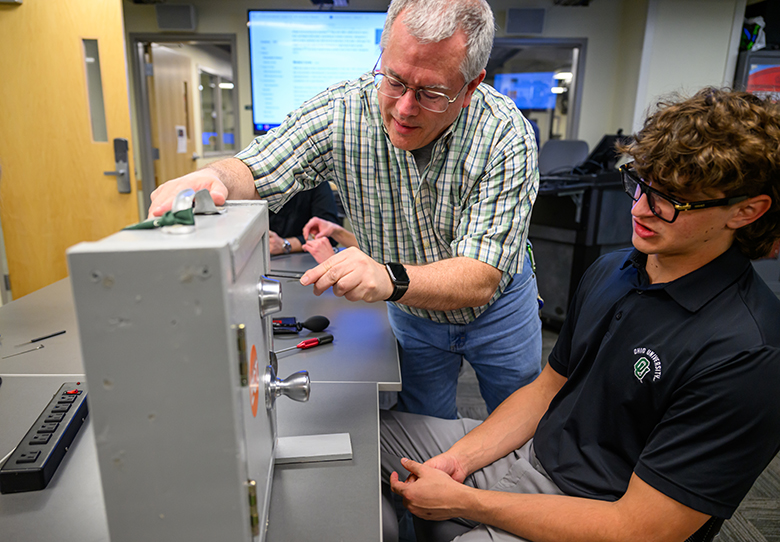
Assistant Professor of Instruction Bruce Tong provides cybersecurity students with a background in compliance.
In addition to support from NIST, OHIO has partnerships with the Ohio Governor’s Cybersecurity Office, American Electric Power (AEP), Progressive Insurance and KeyBank to ensure modules and courses being built align with the industry landscape. These industry partners will help shape what students experience at the University so that it is as close to what they can expect when they’re entering the workforce as possible.
“We intend to take that industry feedback and improve our existing module,” emphasized Das. “We’re trying to bridge the gap between the University and the existing industry standards and practices, and these industry partnerships add an important feedback loop.”
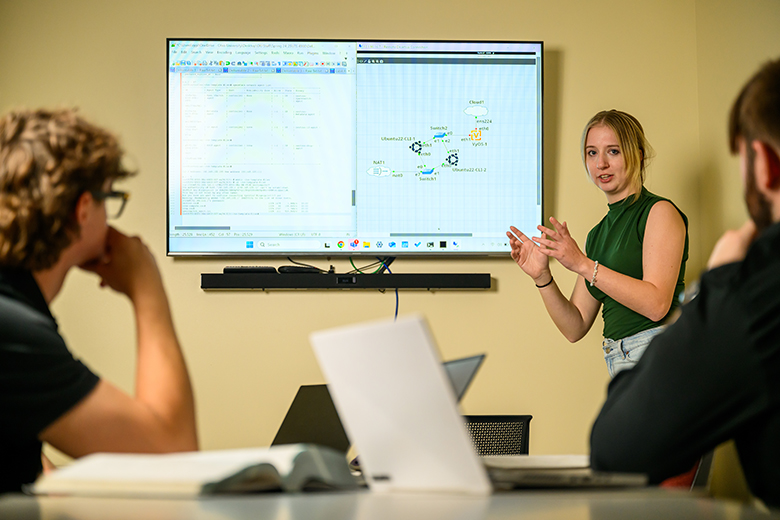
"As a cybersecurity professional who has worked in the industry, communication is important," said Das. "You might be a cybersecurity analyst but at the end of the day you are the one who will be interacting with what happened and then translating all of that information."
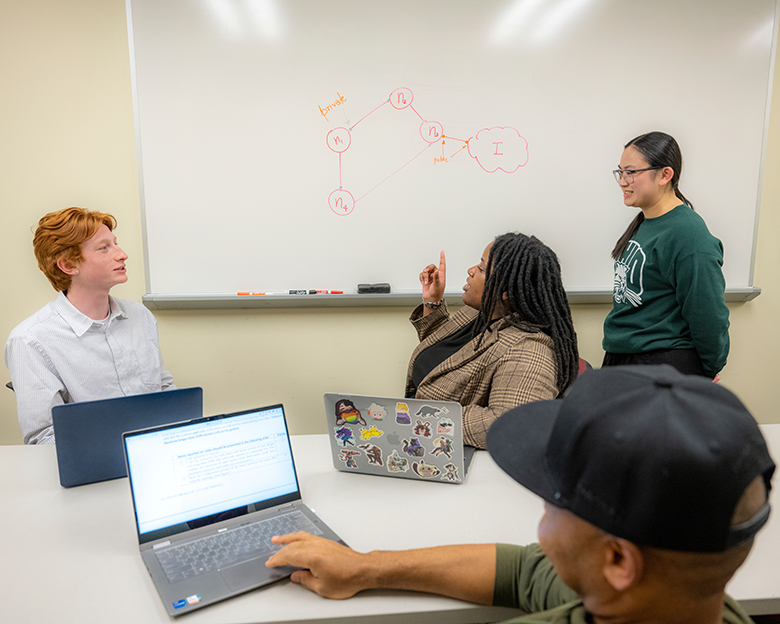
Students in OHIO's cybersecurity program are also exposed to specific skills from engineering and business so that they can navigate different verticals and environments.
A large part of this grant will also deal with disseminating what is built at Ohio University to other higher educations and institutions both nationally and internationally. To do this, Das says OHIO is working with the Consortium of Cybersecurity Clinics—a collection of more than 40 higher education institutes with more than 400 affiliate faculty across the world.
“We will be maintaining a website that provides details about how we build models and how to integrate courses into existing curricula,” said Das. “We are also taking a very innovative approach and creating a cybersecurity podcast. We really wanted to do that because people consume knowledge differently, and some of us just like listening to what’s going on in the cybersecurity world through a podcast.”
To learn more about cybersecurity efforts within Scripps College of Communication, visit: https://www.ohio.edu/scripps-college/mcclure/prospective-students/undergrad/cybersecurity.