DOE Science Highlights Professor Saw Wai Hla’s Atomic-Scale Breakthrough
Professor Saw Wai Hla's groundbreaking atomic-scale imaging research, recognized by the DOE and prestigious awards, advances understanding and manipulation of rare earth elements critical to modern technology.
March 4, 2026
Share:
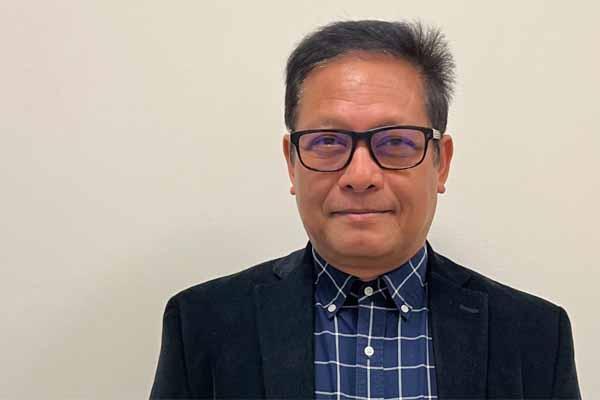
The Nanoscale Quantum Phenomena Institute (NQPI) proudly celebrates national recognition for one of our faculty members, Professor Saw Wai Hla, whose pioneering research in atomic-scale imaging has been featured by the Argonne National Laboratory and the U.S. Department of Energy's (DOE) science news in a Q&A spotlight on imaging and manipulating materials at the atomic scale — a rare and prestigious honor for a researcher.
Hla, an Ohio University physics professor and a scientist in the Materials Science Division at Argonne National Laboratory (ANL), has spent his career pushing the limits of how scientists see and control matter at its most fundamental level. In this interview, he discusses his latest work on rare earth elements, materials critical to modern technology but notoriously difficult to isolate and control. This work is a collaboration among scientists and engineers at ANL and academic institutions, including OHIO, Arizona State University, and the University of Illinois at Chicago, with Hla serving as the ANL project lead. The OHIO teams for this project include Professor Eric Masson’s group in the Chemistry and Biochemistry department, and Professor Sergio Ulloa's group from the Physics and Astronomy department. Both Masson and Ulloa are members of NQPI. The focus of his research is to understand and manipulate individual rare-earth ions’ properties, including electronic structure, chemical state, and magnetism, with unprecedented precision.
This research builds on Hla’s groundbreaking achievement in 2023, when he and collaborators used X-rays to characterize a single atom for the first time, a feat long considered unattainable. By combining cutting-edge synchrotron X-ray beams with advanced scanning probe techniques at Argonne’s Advanced Photon Source, Hla's team was able to detect and analyze the elemental type and chemical state of an isolated atom. This transformative capability has the potential to redefine how materials are studied across physics, chemistry, environmental science, and technology development. Hla recently received one of the most prestigious awards in Nanotechnology, the Feynman Prize, in recognition of his 20-year efforts in achieving single-atom x-ray spectroscopy and molecular machine research.
It’s a very rewarding career. I live with excitement”
In this Q&A section, Hla emphasizes why this level of detail matters: rare earth elements such as neodymium and europium are essential in everyday electronics, clean energy technologies, defense systems, and telecommunications, yet current industrial processes for isolating them are costly and inefficient. His approach — using tailored organic ligands to recognize and control individual ions — could ultimately bypass demanding separation methods and enable new routes to design materials with targeted properties.
Hla also highlights the collaborative ecosystem that enables such high-level advanced research. The Advanced Photon Source (APS), a DOE Office of Science user facility, and the multidisciplinary team around him, including chemists, theorists, and experimentalists, provide vital infrastructure and expertise.
“This type of work would be almost impossible anywhere else,” Hla said, underscoring how national-scale research facilities and team science drive frontier discoveries. His remarks reflect not only his scientific leadership but also an infectious enthusiasm for discovery.
“It’s a very rewarding career. I live with excitement,” Hla said, capturing both the curiosity and dedication that define his work.
Hla’s research has garnered wide acclaim, including recognition as a 2024 Scientific Breakthrough of the Year Laureate in the physical sciences category by the Falling Walls Foundation in Germany and the prestigious Feynman Prize in Nanotechnology, which acknowledges his sustained contributions to imaging and manipulating matter at the atomic scale. OHIO has also been awarded a 2025-26 Presidential Research Scholar Award in recognition of his scientific achievements.
As NQPI under Ohio University VPRCA continues to highlight excellence in nanoscale science and quantum photonics, we congratulate Hla on this distinguished national spotlight and thank him for representing the institute’s commitment to advancing fundamental science with real-world impact.