
Spring 2026 Edition
Alumni & Friends Magazine
The Unseen Injuries
Faculty research aims to protect brains in sports, on stage and on screen
Samantha Pelham Kunz, BA, BSJ ’17, MAA ’21 | April 28, 2026
Share:
A collective wince is almost instinctual any time a football player collapses after a hard hit, a gymnast lands awkwardly or a bone snaps on live television. These are the injuries audiences recognize—they are visible and undoubtedly painful.
But injuries that some researchers at Ohio University are focusing on aren’t visible to the naked eye. These hurts don’t always draw blood or demand a stretcher; rather, they take place inside the head and compound over time, with consequences that may not surface until years later. Concussions, and the repeated head impacts that can follow, have emerged as one of the most pressing and misunderstood health challenges facing athletes and performing artists alike, and OHIO faculty are working diligently to address this problem.
From high-profile NFL injuries to falls by stunt performers and circus artists, the risks associated with head trauma aren’t confined to the football field. Faculty across the College of Health Sciences and Professions and the Heritage College of Osteopathic Medicine are advancing research, education and clinical care that bridge athletics, performing arts and community health, reframing how concussions and chronic traumatic encephalopathy (CTE) are understood, prevented and managed.
Understanding the impact
CTE, a progressive neurodegenerative disease associated with repeated head impacts, has become central to that conversation. According to Melissa Anderson, an assistant professor of exercise physiology and expert on concussions, CTE is marked by abnormal protein accumulation in the brain and has been linked to cognitive decline, mood disorders and behavioral changes. However, it can only be diagnosed by analyzing brain tissue during an autopsy.
“Often, people believe they have CTE without confirmation,” says Anderson. “The challenge is that CTE can’t be diagnosed in living patients, which makes prevention, education and early management incredibly important.”
Anderson emphasizes that while a single concussion does not automatically lead to long-term neurological damage, repeated concussions, and even smaller impacts that don’t meet diagnostic thresholds for concussion, can quietly erode brain health over time.
“The cumulative effects are what concern us,” Anderson says. “Multiple concussions increase the risk for depression, memory loss and other neurological challenges, especially when recovery isn’t properly managed.”
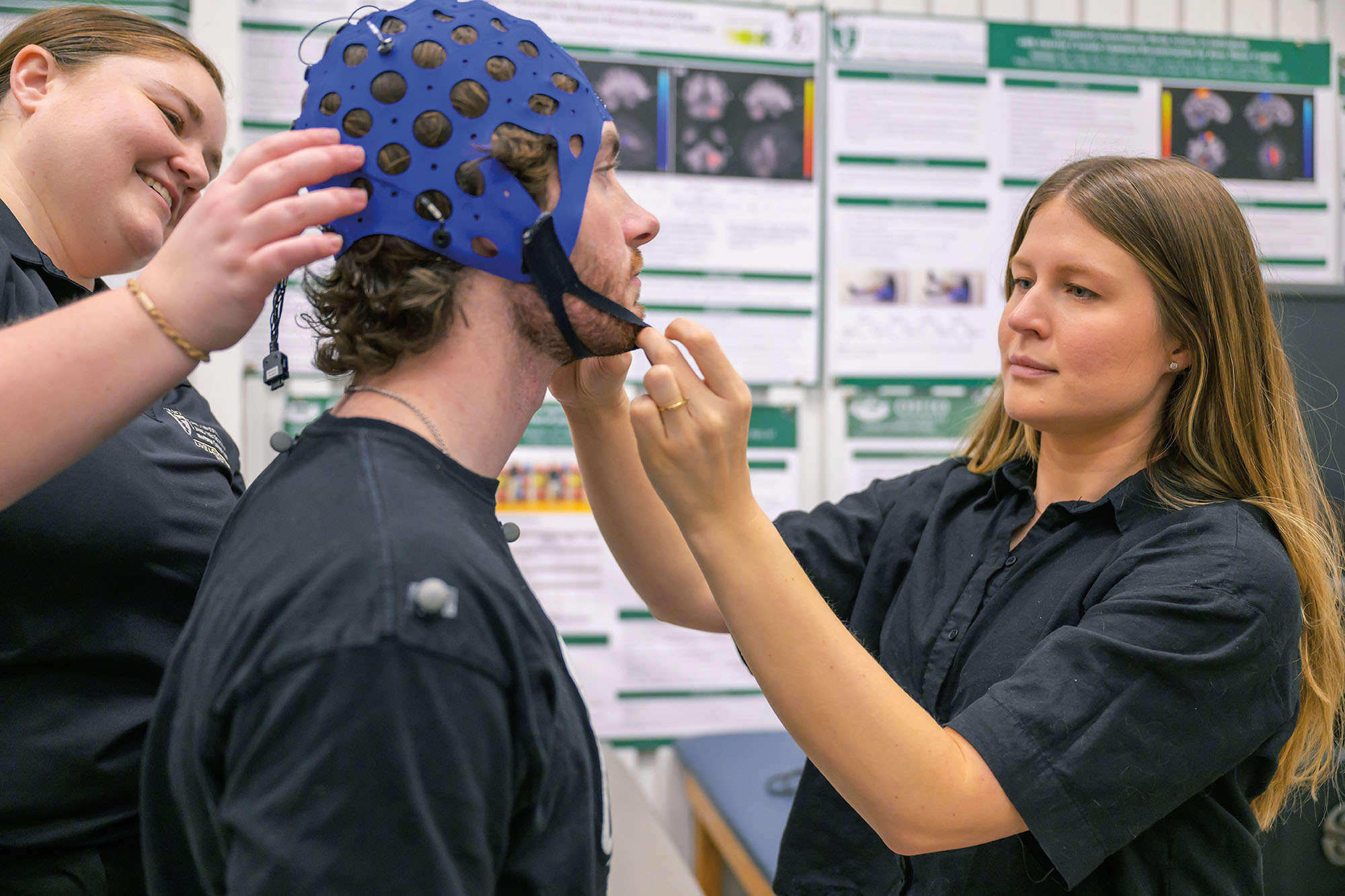
Repeated concussions can increase the risk for neurological challenges, says Assistant Professor of Exercise Physiology Melissa Anderson. Photo by Ben Wirtz Siegel, BSVC ’02
Much of Anderson’s research focuses on how concussion history influences both neurological and physical outcomes, including balance control, reaction time and injury risk after an athlete returns to play. Her work examines how subtle neurological changes following concussion may predispose athletes to additional musculoskeletal injuries, a connection that is increasingly recognized in sports medicine but not always accounted for in return-to-play decisions.
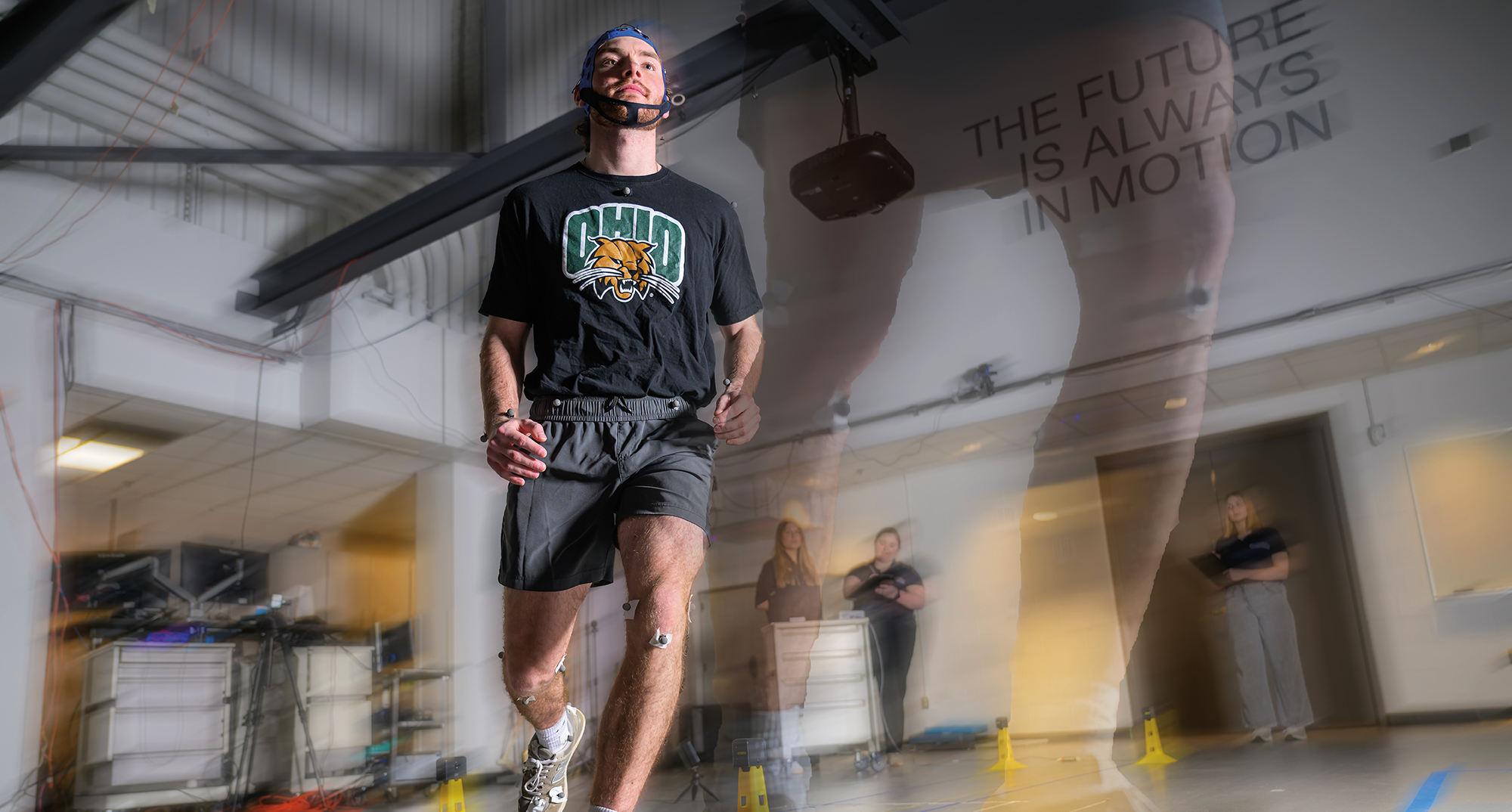
At OHIO’s Neuromuscular Biomechanics and Health Assessment Lab in the Heritage College, Anderson and her collaborators study how concussions alter movement patterns, postural stability and neuromuscular control. By combining clinical concussion assessments with biomechanical analysis, their research helps identify lingering deficits that may not appear during standard symptom checklists but can still place people at risk. This approach recognizes the brain’s central role in coordinating the entire body and underscores why concussion recovery is not simply about symptom resolution, but about restoring safe, efficient movement.
“The cumulative effects are what concern us,” Anderson says. “Multiple concussions increase the risk for depression, memory loss and other neurological challenges, especially when recovery isn’t properly managed.”
Much of Anderson’s research focuses on how concussion history influences both neurological and physical outcomes, including balance control, reaction time and injury risk after an athlete returns to play. Her work examines how subtle neurological changes following concussion may predispose athletes to additional musculoskeletal injuries, a connection that is increasingly recognized in sports medicine but not always accounted for in return-to-play decisions.
The bigger picture
While football and contact sports are often the first activities associated with concussions and CTE, Ohio University faculty have worked to expand these conversations into industries where head trauma frequently goes underrecognized.
Jeff Russell, an associate professor of athletic training, has spent decades advocating for a population often overlooked in concussion research: performing artists. Dancers, actors, circus artists and stunt professionals face repeated physical risk, yet historically lack comparable research, medical infrastructure and reporting protections.
“When you stop and think about how influential a field is, pretty much everybody in the world watches movies and television,” Russell says. “This type of medium is an art form with a huge influence, but people don’t know what goes on behind the scenes to make it look so cool on television or on the movie screen.”
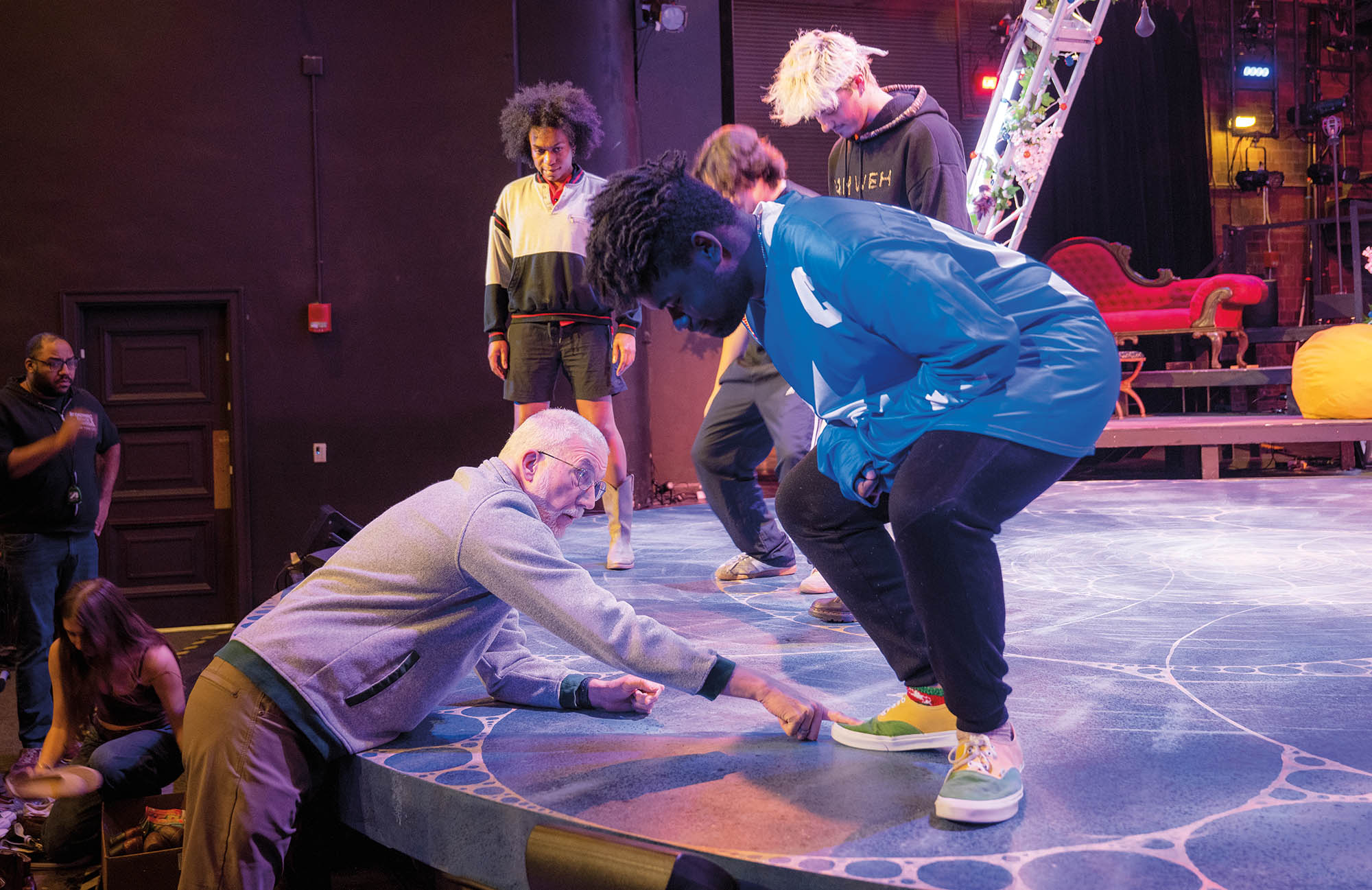
SHAPe Clinic director Jeff Russell provides jump training to School of Theater students. Photo by Rich-Joseph Facun, BSVC ’01
Russell’s research helped produce what he believes is the first scientific paper examining concussion risk among film and television stunt performers. His work highlights a significant gap that while performing arts are highly physical, research devoted to concussion in these fields remains extremely limited compared to sports medicine.
“Injuries to athletes happen in front of everyone,” Russell says. “Injuries to stunt performers and artists often happen behind the scenes, away from public view.”
In his research, Russell has documented that stunt performers routinely experience high-force impacts, falls and collisions comparable to those seen in contact sports, often without consistent medical oversight. His findings also show that performers may be reluctant to report concussion symptoms due to concerns about job security, casting opportunities and industry culture.
To better understand long-term neurological risk, Russell is collaborating with the Boston University CTE Center on a groundbreaking study examining the brains of deceased stunt performers. The partnership represents one of the first efforts to explore whether repeated head impacts sustained in film and television work may contribute to neurodegenerative changes later in life.
“Concussions are important primarily because they’re an injury to your brain,” Russell says. “If you’re not taking care of your brain, that means the rest of your body won’t work right. If you have a concussion and you don’t tell anybody, and keep doing what you’re doing, then you have another concussion on top of it—that can be a very, very dangerous situation.”
Russell’s broader body of research has examined concussion mechanisms, injury reporting behaviors and access to medical care across multiple performing arts disciplines, including dance, theater and circus arts. His work emphasizes that concussion risk is not limited to major stunts but can arise from rehearsals, repetitive choreography, falls, lifts and stage hazards.
“This is why I changed my career from sports medicine to performing arts medicine,” Russell says. “I saw dancers and some other artists who were suffering injuries, but there was nobody to take care of them. It didn’t sit right with me.”
Learning beyond the classroom
Most recently, Russell collaborated with Associate Dean for Research and Associate Professor of Athletic Training Janet Simon to publish a first-of-its-kind study examining concussion patterns among Cirque du Soleil performers over the course of 10 years. The research helped identify which disciplines within the circus are most at risk, when concussions most frequently occur and how performance demands influence injury patterns.
The study is among the first to use long-term, real-world medical data from a major performing arts organization, offering insights that can improve safety protocols, training practices and concussion management in the often-overlooked industry of circus performance.
One way Russell and his team are addressing performing arts medicine is through Ohio University’s Clinic for Science and Health in Artistic Performance. Known as the SHAPe Clinic and founded by Russell in 2013, the interdisciplinary collaboration between the Chaddock + Morrow College of Fine Arts, the College of Health Sciences and Professions, and the Department of Athletic Training provides student performing artists, including those in theater, dance and the Marching 110, among others, with specialized injury prevention, evaluation and health management. The clinic mirrors the athletic training model used in sports while being tailored to the unique physical and creative demands of performance.
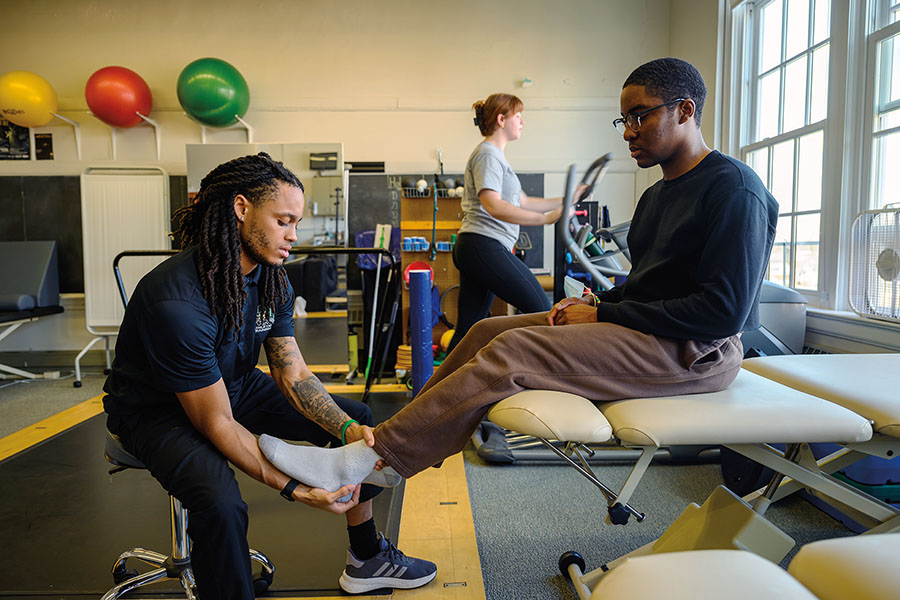
Founded in 2013, OHIO’s interdisciplinary SHAPe Clinic gives student performing artists access to specialized health care typically reserved for athletes, addressing the unique physical demands of performance. Photo by Ben Wirtz SIEgel, BSVC ’02
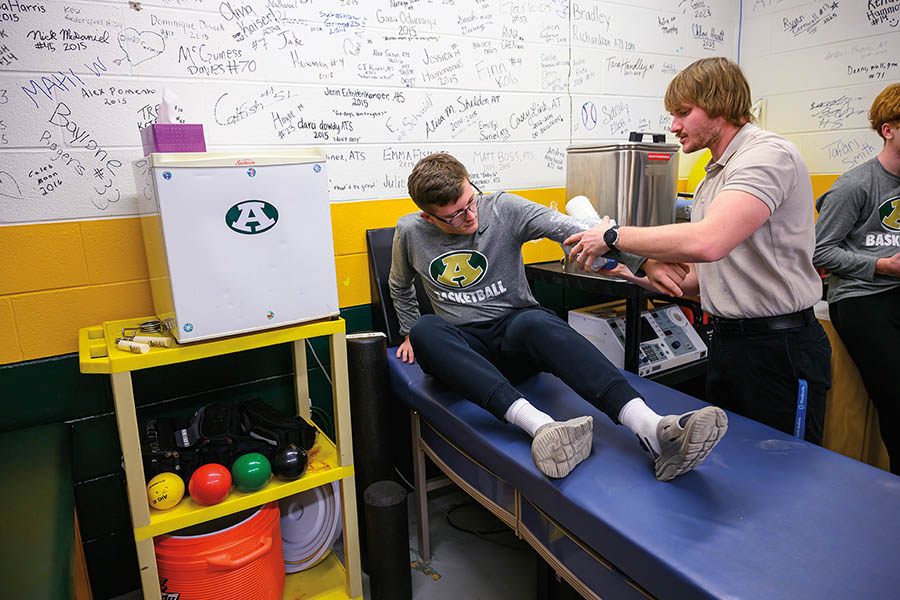
Athletic training alumnus Carter Luckring, MS ’24, works with a student athlete at Athens High School. Photo by Ben Wirtz SIEgel, BSVC ’02
In addition to professional staff, athletic training students gain hands-on experience working alongside licensed clinicians, integrating what they’re learning in the classroom into real-world care.
Beyond campus, athletic training students also regularly serve in local high schools, providing sideline evaluations, baseline testing and concussion education for young athletes. This experiential learning not only prepares students for professional careers, but provides care in communities where access to specialized medical support is often limited.
Complementing these efforts, OHIO has also launched a Performing Arts Health and Wellness Certificate program designed to train health care professionals to meet the growing demand for specialized care in artistic performance settings. The program reflects a broader recognition that athletes and artists share overlapping physical demands and deserve equal medical support.
Across sports, stages and screens, attitudes toward head trauma are evolving. The long-standing stigma of playing through pain or believing the show must go on is giving way to a more informed understanding of risk and recovery.
At OHIO, that shift is reflected in research that prioritizes prevention, clinical protocols emphasizing informed consent and education that empowers individuals to advocate for their health.
For Anderson, the goal is clarity without fear.
“We don’t want people to panic,” she says. “We want them to understand risk, recognize symptoms and know that early care matters.”
For Russell, the mission is deeply personal.
“Ultimately, this work is about helping people,” Russell says. “It’s about serving them, lifting them up and adding value to them. If that’s what your research is about, I don’t think you can do any better than that.”