
Spring 2026 Edition
Alumni & Friends Magazine

Opportunity Abounds
Ohio University is among the nation’s select R1 Opportunity Universities and the only university in Ohio to earn both coveted titles.
April 28, 2026
Share:
In the latest release from the nationally respected Carnegie classifications, Ohio University landed in a rare category: a major research institution also recognized for turning its world-class education into real-world opportunity. It’s one of only 21 R1 universities nationwide, and the only one in Ohio, to earn the new “Opportunity College and University” designation.
“This rare distinction tells a story that we have known about ourselves for generations—that Ohio University holds the door open for students from all backgrounds, and we leverage all the resources of a large, public research university to set our students up for success, for life,” says OHIO President Lori Stewart Gonzalez.
After earning the R1 “Opportunity University” honor in April of 2025, OHIO was awarded Carnegie’s Community Engagement Classification in January of 2026, a recognition reserved for institutions that show sustained, measurable commitment to community engagement.
Released every three years, the Carnegie Classification of Institutions of Higher Education provides a framework for categorizing different types of higher education—from doctoral universities to special focus institutions (such as medical- or arts-focused). These classifications also serve as the basis for how U.S. News & World Report organizes its annual rankings.
Traditionally, Carnegie classifications have only reflected two primary factors: the highest degree awarded at an institution and its level of research activity. Under this umbrella, OHIO was considered a Doctoral University with Very High Research Activity—also known as “R1”—an achievement reached in 2022 when OHIO moved from R2 to R1 status.
But a recently revamped set of classifications brings even greater distinction into focus. Last April, the American Council on Education (ACE) completely redesigned the Carnegie Classifications to better reflect the diversity of today’s higher education landscape. The updated framework is more nuanced and incorporates a broader range of outcomes, such as students’ social and economic mobility and eventual earnings.
The result? New designations for OHIO that solidify its national leadership as a research institution that delivers transformational opportunity by balancing access and outcomes.

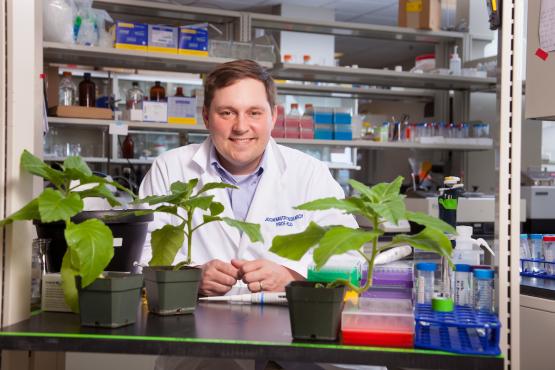
OHIO’s commitment to community engagement comes to life in a number of ways. Photos by Ohio University Photography
On the right career track
Carnegie’s new “institutional classification” considers a university’s size, the level of degrees awarded, and the types of degrees pursued by the majority of graduates.
As a doctoral-granting university with more than 30,000 students, OHIO is now one of only 40 institutions classified as “Undergraduate/Graduate-Doctorate Large” and “Professions-Focused” (alongside other national institutions such as the University of Cincinnati, the University of Kentucky, and Auburn University). The “Professions-Focused” designation signifies that more than half of undergraduate students complete pre-professional and/or career-aligned degrees.
OHIO’s “Professions-Focused” designation is driven by years of growth in health professions degrees including large online programs in nursing, along with growth in student interest in business degrees and ongoing strength in professional fields such as education and journalism. Those four fields alone make up more than 60% of degrees awarded.
What do the Carnegie classifications mean?
Carnegie Classifications
The Carnegie Classifications are not college rankings. They are a national framework used to group and describe U.S. colleges and universities by shared characteristics, such as degree offerings, research activity, student access, graduate earnings and community engagement. The classifications help readers understand what kind of institution a college or university is, and how it carries out its mission. (carnegieclassifications.acenet.edu)
R1 / Very High Research Activity
R1 is Carnegie’s highest research activity designation. In the 2025 methodology, R1 institutions are those with, on average, at least $50 million in annual research and development spending and at least 70 research doctorates awarded. (carnegieclassifications.acenet.edu)
Professions-Focused
This is part of Carnegie’s 2025 Institutional Classification, which groups institutions by characteristics such as size, degree levels and fields of study. A Professions-Focused designation reflects an institution where a majority of degrees are awarded in career-aligned or professional fields. (carnegieclassifications.acenet.edu)
Opportunity College and University
This designation is part of Carnegie’s Student Access and Earnings Classification. It recognizes institutions that provide higher access to students from lower socioeconomic and historically underrepresented racial and ethnic backgrounds, while also showing that former students earn competitive wages compared with peers in the institution’s geographic context. (carnegieclassifications.acenet.edu)
Community Engagement Classification
The Community Engagement Classification is an elective classification, meaning institutions apply for it. It recognizes colleges and universities that demonstrate collaboration with communities for the mutually beneficial exchange of knowledge and resources in a spirit of partnership and reciprocity. (carnegieclassifications.acenet.edu)
Ohio University’s strength in professional education is more meaningful particularly in the face of changing perceptions about higher education among high school students and society at large.
In fact, according to a Pew Research Center survey released last October, 55% of Americans give colleges and universities fair or poor ratings on preparing students for well-paying jobs in today’s economy. In this context, a “Professions-Focused” designation can play a critical role in helping students and families make informed decisions about which school to attend (or even whether to go to college).
“We know that outcomes matter to students and their families and play a significant role in our commitment to delivering on our value promise,” says Donald Leo, executive vice president and provost of Ohio University. “No matter what degree our students choose, our goal is always to ensure they have experiences during their time at OHIO that prepare them for the next step in their chosen field.”
OHIO is one of only five R1 institutions nationwide to earn both the ‘Professions-Focused’ and ‘Opportunity College’ distinctions—and the only one in Ohio to do so.
Opportunity knocks
OHIO’s focus on experience and outcomes also drives its new distinction as an “Opportunity College and University.” Carnegie’s recently introduced “Student Access and Earnings Classification” evaluates how well institutions serve Pell-eligible students and students from historically underrepresented racial and ethnic backgrounds, as well as post-graduate earnings as compared to someone without a college degree in the geographic region they serve.
Institutions that create both “Higher Access” and “Higher Earnings” compared to other similarly sized peers are now celebrated as “Opportunity Colleges and Universities.”
OHIO is one of only five R1 institutions nationwide to earn both the “Professions-Focused” and “Opportunity College” distinctions—and the only one in Ohio to do so. Among its peers, OHIO also boasts the highest earnings ratio at 2.18. (As measured in the Dynamic Strategy, the average OHIO graduate makes $54,958 one year after graduation.)
Additionally, three of OHIO’s regional campuses (Chillicothe, Southern and Zanesville) were also designated as “Opportunity Colleges” among their peers. The Chillicothe campus was classified as “Professions-Focused,” while Zanesville and Southern were recognized as “Opportunity Colleges” with a special focus in nursing.
The recognition both affirms and bolsters Gonzalez’s vision of “creating pathways for more students to succeed and to serve meaningfully in the communities where they live, work and lead.”

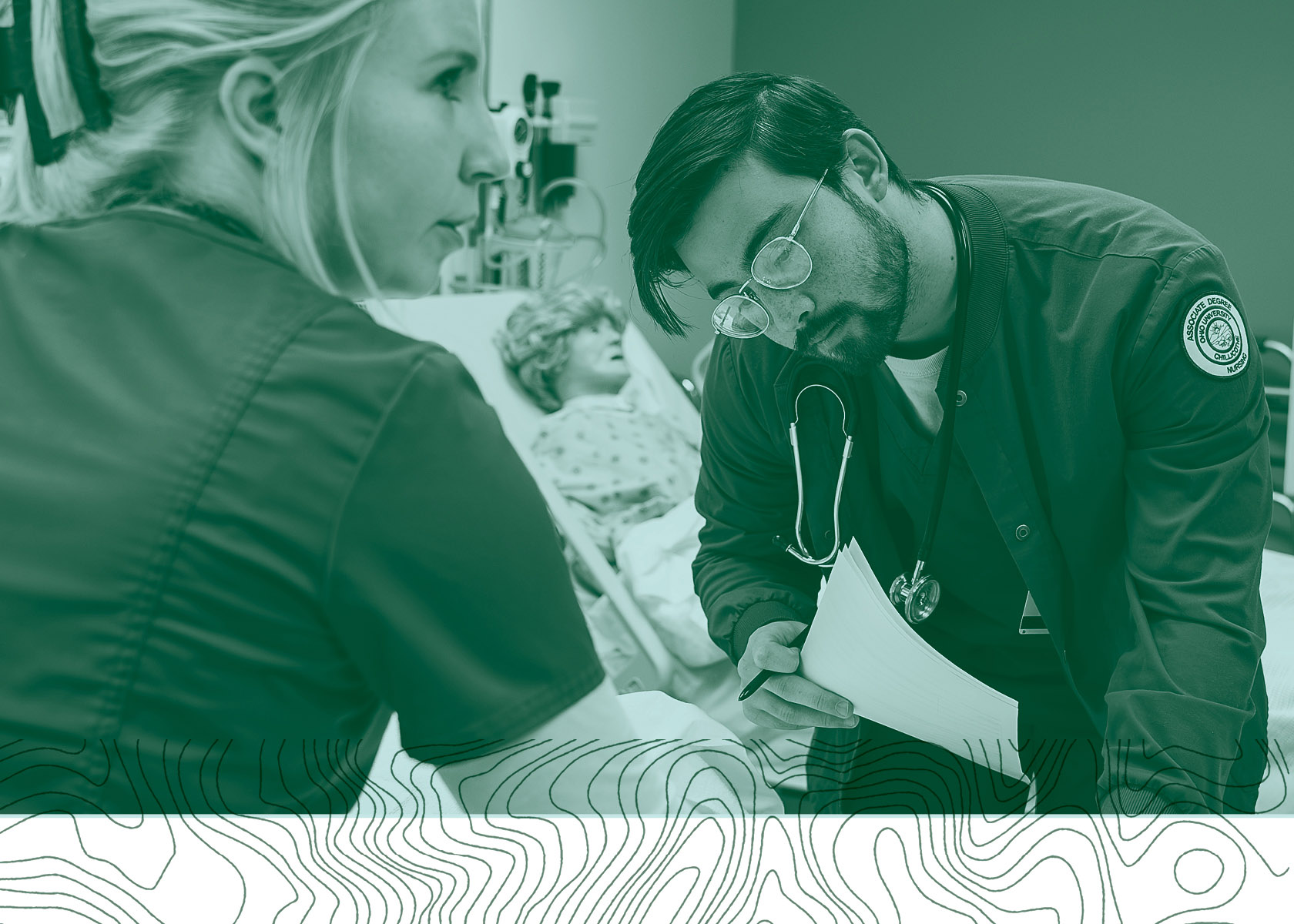
Experiences that prepare students for successful futures in their fields are paramount during their time at OHIO. Photos by Ohio University photography
Practicing what we promise
That vision echoes the language etched into the Alumni Gateway at the entrance to College Green — “enter to learn … depart to serve ”— a concept that Gonzalez ensured was captured in the University’s recently updated mission statement.
Despite the University’s longtime commitment to involving students, faculty and staff in service to and engagement with regional communities as part of the learning experience, OHIO had not previously earned Carnegie’s classification as a “Community Engaged” institution. Unlike the institutional, research or access and earnings classifications, the Community Engaged designation requires the university to submit an application demonstrating its commitment to community engagement, successful outcomes of its work, and organizational structures that ensure ongoing success. In January, OHIO received this additional classification, thanks in part to renewed focus on community impact through the University’s Dynamic Strategy.
OHIO’s engagement with community comes to life in a number of ways—from the Heritage College of Osteopathic Medicine’s Mobile Clinic program, to collaborative arts programming designed with and for the region, to support for small businesses and rural county government through the Voinovich School for Leadership and Public Service.
Now, set in motion by the Dynamic Strategy, OHIO has launched a Center for Community Impact designed to help align and amplify the University’s outreach, research and partnership efforts.
Each of these Carnegie distinctions helps to demonstrate a piece of what makes Ohio University special, but taken together they set OHIO apart from the 4,000 public and private U.S. universities classified by Carnegie: A large research university built to prepare students for professional success, accessible to all who are eager to learn, committed to uplifting communities and inspiring students to serve.